Valencia’s Central Market is where the city reveals itself in its most unfiltered form—a place where daily life unfolds with quiet vibrancy, untouched by pretense. Built in the early 20th century, it stands at the intersection of past and present, a working market that balances practicality with architectural grace. This isn’t just a place to buy groceries; it’s where centuries-old traditions meet modern rhythms, where the market breathes as a living space rather than a relic frozen in time.
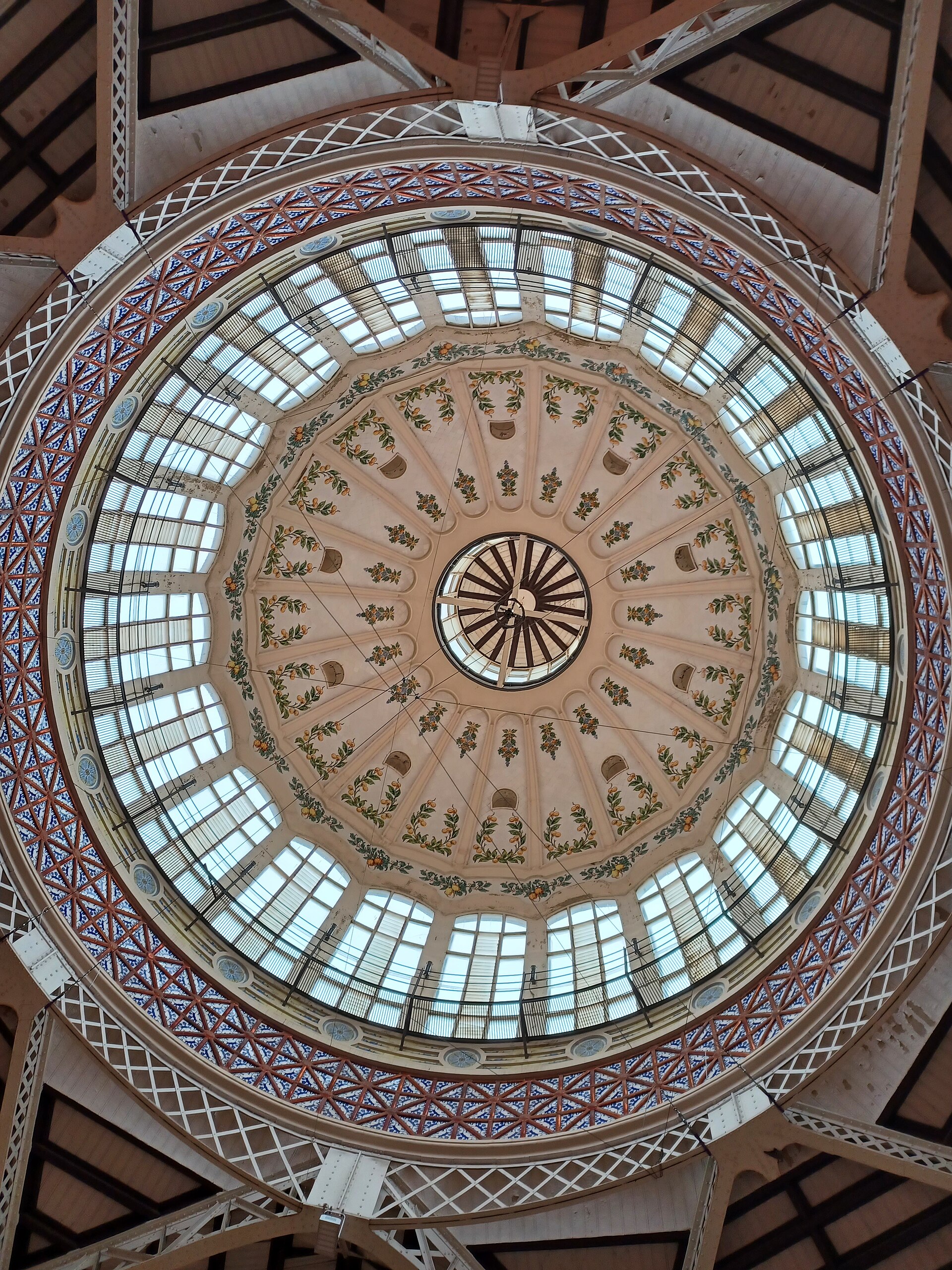
The building itself is a masterpiece of Valencian Modernisme, designed by architects Francisco Guardia and Alejandro Soler. Even those indifferent to architecture can’t help but notice its striking structure—soaring metal arches, glass domes, and stained-glass windows that flood the interior with natural light. The design feels airy and expansive, with wide aisles and thoughtfully arranged stalls that invite lingering rather than rushed shopping. Sunlight dances across displays of ripe fruit, spices, and glistening seafood, turning the market into a sensory experience as much as a commercial one.
Located in the heart of the old city, just steps from the City Hall Square and the Basilica of the Virgin of the Forsaken, the market is more than a shopping destination. Mornings bring the busiest hours, when locals fill their baskets for the day, haggle over prices, and catch up on neighborhood news. Tourists blend into the crowd, trying to absorb the cadence of Valencian life. By midday, the initial rush eases, but the market never empties—people still gather at its small taverns for a quick bite or simply to watch the world go by.
The market’s offerings are a testament to Valencia’s culinary richness. Here, you’ll find everything from local staples to exotic delicacies. Mountains of oranges—Valencia’s most famous export—share space with fresh artichokes, eggplants, and peppers. The fish stalls are a revelation, with everything from familiar cod and sardines to lesser-known varieties that vendors happily explain how to prepare. Meat counters display jamón, chorizo, and other cured meats, while the cheese selection is so vast it’s hard to know where to begin.
Spices take on a life of their own here, their aromas mingling in the air to create an unforgettable fragrance. Saffron, paprika, vanilla, cinnamon—these are just a few of the treasures on offer, often sourced from distant corners of the world. Vendors don’t just sell; they engage, offering samples and sharing tips on how to use each spice in cooking. It’s an impromptu culinary lesson, one that unfolds as you wander the aisles.
Beyond commerce, the market serves as a cultural hub. Food festivals, paella-making workshops, and local wine tastings are common, especially on weekends. Musicians sometimes perform in the aisles, artists set up easels to paint still lifes of market produce, and groups gather to chat over coffee. The market bridges worlds—traditional and contemporary, local and tourist, bustling and laid-back—all under one roof.
For many Valencians, the market is woven into the fabric of their lives. Elderly women haggle over prices, chefs select ingredients for their restaurants, and students grab a quick lunch between classes. Everyone finds something here: fresh produce, inspiration, or simply a slice of authentic Valencia. It’s a place where generations intersect, where the past and present coexist without friction.
The architecture alone is worth admiring. The facade is adorned with ceramic tiles featuring traditional Valencian motifs, while inside, Gothic and Modernist elements blend seamlessly. The central dome, crowned with a skylight, houses flower stalls and is a favorite spot for photographs. But even locals pause here, drawn to the way light and shadow play across the space.
More than just a market, this is a symbol of Valencia—a place where the city’s history, culture, and soul converge. It’s where you can feel the pulse of daily life, where traditions aren’t just preserved but actively lived. To visit is to step into that rhythm, if only for a moment. And perhaps that’s why it remains one of the most beloved spots in the city, for both residents and visitors alike.