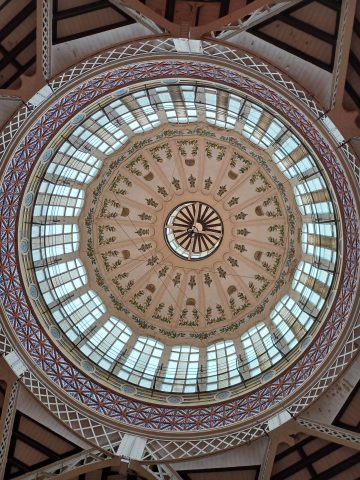
The Silk Exchange, or La Lonja de la Seda, stands as a quiet testament to Valencia’s golden age, when the city was a bustling hub of Mediterranean trade. Built in the late 15th century, this grand structure was more than just a marketplace—it was the heart of Valencia’s economic power, where merchants from across Europe gathered to negotiate deals on silk, spices, and other coveted goods. The air here must have once hummed with the clatter of footsteps, the murmur of negotiations in half a dozen languages, and the rustle of contracts being signed. Today, the building retains that sense of purpose, its thick stone walls still echoing with the ghosts of commerce and ambition.
Architecturally, La Lonja is a masterpiece of late Gothic design, though its details hint at the Renaissance to come. The most striking feature is the Column Hall, where towering spiral columns twist upward like ancient trees, their branches forming the vaulted ceiling. These columns aren’t just structural—they create a sense of grandeur, as if the very space is lifting you toward the heavens. Outside, the building appears fortress-like, with its sturdy walls and narrow windows, but step inside, and the light floods in, softening the stone and revealing the craftsmanship in every arch and cornice.
Attached to the main hall is the Consulate Pavilion, a smaller but equally elegant space where trade disputes were settled and regulations enforced. The interior is a marvel of woodwork and frescoes, each panel carved with scenes of daily life from centuries past. The craftsmanship is so precise that even now, you can almost hear the creak of chairs and the murmur of voices as merchants and officials debated the finer points of their agreements. It’s a place where history feels tangible, as if the past hasn’t quite faded away.
La Lonja isn’t just a relic—it’s a living part of Valencia’s cultural life. Throughout the year, the building hosts exhibitions, concerts, and festivals that breathe new energy into its ancient halls. In summer, the courtyard becomes a stage for musicians, their melodies drifting through the arches, while in winter, the space transforms into a festive market. Visitors can wander the same corridors where merchants once haggled over silk or sit in the courtyard, watching the sunlight dance across the worn stones. There’s no glass barrier here, no "do not touch" signs—just history laid bare, waiting to be explored.
The Silk Exchange is more than an architectural gem; it’s a symbol of Valencia’s role as a bridge between Europe and the East. During the Middle Ages, the city was one of the continent’s largest silk producers, and La Lonja was the nerve center of that industry. Contracts signed within these walls shaped economies, determined trade routes, and connected distant cultures. Even now, standing in the Column Hall, it’s easy to imagine the clamor of voices, the scent of spices in the air, and the weight of decisions that would ripple across continents.
Recognized as a UNESCO World Heritage site, La Lonja is celebrated for its historical significance, but for Valencians, it’s simply part of the city’s fabric. Students sketch its arches, tourists photograph its details, and locals linger in the courtyard, enjoying the shade of orange trees. The building’s quiet presence contrasts with the bustle of the old town, offering a moment of reflection amid the city’s vibrant energy.
Walking through La Lonja is like stepping into another era. The stones beneath your feet have witnessed centuries of commerce, conflict, and creativity, and the atmosphere here is thick with stories. Unlike modern museums, where history is often cordoned off behind ropes and glass, La Lonja invites you to touch its walls, to trace the grooves in the wood, and to imagine the lives that once filled these halls. There’s no need for plaques or guided tours—the building speaks for itself.
Valencia has no shortage of landmarks, from its towering cathedral to the futuristic City of Arts and Sciences, but La Lonja holds a unique place among them. It’s not as flashy as some, nor as crowded, but it captures the essence of the city in a way few other places do. Here, history isn’t just preserved; it’s alive, a reminder that Valencia has always been a crossroads of trade, culture, and human connection. Even if you’re not a history enthusiast, La Lonja is worth a visit—if only to watch the light play across its ancient stones or to sit in the courtyard, where the past and present coexist in quiet harmony.