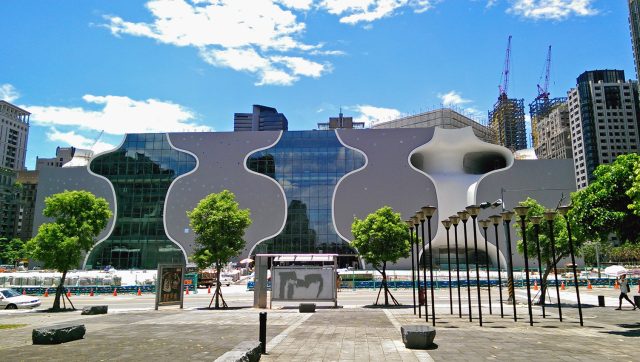
Calligraphy Square is an urban space where the pace of modern life eases. Located in the city center, it sits near shopping streets and office towers but feels separate—a quiet spot where past and present meet without conflict. Here, details that usually go unnoticed in a city of over two million become visible.
The square is relatively new, but its roots are old. In Taiwan, calligraphy is more than handwriting; it’s a discipline, a philosophy. Each stroke carries meaning, each character holds a story, and the craft has been preserved across generations with the same care as martial arts or tea ceremony. The square was built to bring this art into public life, making it available to anyone passing by. On some days, a master demonstrates brush techniques. On others, students practice outdoors, or a lesson unfolds for curious onlookers. The informality is the point—no appointments, no tickets, just the opportunity to try.
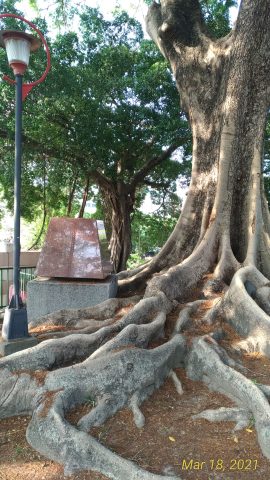
A massive stone monument stands at the center. Its surface is carved with calligraphic works, each created by a different artist. The characters are arranged so you can walk around them, examining the brushwork from every side. The stones appear to emerge from the ground, as if the words were always part of the landscape. Around the monument, gardens with low hedges and trees create a sense of enclosure, muffling the city’s noise.
The square’s interactive elements make it engaging. These aren’t just sculptures to observe—they’re meant to be touched. One feature is a set of stone slabs with shallow grooves for water. Visitors dip a brush into the water and write characters on the surface, watching the strokes disappear within minutes. Nearby, abstract installations mimic the flow of calligraphy. Children often trace the curves with their fingers.
People come here to take part, not just watch. Parents bring their children to introduce them to traditional arts. Elderly couples sit on benches, talking over tea. Students sketch in notebooks. In the evenings, soft lighting changes the space. The carved characters on the stones deepen, their shadows stretching like ink on paper. The air smells of jasmine, and conversations mix with distant traffic. Time feels different here—minutes can stretch into an hour unnoticed.
For visitors, the square offers a different side of Taichung. The city is known for its night markets, skyscrapers, and street art, but this is where you see something quieter, something lasting. Even without understanding Chinese, watching a calligrapher at work is absorbing. The way they hold the brush, the deliberate pace of each stroke, the way ink spreads on paper—it’s a performance that needs no translation. You start to see how deeply this art is tied to Taiwanese identity, how it links people to their history and to each other.
The square doesn’t stay the same. It hosts exhibitions of contemporary calligraphy, cultural festivals, poetry readings, and live music. These events keep the space active, ensuring it doesn’t become a relic but remains part of the city’s life. Yet its core stays unchanged: a celebration of an art form that has shaped Taiwanese culture for centuries. It’s a place where old and new coexist, where tradition isn’t locked away but allowed to evolve.
If you visit Taichung, spend some time here. You don’t need to know calligraphy or Chinese history to appreciate it. Sit on a bench, watch the light on the stone inscriptions, listen to children laughing as they try brushwork. The square makes you slow down, reminding you that beauty often lies in the pauses—the space between one stroke and the next, the quiet moments most cities overlook. It’s not just about writing; it’s about noticing.