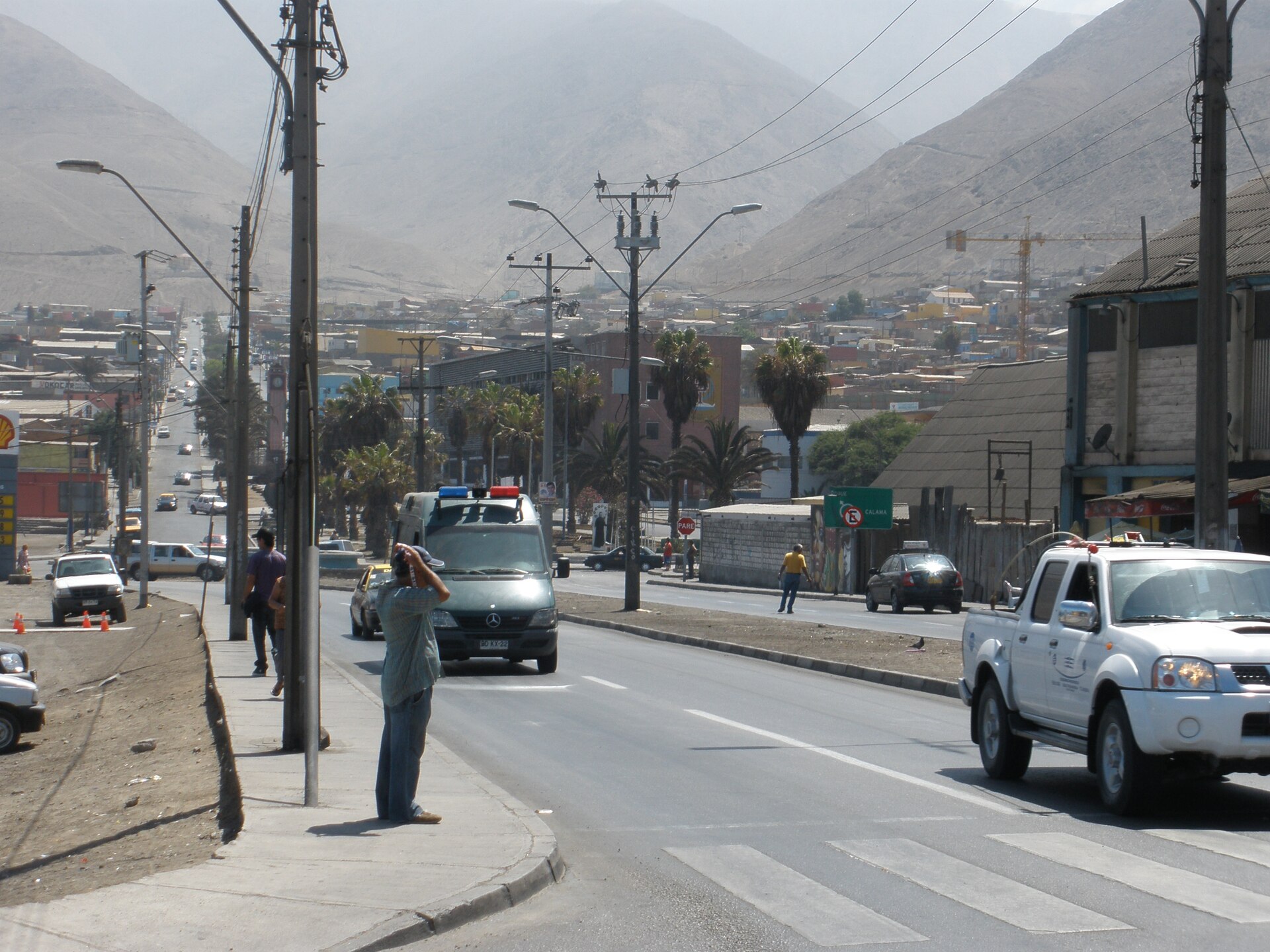
Time moves slowly here. The square sits in the center of this northern Chilean port city, small but holding more than its size suggests. It’s where history brushes against daily routines—where locals meet, walk, or rest under the trees. Around it, low administrative buildings, cafés, and shops stand close together. By evening, families, teenagers, and older residents fill the space, each absorbed in their own conversations.
The square is named after Arturo Prat, a naval officer who died in 1879 during the Battle of Iquique. Chile was fighting Peru and Bolivia for control of nitrate-rich lands, and Prat’s death turned him into a national symbol. His name appears across the country—in monuments, schools, and streets. In Tocopilla, a city shaped by resource struggles, his memory lingers because history and geography are never far apart.
The buildings around the square are plain. Tocopilla grew in the late 1800s as a port and industrial hub for nitrate mines. The structures are mostly two or three stories tall, made of brick and concrete, with flat roofs and large windows. Shutters block the sun. Some facades have neoclassical details—pilasters, cornices—but nothing is built for show. This was always a working town.
A bronze statue of Prat stands at the center, facing the sea. Flowerbeds bloom around it, even in the dry climate. Acacia and eucalyptus trees line the edges, their leaves providing shade in summer. When rare rains come in winter, the square briefly turns greener.
Tocopilla is full of contrasts, and the square reflects them. Here, history feels close—the nitrate wars, the rise and fall of mining, the workers who came from across Chile and beyond. But it’s also where life happens without pretense. In the mornings, vendors sell bread, fruit, and sweets. By midday, office workers stop for a quick meal. In the evening, voices fill the air—people talk about soccer, share news, or let their children play between the benches.
The square is where the city gathers. Festivals, protests, and concerts happen here, especially during national holidays like Independence Day or the anniversary of the Battle of Iquique. Flags go up, musicians perform, and dancers take the stage. For many, it’s one of the few chances to see live art—Tocopilla is far from Chile’s cultural centers. Most days, though, the square is just a place to walk, sit, or watch the world go by.
Tocopilla sits in the Atacama Desert, one of the driest places on Earth. Rain is rare. Summers can reach forty degrees Celsius, driving people indoors during the hottest hours. Winters, from May to August, are cooler, and the square feels livelier then. The city adapts—because it has to.
For visitors, the square isn’t a tourist spot. It’s a window into everyday life in Tocopilla. The city isn’t on most travel routes, and foreigners are uncommon. That’s part of why it feels real—history and modernity exist side by side, without fanfare. You come here to see how people live, to feel the city’s pulse.
Tocopilla has faced hard times. The nitrate industry declined, and the port’s activity slowed. People left. But the square remains. Friends meet, couples stroll, children play. Each morning, someone opens their shutters, steps outside, and walks past the monument, past the cafés, toward the city’s heart. It doesn’t ask for attention. It just endures.