Cobija is one of those places that slips through the cracks of history, even in Chile. Tucked along the northern coast near Tocopilla, it’s little more than a ghost town now, a scattering of ruins where a bustling port once stood. The only sounds here are the crash of waves and the occasional cry of a gull, but in the mid-1800s, Cobija was a cornerstone of Chile’s economy. Back then, it was the main export hub for nitrate, a mineral mined in the Atacama Desert and shipped from here to Europe and North America. The town thrived—warehouses, customs offices, homes, and a harbor crowded with ships. For a few decades, it was the kind of place where fortunes were made and lost, where the desert’s wealth flowed through its docks like water.
The rise and fall of Cobija are tied to the nitrate boom, a period that brought Chile wealth but also conflict. In 1879, the War of the Pacific erupted between Chile, Peru, and Bolivia, and control over this region was one of the war’s flashpoints. After Chile’s victory, Cobija remained under its flag, but its glory days were already numbered. By the early 20th century, nitrate’s demand had waned, and new technologies made its extraction less profitable. The port withered, and by the 1930s, the town was nearly abandoned. What remains today are the skeletal remains of buildings, rusted narrow-gauge railway tracks, and crumbling piers, slowly being reclaimed by the salt air and time.
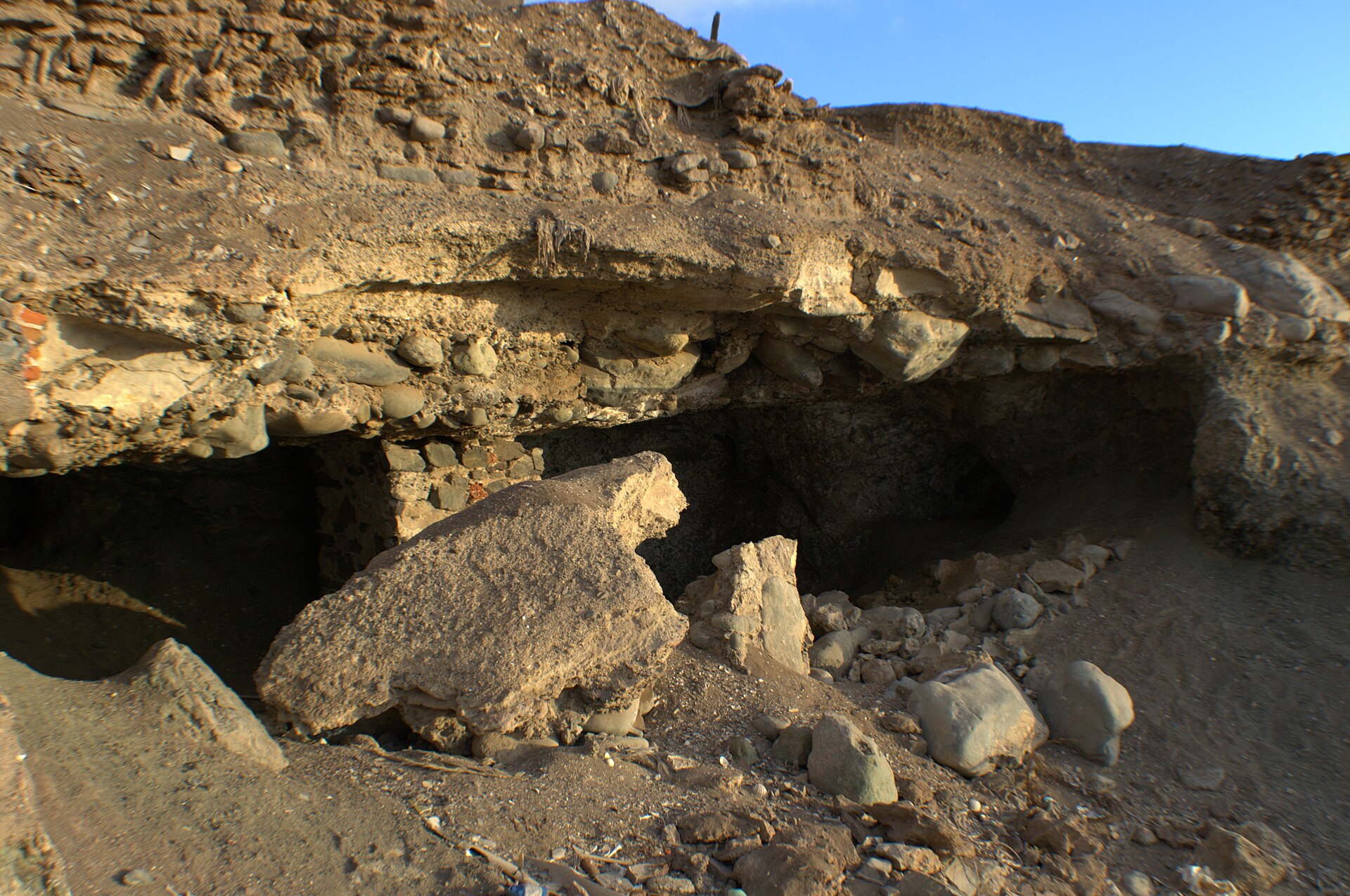
The architecture of Cobija reflects the practical needs of a 19th-century port town, with a touch of modest colonial influence. Buildings were constructed from wood and brick, their flat roofs designed to withstand the harsh coastal winds and the rare but heavy rains. Some structures still hint at their former grandeur—high ceilings, large windows, and carved wooden balconies—but most are now hollow shells, their walls cracked and their doors long gone. The old customs house stands out, a massive building with thick walls that once anchored the town’s trade. Even in its ruined state, it’s imposing, a silent witness to the commerce that once defined this place.
The Atacama Desert surrounding Cobija is one of the most unforgiving landscapes on Earth. Rain is almost unheard of, and temperatures swing wildly between day and night. The terrain looks almost otherworldly—barren earth, sparse cacti, and endless horizons where the sky bleeds into the land. Yet in the 1800s, this was a hive of activity. Nitrate was hauled from the desert’s depths to Cobija’s docks via a narrow-gauge railway, remnants of which still snake through the sand. The tracks are overgrown now, the wooden ties rotted away, but the route remains a faint echo of the thousands who once labored here, carving a living from the desert’s harsh embrace.
There’s a quiet, almost eerie stillness to Cobija. No crowds, no souvenir shops, no cafes—just the wind, the sand, and the ocean’s relentless rhythm. Locals from nearby towns sometimes visit, picking through the ruins or simply soaking in the solitude. For them, Cobija is a piece of history they’ve known since childhood, a place that’s long since faded into the past. Travelers who make the journey often describe a strange sensation, as if time has stalled here, leaving behind a world that moved to a different rhythm. It’s not a place that demands attention; it simply exists, a relic of an era that’s all but forgotten.
Despite its abandonment, Cobija still holds traces of the people who once called it home. Faded graffiti on walls, rusted tools, broken bottles—these fragments tell a story of lives lived in haste, of dreams tied to the fortunes of nitrate. The desert and the ocean have been slowly erasing these remnants, but they linger, stubborn reminders of a time when this was a place of industry and movement. There are no plaques or guided tours here, no curated exhibits. The ruins speak for themselves, in the language of decay and endurance.
Reaching Cobija isn’t easy. From Tocopilla, you head north along the coastal highway before turning onto a rough dirt road that leads to the shore. The journey is bumpy, and in the rare event of rain, the road can become impassable. But those who make the effort are rewarded with something rare—a glimpse of Chilean history stripped bare. There are no museums here, no explanatory signs, just the ruins, the ocean, and the desert, each telling their own story without words. It’s a place that doesn’t ask for admiration; it simply is, a quiet monument to the rise and fall of an industry that once shaped a nation.
Cobija isn’t just an abandoned town. It’s a testament to an era that transformed Chile, leaving behind little more than memories and ruins. For those who care about history, it’s a revelation—a chance to step into a past that’s usually confined to textbooks. Here, you can feel the weight of the labor that built Chile’s wealth, the fleeting nature of prosperity, and the relentless march of time. It’s not a place that tries to impress; it doesn’t need to. Its power lies in its honesty, in the way it stands as a reminder that even the most vibrant places can fade into silence.