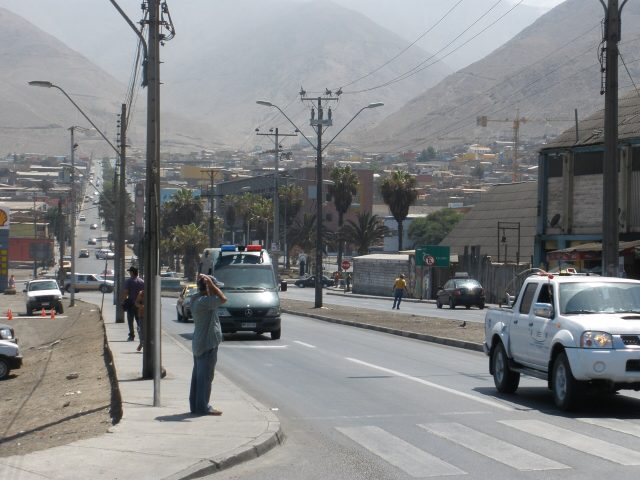
Juan López Park in Tocopilla is the kind of place that doesn’t announce itself to travelers. Instead, it lingers quietly in the memory long after you’ve left—a small green refuge tucked into the vastness of the Atacama Desert, where the air carries the salt of the Pacific and the silence feels like a natural part of the landscape. There are no crowds here, no flashy attractions, no grand hotels promising luxury. Just open space, the occasional visitor seeking shade, and the slow rhythm of a town that has learned to exist between the desert and the sea.
Tocopilla itself was born from industry, rising in the late 19th century as a key port for nitrate mining, a trade that shaped northern Chile’s economy for decades. The city was a crossroads, a place where workers, goods, and supplies moved between the coastal ports and the inland mines. Juan López Park came later, when Tocopilla began to grow beyond its industrial roots, becoming a place where people actually lived rather than just passed through. It was designed as a public space for the community—a place to escape the heat, to walk, to gather. In a region where water is scarce and the sun relentless, even a modest park becomes something precious.
The park’s design is simple, almost unassuming. There are no ornate fountains or elaborate sculptures, just well-worn paths winding between trees planted to provide shade, small clearings with benches, and an open-air stage at the center. Occasionally, local events take place here—concerts, festivals, or community gatherings—but most of the time, it’s just a quiet spot where people come to sit. The palm trees and drought-resistant plants give the park a faintly Mediterranean feel, though the nearest olive groves are thousands of kilometers away. It’s a place that doesn’t try to impress; it just exists, serving its purpose without pretension.
Scattered throughout the park are a few monuments, each telling a small piece of Tocopilla’s story. One commemorates the victims of the 1995 earthquake, a disaster that left deep scars on the city. Another honors Chilean sailors, a nod to the town’s enduring connection to the sea despite its desert surroundings. These memorials aren’t grand or imposing, but they’re deeply local—markers of a community’s resilience and its ties to both the land and the ocean. For those who take the time to notice, they offer a glimpse into the lives of the people who call this place home.
The park changes with the hours of the day. Mornings are cool and still, the air crisp with the scent of salt carried inland by the breeze. By midday, the sun is fierce, and the park becomes a sanctuary for anyone seeking relief from the heat. Under the trees, the temperature drops just enough to make the shade feel like a gift. Sometimes, a stray dog will stretch out on the grass, indifferent to the world. Evenings bring life back to the park—families with children, groups of teenagers sharing snacks, older residents taking their evening walks. It’s then that the park feels most like the heart of the neighborhood, a place where people come not just to rest, but to connect.
For most travelers, Tocopilla isn’t a destination. It’s a stopover, a place to refuel on the way to somewhere else—San Pedro de Atacama, Iquique, or the other, more famous corners of northern Chile. And that’s part of what makes Juan López Park worth visiting. There’s no tourist infrastructure here, no guided tours or souvenir stands. Just a quiet corner of a working town, where the daily rhythms of life unfold without fanfare. It’s a chance to see how people adapt to living in one of the driest places on earth, where even a patch of green feels like a small miracle.
The plants in the park are survivors. They’re low to the ground, their leaves thick and waxy, evolved to hold onto every drop of moisture. They don’t bloom in extravagant colors or grow tall and lush, but they endure. In that way, they’re a lot like the people of Tocopilla. The city has weathered economic collapses, natural disasters, and the slow decline of the industries that once sustained it. Yet it persists, reinventing itself in small ways. The park is a reminder of that resilience—not just of the plants, but of the community that tends to them.
If you find yourself in Tocopilla, don’t rush through. Take an hour to wander into Juan López Park. Sit on one of the benches, watch the people who come and go, listen to the wind moving through the palm fronds. You might begin to notice the way the light shifts over the desert hills, or the way the sound of the ocean seems to follow you even here, far from the shore. It’s a place where time moves differently—slower, steadier, shaped by the land itself. And if you’re lucky, you’ll leave with something more than just a memory: a sense of what it means to live in a place where beauty isn’t given, but earned.