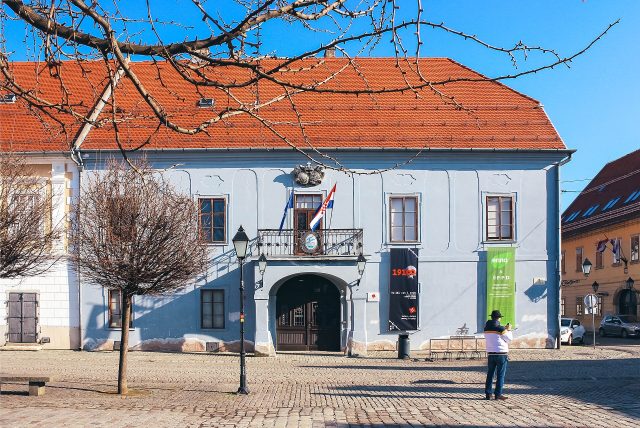
Ante Starčević Square in Osijek is one of those places where the city breathes at its own unhurried pace, yet you can still feel the pulse of history beneath the surface. Tucked in the heart of the Upper Town, it’s where old streets leading to the Drava River embankment intersect with the rhythms of modern life—cafés humming with conversation, shops displaying local goods, and people going about their day. The square itself isn’t large, but its significance stretches far beyond its size. Named after Ante Starčević, a 19th-century politician and thinker whose ideas shaped Croatian nationalism and independence, the square isn’t just a tribute to his legacy. It’s a reminder of how deeply politics, culture, and everyday life are woven together in Croatia.
The architecture here tells a story of gradual evolution, with each building reflecting a different era. The most striking structure is the City Library and Reading Room, built in the early 20th century in a restrained neoclassical style. Its façade, with tall windows and symmetrical columns, exudes a quiet dignity—fitting for a place where people come not just for books, but for moments of quiet reflection, a chat with a friend, or a coffee on a bench. Nearby, a small fountain surrounded by flowers offers a modest but inviting spot where locals often pause to rest in the summer heat.
Just steps away stands the former Chamber of Commerce, now home to the city administration. Its façade is adorned with intricate stucco work and wrought-iron balconies, while inside, high ceilings and wooden paneling hint at its storied past. This building has witnessed countless decisions that shaped the region, from the bustling trade of the Austro-Hungarian era to the administrative work of today. It’s a symbol of continuity, a place that has adapted over time without losing its character.
Ante Starčević Square isn’t just an architectural ensemble—it’s a stage for Osijek’s daily life. Mornings bring students hurrying to nearby university lectures and retirees taking leisurely strolls along the cobblestones. By midday, the square fills with the laughter of children playing near the fountain and the murmur of conversations spilling from café terraces. As evening falls and the streetlights flicker on, the square transforms into a gathering place. Couples meet for dates, friends catch up over drinks, and others simply sit on benches, watching the city wind down.
The square takes on a special charm during local festivals. In December, it becomes the heart of Osijek’s Christmas market, with wooden stalls selling handmade crafts, mulled wine, and traditional sweets. The air is thick with the scent of cinnamon and roasted chestnuts, and strings of lights cast a warm glow over the scene. In summer, the square hosts open-air concerts, drawing crowds from across the city and turning it into a cultural hub for a few magical evenings.
Despite its historical weight, the square never feels like a museum exhibit. It’s alive, and that’s what makes it so appealing. Unlike the tourist-packed streets of Dubrovnik or Split, Ante Starčević Square offers a glimpse of Osijek as it truly is—unhurried, welcoming, and a little provincial, but with a quiet dignity all its own. Locals have a soft spot for this place, whether it’s tied to childhood memories, first dates, or the familiar route to work.
If you find yourself in Osijek, take a moment to linger here. Walk its perimeter, step into a café for a coffee or a glass of local wine, and listen to the sounds of the city. You might hear the clatter of a passing tram, the shouts of children running by, or just the hum of everyday life. Or perhaps you’ll sense the rhythm that makes Osijek so captivating—a place where history and modernity coexist so naturally that it feels as though they’ve always been part of the same story. Ante Starčević Square isn’t just a spot on the map; it’s a slice of Croatian life, where the past and present flow together seamlessly.