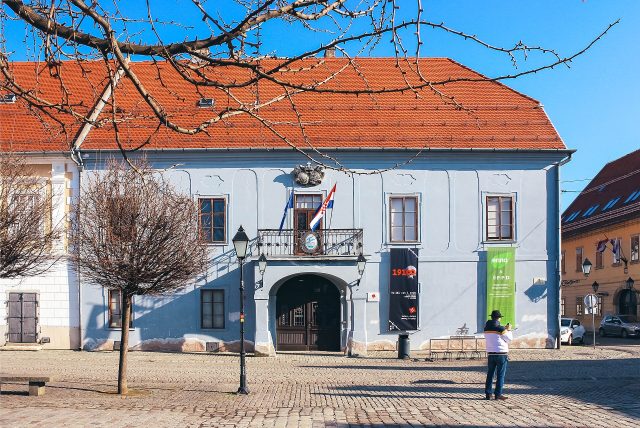
King Petar Krešimir IV Park sits in the center of Osijek, where the city’s noise softens into rustling leaves and slow footsteps. It’s not just a place to walk—it’s a green refuge where history, nature, and local life blend without fuss. Wide paths, tall trees, and benches ask you to stop, breathe, and stay awhile.
Osijek’s past is layered: Habsburg rule, Slavic traditions, and the marks of war. The park appeared in the late 1800s, when the city grew under Austro-Hungarian influence. Public spaces then were designed for leisure and comfort. The park’s name honors a medieval Croatian king, though it has no direct link to his time—just a quiet tribute to heritage.
The park’s appeal is simple. No grand fountains or monuments, just cared-for paths, mature trees, and small pavilions. The music pavilion, built in the early 1900s, still stands. Once, live performances filled the air here. Now, it’s a quiet reminder of how public life has changed.
For locals, the park is part of daily life. In summer, its shade offers relief from the heat. People read, talk, or sip coffee on benches. Winter changes it—bare branches and snow give it a different look, but the paths stay busy. Spring and autumn are best: blooming chestnuts or golden leaves make it feel like a pause from the city.
The park hosts small festivals, concerts, and art shows. It’s where people meet, have first dates, or picnic with family. There’s no fuss—just a place that feels like part of the city’s rhythm.
Osijek is called a city of three cultures: Croatian, Hungarian, and Austrian. The park reflects this mix. You won’t see clear divisions, but you can feel how different eras shaped its paths and plants. One alley is named after composer Ivan Zajc, another after writer August Šenoa—small details that tie the present to the past.
The park doesn’t stand alone. On one side, it meets the Drava River promenade; on the other, it borders Art Nouveau districts. This connection makes it feel like part of the city, not just a separate spot. Osijek has other green spaces, but this one feels like where the city exhales.
After the 1990s war, many public spaces were neglected. Local efforts brought them back. Today, the park is well-kept—trees pruned, paths clean—but it never feels like a museum. It’s a living space, still changing with the city.
For visitors, the park isn’t a must-see. No crowds, no souvenir stands, no guides calling out. Just a quiet bench, birdsong, and the slow pace of a Croatian city. Maybe that’s the point—it doesn’t try to impress. It just lets you be.