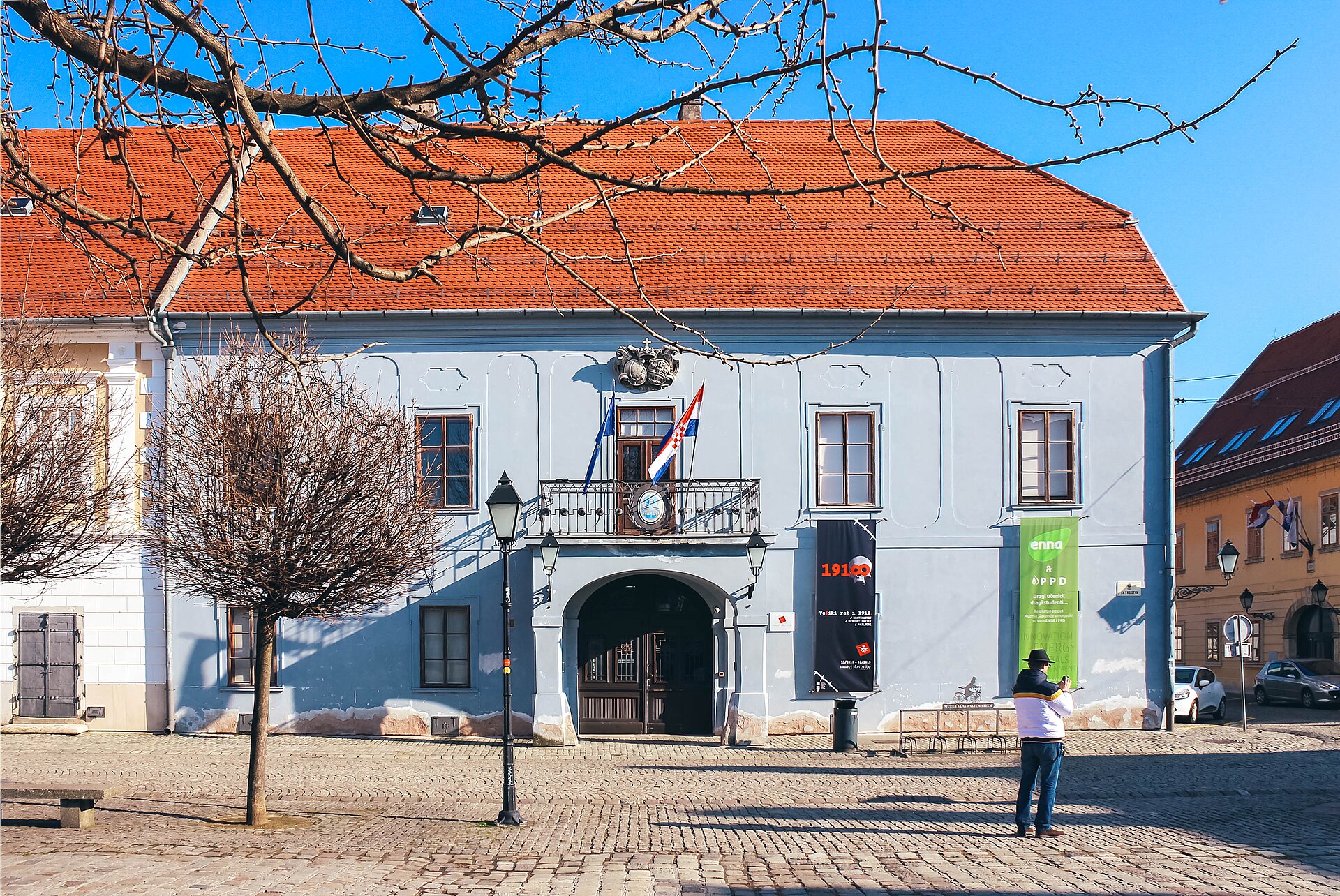
The Museum of Slavonia in Osijek is one of those rare places where history doesn’t just sit behind glass—it lingers in the air, in the creak of old floorboards, in the way light falls through tall windows onto objects that have witnessed centuries. Housed in a former city magistrate’s building from the 18th century, the museum itself is part of the story it tells. The structure was built when Osijek was a key administrative hub of the Habsburg Empire, and its architecture still carries the weight of that era: soaring ceilings, heavy oak doors, intricate stucco work, and tiled stoves that once warmed the offices of officials. The blend of Baroque grandeur and neoclassical restraint reflects the city’s golden age, when it thrived as a crossroads of trade and governance.
Founded in the late 19th century, the museum emerged during a time when Europe was rediscovering its regional identities. As interest in Slavic history grew, local collectors—nobles, merchants, and craftsmen—began donating everyday items, documents, and artworks that would form the core of the museum’s holdings. What started as a modest assembly of local relics gradually expanded into a comprehensive portrait of Slavonia, the vast eastern region of Croatia where cultures have long intersected. The museum doesn’t just chronicle Osijek’s past; it captures the broader narrative of a land shaped by rivers, borders, and the people who crossed them.
One of the museum’s most compelling sections is its archaeological collection, which traces the layers of human settlement along the Drava and Danube rivers. Here, you’ll find tools, pottery, and jewelry left behind by Illyrians, Romans, and early Slavs. The Roman artifacts are particularly striking—fragments of mosaics, tombstones, and religious objects that hint at the region’s importance as a frontier of the empire. These pieces remind visitors that Slavonia was once a distant outpost of Rome, long before it became part of the Croatian kingdom.
The medieval and Ottoman periods are explored in another gallery, where weapons, armor, and maps tell the story of a contested land. For centuries, Slavonia was a battleground between Hungarian kings, Ottoman sultans, and Habsburg emperors. The museum preserves relics from these turbulent times, including household items that reveal how daily life adapted under different rulers. A highlight is the collection tied to Osijek’s liberation from Ottoman rule in the late 17th century, when the city became a Habsburg stronghold and flourished as a military and commercial center. The exhibits here don’t just describe history—they evoke the tension and resilience of a place caught between empires.
The ethnographic displays are among the museum’s most vivid. Traditional Slavonian costumes, embroidery, ceramics, and musical instruments fill the rooms, alongside reconstructed interiors of 19th-century peasant homes. Low ceilings, handmade furniture, and clay dishes transport visitors to a time when life revolved around the land. What makes these exhibits so engaging is how they reveal the region’s cultural mosaic—where Slavic, Hungarian, German, and even Turkish influences merged over generations. The result is a distinct identity, one that feels both familiar and foreign to modern eyes.
Art has always been central to the museum’s mission. The collection includes paintings and sculptures by local artists from the 18th to 20th centuries, as well as works by those who drew inspiration from Slavonia’s landscapes. Portraits of noble families, scenes of Osijek’s surroundings, and religious art offer glimpses into the region’s aesthetic evolution. Some of the most moving pieces depict Slavonia’s natural beauty—oak forests, floodplains, and rivers that have sustained life here for millennia. These works aren’t just decorative; they’re a testament to how deeply the land has shaped its people.
What sets the Museum of Slavonia apart is its ability to make history feel immediate. Temporary exhibitions, lectures, and workshops keep the space dynamic, while interactive elements invite visitors to engage with the past in unexpected ways. You can try on a replica of medieval armor, practice writing with a quill, or listen to recordings of traditional folk songs. These small experiences turn a museum visit into something more than a passive tour—they create moments of connection, where the past isn’t just observed but briefly lived.
Osijek itself is a city of layers, and the museum helps peel them back. Walking through its halls, you begin to understand why Slavonia has always been a place apart—a region where civilizations collided, where languages and faiths mingled, and where every era left its mark. The museum doesn’t try to tell the whole story at once. Instead, it offers fragments, glimpses of lives that unfolded in these very streets. For locals, it’s a place of memory; for visitors, it’s a quiet revelation. In a world where history is often reduced to dates and headlines, the Museum of Slavonia reminds us that the past is made of people, places, and the things they left behind.