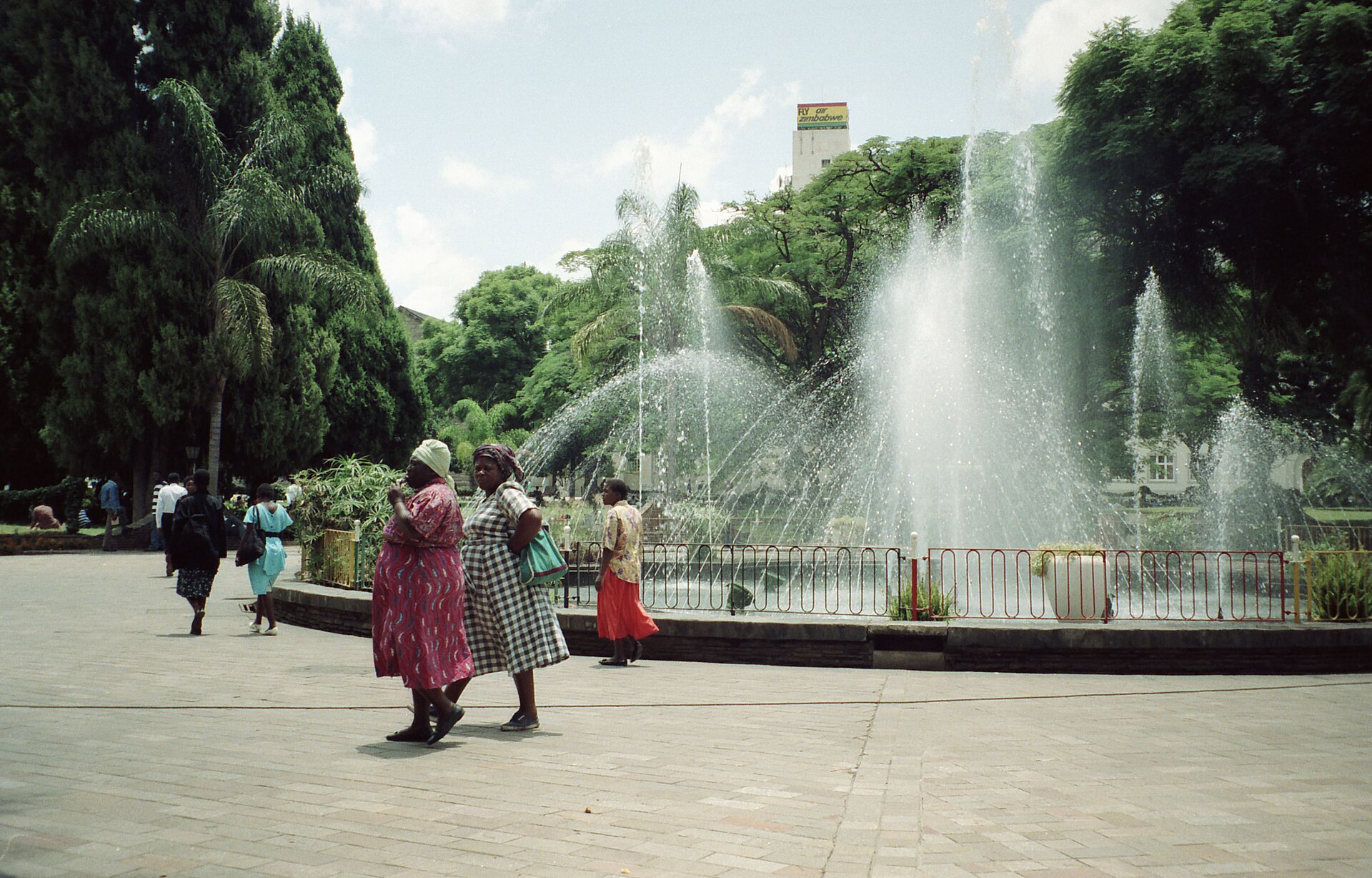
Africa Unity Square sits in the center of Zimbabwe’s capital, a five-minute walk from the government buildings and the main business district. It doesn’t look like the plazas of Europe or the squares of other African capitals. Instead, it feels like a pause in the city’s rhythm—people gather here not for spectacle, but to sit, talk, or eat lunch.
The square began as Cecil Square during colonial rule, named after Cecil Rhodes. For decades, it was a symbol of white minority power, its layout and surrounding buildings reflecting that era. The old facades remain, though the name and meaning have changed.
After independence in 1980, it was renamed Africa Unity Square. The change marked how Zimbabwe saw itself—no longer tied to colonial history, but part of a broader African identity. Today, it’s a modest space: benches, worn paths, and vendors selling snacks or newspapers. No statues, no monuments, just a place where people come and go.
The buildings around the square tell their own story. The Reserve Bank of Zimbabwe, with its stark modernist design, stands on one side. Nearby, colonial-era structures now house government offices and small businesses. The contrast between old and new is quiet but constant.
What makes the square worth noticing is how ordinary it is. It hasn’t become a tourist spot, but it holds decades of change. On any day, you might see students arguing under the trees, vendors setting up stalls, or men playing chess on folding boards. The square doesn’t ask for attention—it just absorbs the city’s life.
If you walk through Harare’s center, stop for a few minutes. The square isn’t a place to spend hours, but it feels real—no crowds, no souvenir shops, just a quiet corner. Sit on a bench, and you’ll see how it changes: mornings are quiet, midday slows down, and by late afternoon, people fill the paths on their way home.
The name, Africa Unity, echoes the ideals of Zimbabwe’s early independence years. The country’s struggles have often overshadowed those ideals, but the square still stands as a small reminder. It’s not a place for speeches or grand events, but for everyday moments—conversations, shared meals, or just occupying the same space.
Africa Unity Square mirrors Harare itself. The city has seen colonial rule, independence, economic highs and lows, yet life continues. The square doesn’t pretend to be more than it is: a patch of green in the city, where history lingers and the future unfolds one small moment at a time.