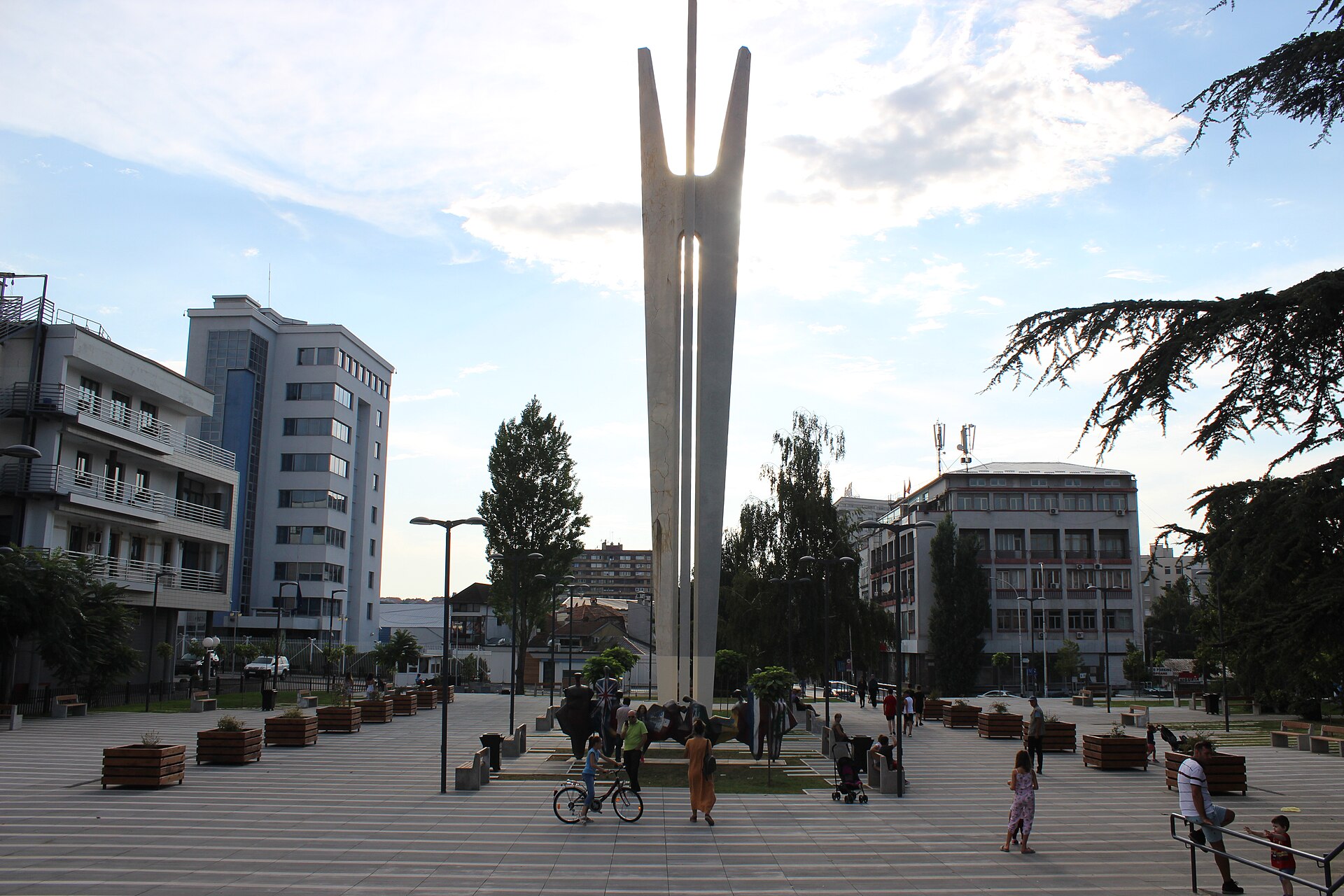
Adem Jashari Square in Orahovac is one of those places where history isn’t confined to museums or plaques—it lingers in the air itself. Tucked in the heart of the town, where the main streets converge, it’s a space where daily life unfolds without pretense. Locals sip coffee at open-air cafés, children dart around the fountain, and elderly men debate the day’s news on benches. Beneath this ordinary rhythm, though, lies a quiet acknowledgment of the past, one that the town carries without fanfare.
The square takes its name from Adem Jashari, a key figure in the Kosovo Liberation Army and a symbol of the region’s struggle for independence. In the late 1990s, Orahovac found itself at the center of conflict, and this square, like the rest of the town, bore witness to those turbulent years. Today, there are no grand memorials or towering monuments—just the name itself, a subtle reminder of those who shaped Kosovo’s future.
The architecture surrounding the square is unassuming, much like the town itself. Most buildings are two or three stories high, their facades weathered by time, with peeling plaster and wrought-iron balconies that hint at Yugoslavia’s architectural legacy. Signs in Albanian and Serbian script hang above small shops, adding to the sense that Orahovac isn’t trying to impress anyone. At the center of the square, a modest fountain trickles water into a stone basin, its gentle sound blending into the hum of everyday life. There are no elaborate sculptures or grand designs—just the simple, steady rhythm of water, a small respite from the noise of the town.
Orahovac isn’t a place that draws crowds of tourists. It’s a working town, where life moves at its own pace, and people are accustomed to being overlooked by travelers. There are no luxury hotels or fine-dining restaurants here, but there are family-run cafés serving hearty, traditional dishes—flaky burek stuffed with cheese or spinach, slow-cooked meat stews, and fresh, crusty bread. Adem Jashari Square is where you can sit unnoticed and watch the town go about its day. In the mornings, vendors from the market set up nearby; by afternoon, schoolchildren spill onto the pavement; and in the evenings, locals gather to enjoy the cool air.
For those curious about Kosovo’s history, Orahovac and its central square offer a glimpse into how people live in places where the past isn’t just a memory—it’s still part of the present. There are no political slogans or dramatic declarations here, just the quiet dignity of a town that remembers. The square doesn’t claim to tell the whole story of the conflict; it simply exists as a part of daily life, where every conversation and every stone carries echoes of what came before.
Wander down the streets branching off from the square, and you’ll find small shops selling local goods—honey, homemade cheeses, bundles of dried herbs. Occasionally, you might come across handcrafted items: embroidered tablecloths, wooden spoons, or rustic pottery. These aren’t mass-produced souvenirs but things made with care, reflecting the town’s traditions. There’s no touristy kitsch here, just the kind of authenticity that comes from a place that hasn’t been polished for outsiders.
As evening falls, the square takes on a different energy. Streetlights flicker on, music drifts from cafés, and the scent of grilled meat and coffee fills the air. Teenagers linger by the fountain, older men play backgammon at outdoor tables, and families stroll along the pavement. In these moments, Adem Jashari Square feels less like a landmark and more like a living room for the town—a place where different generations and stories intersect. There’s no grand spectacle, just the easy rhythm of a community that knows its own worth.
To a traveler passing through, the square might seem unremarkable. But that’s precisely what makes it special. It doesn’t try to impress or perform; it simply is. Here, history and the present coexist without tension, where the weight of the past doesn’t overshadow the everyday. Maybe that’s why Adem Jashari Square leaves an impression—not through grandeur or drama, but through the quiet, unassuming dignity of a small town that understands its place in the world.