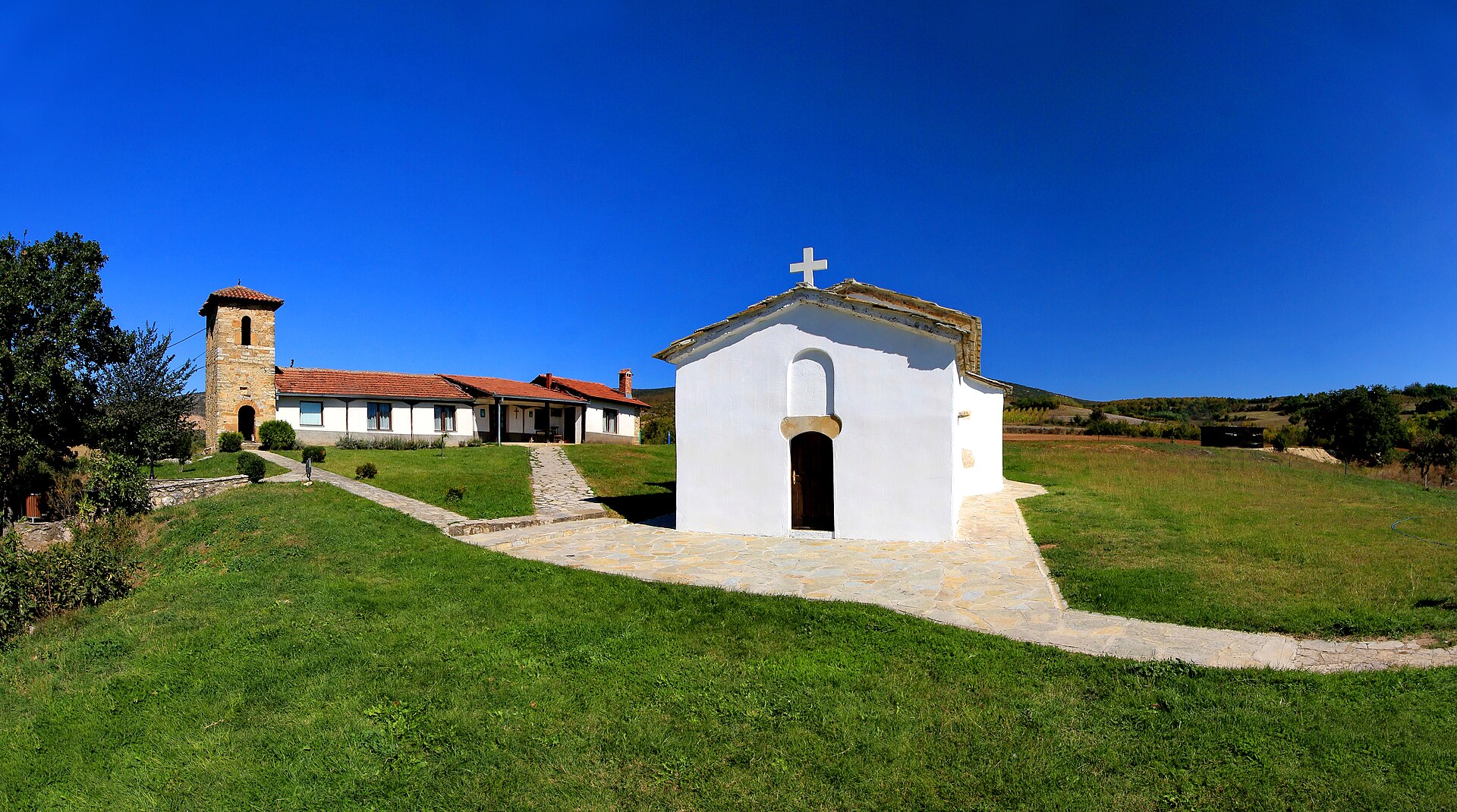
St. Nicholas Church in Orahovac is one of those places that doesn’t demand attention at first glance, yet lingers in the mind long after you’ve left. Perched on a gentle rise in the heart of the town, it’s surrounded by low-slung houses with terracotta roofs, as if the world here moves at a slower, quieter pace. The church itself is modest in size, but its unassuming presence carries weight—less a grand monument than a living piece of history that has weathered more than its share of storms.
Built in the 19th century, St. Nicholas belongs to a generation of Orthodox churches constructed in Kosovo during Ottoman rule. The era imposed strict limitations: churches couldn’t rival mosques in height or ornamentation, and their exteriors had to remain unobtrusive. That restraint is still visible today—plain stone walls, a squat bell tower, no flourishes or ostentation. Yet inside, the building holds what no decree could suppress: frescoes, icons, and an atmosphere that feels untouched by time.
The interior is small, bathed in the soft light that filters through narrow windows. The walls are adorned with traditional Orthodox murals, their colors muted but enduring. There’s no gilded splendor here, no overwhelming opulence—just a quiet authenticity, as if each brushstroke carries the weight of generations. The wooden iconostasis has darkened with age, its saints gazing out with a warmth that feels almost human. Over the years, the wood has absorbed the scent of incense and candle wax, the faint traces of countless prayers.
Orahovac has seen its share of upheaval, and St. Nicholas Church has stood through it all. During the conflicts of the late 20th century, many Orthodox churches in Kosovo were damaged or destroyed, but this one survived. Perhaps because it was never a symbol of power or wealth—just a place where people gathered not for spectacle, but for solace. Today, services are still held, though the congregation has dwindled. Those who attend now do so not out of habit, but out of something deeper.
The church is nestled within the old quarter of Orahovac, where narrow streets twist between tightly packed houses, their balconies nearly touching overhead. It’s easy to imagine life here a century or two ago—the same stone facades, the same terracotta roofs, the same sounds of creaking doors and distant voices. St. Nicholas feels like a natural part of this landscape, as if the town would be incomplete without it. It doesn’t strive for grandeur; its strength lies in its quiet persistence.
For visitors who come to Orahovac not as tourists but as guests, the church can be an unexpected discovery. There are no crowds, no souvenir stalls, no signs urging you to hurry. Just silence, the scent of aged wood and beeswax, the occasional creak of floorboards. Sometimes, you might hear the murmur of a prayer or the rustle of pages in a prayer book. This isn’t a place for quick visits—it’s one to pause in, to listen, to feel the weight of history in the air.
Kosovo is a land where cultures and faiths have long intertwined, and St. Nicholas Church is one of those rare places where that complexity isn’t a source of division, but a quiet harmony. It doesn’t claim to be extraordinary, yet it fits seamlessly into the fabric of the town. There’s no defiance in its walls, no bitterness over the past—just a quiet acknowledgment that life endures, no matter what.
If you ever find yourself in Orahovac, don’t rush past. Step inside, even if you’re not religious. You might not find the words for what you feel here—the sense of time folding in on itself, the unspoken connection between past and present, the way a simple stone church can hold so much more than its size suggests. But that’s the point. Some places don’t need to explain themselves. They just are.