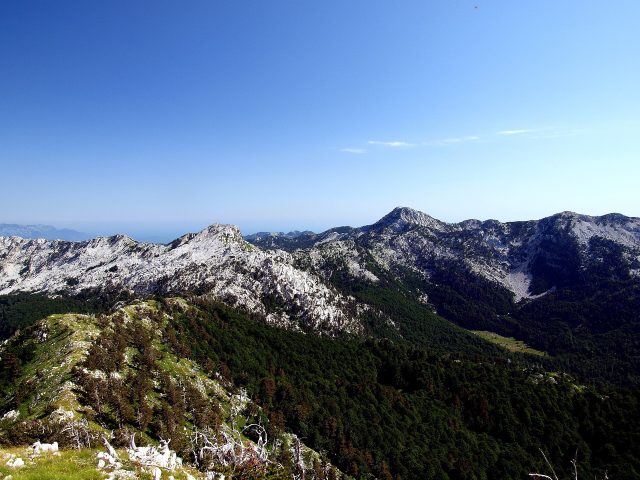
Lipci Beach is one of those quiet corners along Montenegro’s coast where the only thing waiting for you is the sound of waves and the scent of wild herbs carried by the breeze. Tucked between rocky cliffs near the village of Lipci, it feels like a hidden cove where time moves at its own pace. There are no rows of sunbeds, no beach bars blasting music, no crowds jostling for space—just smooth pebbles underfoot, clear water stretching toward the horizon, and mountains that seem to rise straight from the sea. The beach itself is small, but that only adds to its charm. Even in the middle of summer, it’s easy to find a quiet spot where the only company is the occasional seagull circling overhead.
Lipci isn’t a resort town, nor does it try to be. It’s a place where life unfolds slowly, shaped by the rhythms of the land and sea. The villagers here still fish at dawn, tend olive groves, and harvest grapes in the autumn, much as they have for generations. Most visitors come for the day, arriving by car or boat, content to swim in the cool water and soak in the view of the Bay of Kotor’s opposite shore, where tiny villages cling to the hillsides like clusters of white stone. The road to the beach winds through groves of gnarled olive trees and past old stone houses, their walls weathered by salt and sun. The descent to the water is steep, but the panorama that unfolds at the bottom makes the effort worthwhile.
The history of this stretch of coast is layered with the influence of empires—Byzantine, Venetian, Ottoman—each leaving its mark on the architecture and culture of the region. Yet Lipci Beach has always remained on the periphery of these grand narratives. For centuries, it was little more than a sheltered cove where fishermen moored their boats and travelers paused to rest. That sense of quiet continuity lingers today. There are no grand ruins or monuments here, just the same pebbled shore and the same endless blue of the Adriatic, as if the place has simply refused to change.
The water near the shore is remarkably clear, shifting from pale turquoise in the shallows to deeper blue further out. The pebbles underfoot are smooth but uneven, so water shoes aren’t a bad idea if you plan to spend much time walking along the beach. The seabed slopes gently at first, then drops away more steeply, so it’s possible to swim out a short distance and still feel the satisfying depth beneath you. Currents are usually mild, though a stiff breeze can churn up waves, so it’s worth keeping an eye on the conditions. By early June, the sea is warm enough for comfortable swimming, and in July and August, it becomes almost bath-like, though never as stifling as the waters further south.
There’s little in the way of amenities here—no cafés, no showers, no vendors hawking inflatable rafts. That’s part of the appeal, of course. Without the usual tourist infrastructure, the beach retains a sense of untouched simplicity. But it also means coming prepared. Locals occasionally set up impromptu stalls selling fresh figs or homemade cheese, but it’s best not to count on it. Bringing your own food, water, and shade is the surest way to avoid disappointment, especially if you plan to stay for the day. The trade-off is the kind of solitude that’s increasingly rare along the coast—interrupted only by the cry of a gull or the distant putter of a fishing boat.
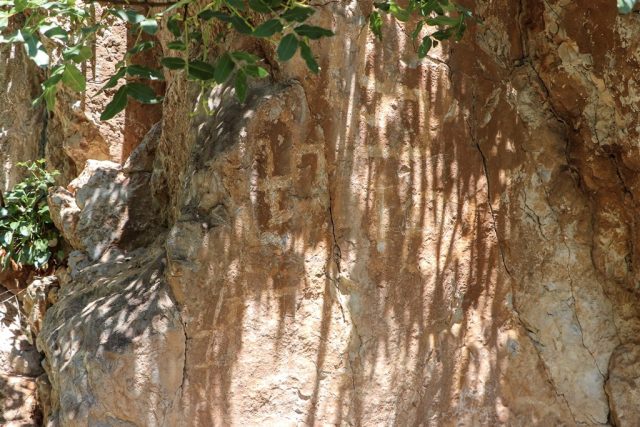
If you’re willing to explore beyond the beach, there are a few quiet attractions nearby. The village of Lipci itself is home to a handful of old stone churches, one of which dates back to the 17th century. Inside, the walls are adorned with faded frescoes and icons painted by local artists, their colors softened by time. More intriguing, though, are the ancient rock paintings hidden in the hills above the village. The carvings depict scenes of hunting and wild animals, their origins still debated by historians. Some believe they’re prehistoric, while others argue they’re more recent. Either way, their presence adds a touch of mystery to the landscape, a reminder that this quiet corner of Montenegro has been inhabited for far longer than the villages and churches suggest.
This isn’t a place for those seeking nightlife or guided tours. Lipci Beach is for people who prefer their holidays unscripted—where the highlight of the day might be watching the light shift across the water or discovering a secluded cove just around the bend. You could spend hours here with nothing but a book and the sound of the waves, or wander along the shoreline, where the cliffs form small grottos perfect for a private swim. In the late afternoon, as the sun dips behind the mountains, the sea takes on a golden hue, and the air fills with the scent of pine and salt. It’s the kind of place that lingers in your memory long after you’ve left.
Getting here requires a bit of effort. The most straightforward route is by car from Kotor, Tivat, or Herceg Novi, though the last stretch involves a winding mountain road with sharp turns. Parking is limited, and in peak season, spaces fill up quickly. Another option is to arrive by boat from Kotor or Perast, which offers a different perspective on the bay’s dramatic coastline. Either way, the journey is part of the experience—each turn in the road or shift in the wind revealing another layer of this rugged, beautiful landscape.
Lipci Beach doesn’t announce itself with grand views or flashy attractions. It’s the kind of place you stumble upon and then find yourself returning to, drawn by its unassuming beauty. There’s no luxury here, no fanfare—just the quiet satisfaction of a day spent in a place that feels untouched by time. For those who’ve grown weary of crowded resorts and overdeveloped coastlines, it offers something far more valuable: a chance to step back, breathe deeply, and remember what it’s like to simply be still.