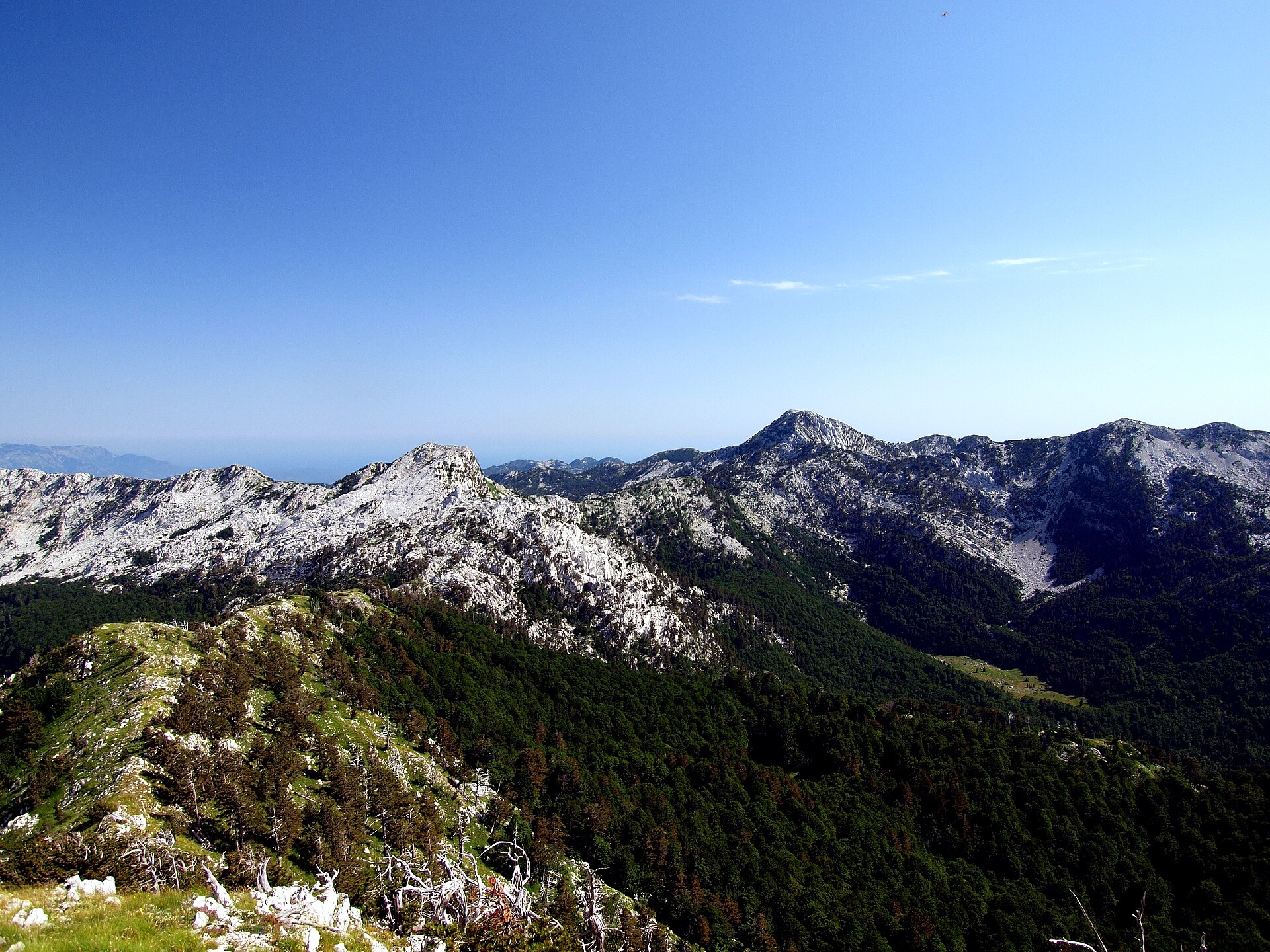
Mount Orijen rises above the Bay of Kotor like an ancient sentinel, its slopes steeped in the memory of empires long gone. Though not the tallest peak in Montenegro’s coastal range, its near 1,900-meter summit commands attention—not for its height alone, but for the way it anchors the landscape. On one side, sheer cliffs plunge toward the sea; on the other, gentler slopes roll into forests and meadows where wild thyme and sage scent the summer air. The mountain doesn’t impose itself; it simply *is*, as if it has always been part of the horizon, shaping the lives of those who live in its shadow.
The locals call it Orijen, plain and unadorned, as if the name carries all the weight of its past. And in a way, it does. For centuries, the mountain has been more than just a landmark—it was a natural fortress, a refuge, and a crossroads. In the Middle Ages, its slopes shielded villages in the valley below, while the paths winding toward its summit were trodden by shepherds, merchants, and even pirates lying in wait for ships in the bay. Those same trails are now walked by hikers, though the mountain hasn’t lost its wild, untamed edge. The past lingers here, not in grand monuments, but in the quiet persistence of the land itself.
The climb up Orijen is less about reaching the top and more about stepping into another time. Most begin in the village of Lipci, where narrow lanes and stone houses with terracotta roofs feel untouched by the centuries. The first stretch of the trail winds through olive groves and vineyards, where the same hardy grape varieties have been cultivated for generations, yielding the deep, earthy red wines of the region. As the path steepens, the trees thin out, giving way to rocky scree where lizards dart between stones and birds of prey circle lazily overhead. The higher you go, the more the world below seems to shrink, until the bay is just a sliver of blue in the distance.
About halfway up, a small chapel dedicated to Saint Elijah clings to the mountainside, its white walls nearly blending into the limestone. It’s easy to miss if you’re not looking for it, but those who pause here often do so without realizing why—perhaps for the view, or maybe for the strange sense of stillness that settles over the place. Locals say the chapel once guided travelers, and on the saint’s feast day, pilgrims would gather from all over the region. Now, it’s a quiet spot, a place to catch your breath and watch the bay unfold beneath you like a living map.
The summit of Orijen isn’t a jagged peak but a broad, windswept plateau, where low shrubs and grasses sway in the constant breeze. The air here feels lighter, as if the mountain has filtered out the noise of the modern world. On clear days, the view stretches beyond the Bay of Kotor to the Dalmatian islands of Croatia and, farther still, to the faint outline of Albania’s mountains. It’s a reminder of how this place has always been a crossroads—not just of landscapes, but of histories, cultures, and the slow, unhurried passage of time.
For those who prefer to experience Orijen without the climb, the mountain reveals itself just as powerfully from the water. Many of the small boats that cruise the bay pause at its base, where the cliffs drop straight into the sea. The water here is startlingly clear, so much so that you can see fish darting between the submerged rocks. Fishermen still work these waters, hauling in tuna and mackerel, though the larger vessels stay away—the shallows make it too risky. From the deck of a boat, Orijen looms like a silent guardian, its presence both imposing and strangely comforting.
This isn’t a mountain for those chasing Instagram moments or personal bests. There are no cable cars, no manicured viewpoints, no souvenir stands. Orijen demands something quieter: patience, curiosity, a willingness to listen to the wind and the stories it carries. The trails here were worn by generations of feet—shepherds, traders, maybe even smugglers—and the silence is broken only by the cry of gulls or the rustle of dry grass. It’s a place where the past isn’t just remembered; it’s still alive, breathing in the rocks and the sea air.
What makes Orijen special isn’t any single feature, but the way it holds everything together—the way the land, the sea, and the people who’ve lived here have shaped one another over centuries. You don’t conquer Orijen; you meet it, on its own terms. And if you’re lucky, you leave with the sense that you’ve touched something enduring, something that doesn’t need plaques or guidebooks to explain itself. The mountain has always been here. It will still be here long after we’re gone.