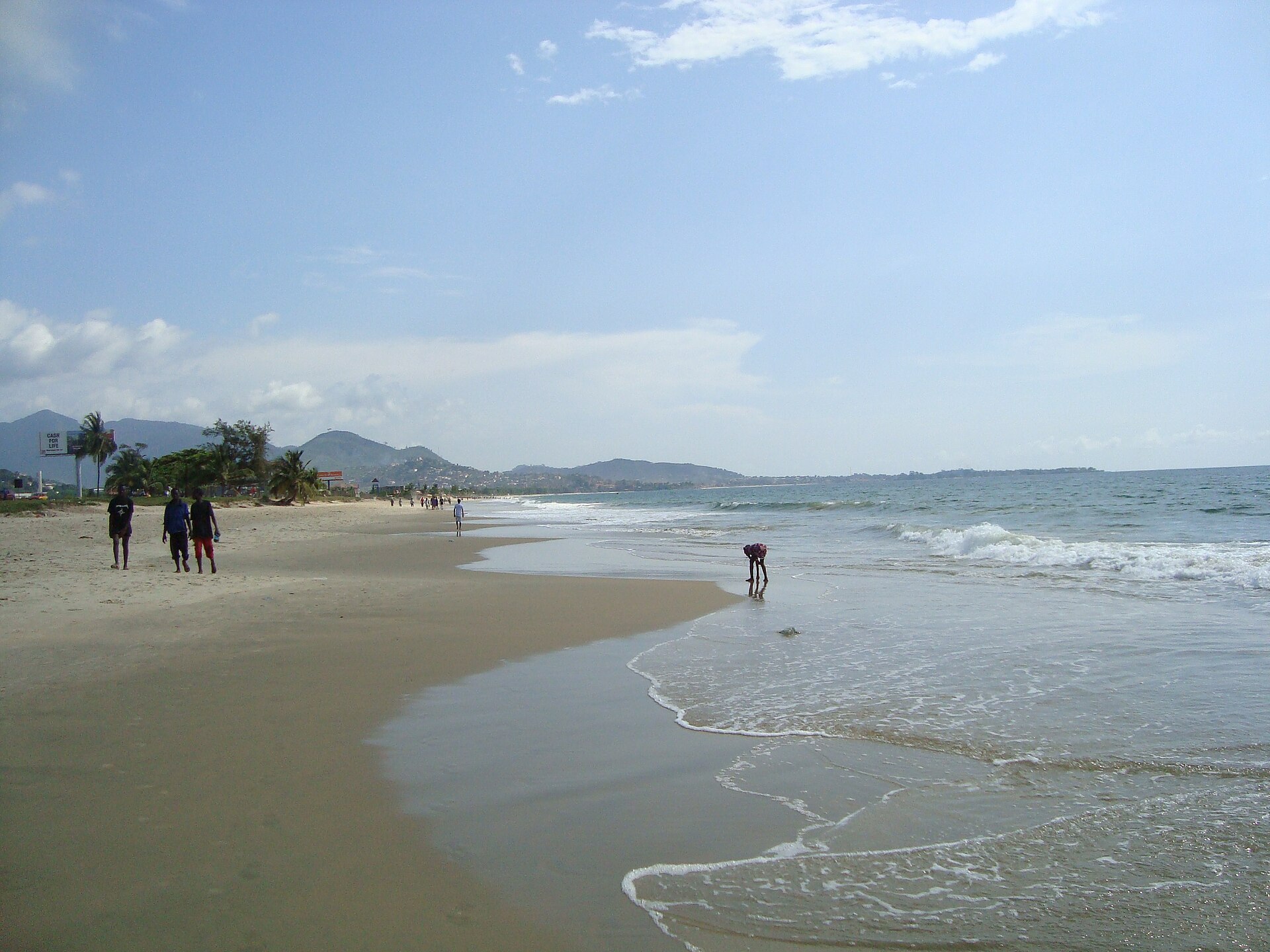
Lumley Beach is one of those places where the city and the ocean meet without much fuss. It stretches along the western edge of Freetown, where the capital’s hustle slowly gives way to the rhythm of waves and the occasional cry of seagulls. The sand here is dark, almost golden in the right light, and the water is warm year-round, though the currents can be strong—something locals know well and visitors learn quickly. Unlike some of the more secluded beaches further down the peninsula, Lumley is where Freetown comes to unwind, especially on weekends. You’ll see families setting up picnics under the palm trees, groups of friends playing football near the shore, and fishermen mending their nets in the shade.
The beach has been part of Freetown’s life for as long as anyone can remember, though its role has shifted over time. In the colonial era, it was a quiet stretch of coast where British administrators might have taken an evening stroll, far from the crowded streets of the city center. Later, as Freetown grew, Lumley became more accessible, and by the mid-20th century, it was already a popular spot for both locals and the small expat community. There’s no grand history here—no battles, no ancient ruins—but that’s part of its charm. It’s a place shaped by everyday use, by the slow accumulation of memories rather than monuments.
What makes Lumley stand out isn’t just the beach itself, but the way it blends into the city. Unlike some coastal areas that feel cut off from urban life, Lumley is very much part of Freetown. The road running parallel to the shore is lined with small restaurants, beach bars, and makeshift stalls selling grilled fish, cold drinks, and fresh fruit. In the evenings, the air fills with the smell of charcoal and spices, and the sound of music—usually highlife or Afrobeats—drifts from the open-air spots. It’s not a polished tourist destination, and that’s exactly why it feels authentic. The beach chairs are plastic, the umbrellas are faded, and the service is friendly but unhurried.
The water here is clear enough to see the sandy bottom when the waves are calm, though after heavy rains, the runoff from the city can make it murkier. Still, on most days, it’s inviting, especially in the early morning when the beach is nearly empty. By midday, the sun is intense, and shade becomes a necessity. The palm trees provide some relief, but if you want a proper break from the heat, one of the beachfront spots with a thatched roof is a good bet. Some places offer simple meals—rice with stew, fried plantains, or fresh lobster if you’re lucky—while others are just a place to sit with a cold drink and watch the ocean.
Lumley isn’t just for relaxation, though. It’s also a working beach. Early in the morning, before the crowds arrive, fishermen bring in their catch, hauling nets heavy with barracuda, snapper, or sometimes even shark. The fish market that springs up near the shore is chaotic but fascinating—a mix of bargaining, laughter, and the sharp tang of saltwater and fresh seafood. If you’re curious, you can buy a fish straight from the boat and have it grilled on the spot. It’s not a tourist experience, just a slice of local life, and that’s what makes it worth seeing.
The beach changes with the seasons. During the dry months, from November to April, the sand is drier, the skies are clearer, and the water is at its calmest. This is when Lumley sees the most visitors, both from Freetown and beyond. The wet season, from May to October, brings heavier rains and rougher seas, but also a different kind of beauty. The beach takes on a wilder, more untamed look, and the storms that roll in over the Atlantic can be dramatic. Fewer people come during this time, which means you might have long stretches of sand to yourself.
There’s no grand entrance to Lumley Beach, no ticket booth or official parking lot. You just walk down one of the side streets near the shore, and suddenly, the city falls away. The beach is public, free to access, and open at all hours, though it’s wise to visit during daylight. At night, the area can feel less safe, and the lack of proper lighting means the ocean becomes little more than a dark presence beyond the sand. But during the day, it’s one of the most welcoming places in Freetown—a spot where the city’s energy softens, if only for a little while.
If you’re staying in Freetown, Lumley is an easy escape. It’s close enough to the city center that you can visit for a few hours without much planning, yet far enough to feel like a break from the noise. There are no luxury resorts here, no infinity pools or beach butlers. What you get instead is something simpler: a place where people come to forget about time, where the ocean sets the pace, and where the only agenda is to enjoy the moment. It’s not the kind of beach you see in travel brochures, but that’s precisely why it feels real.