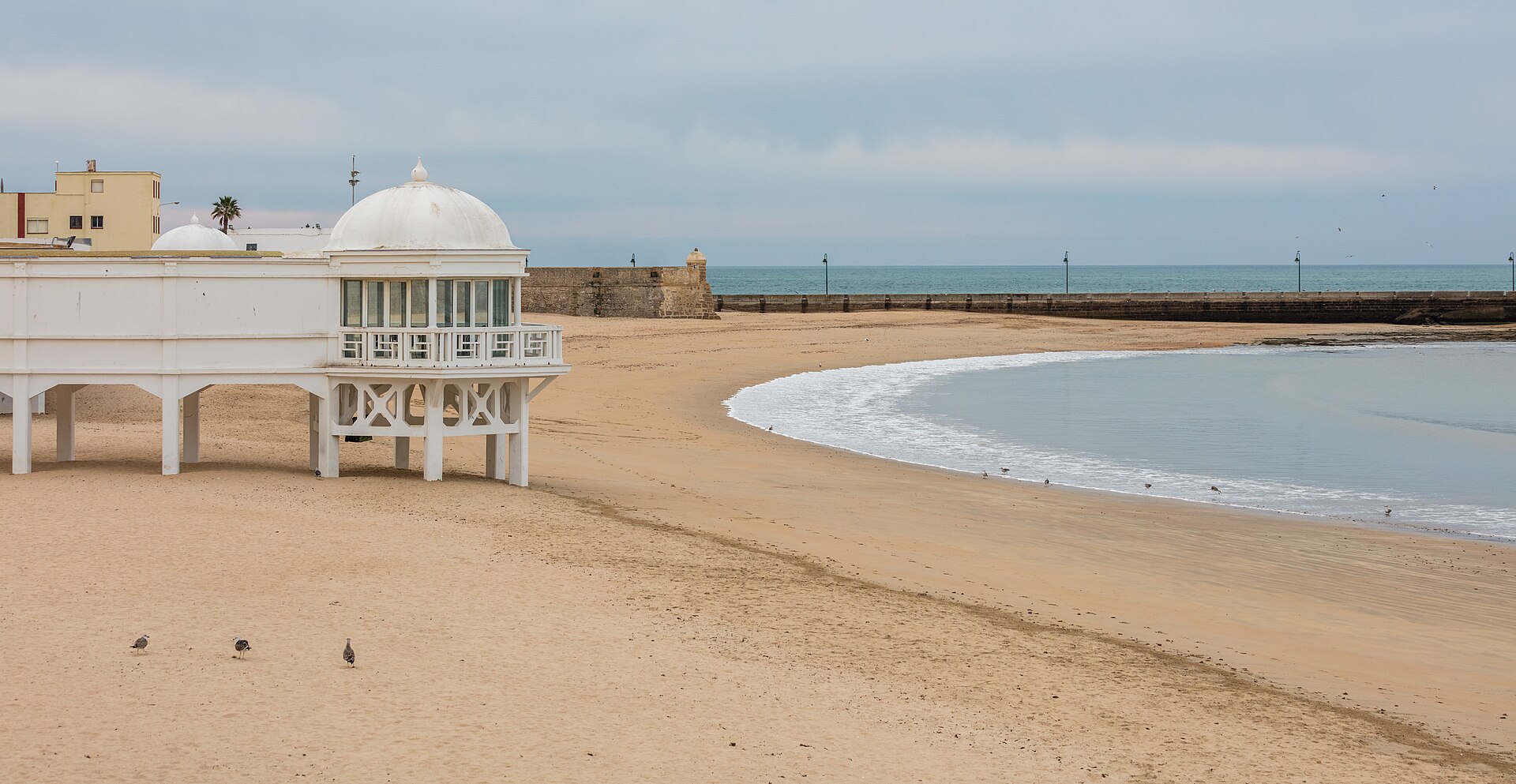
La Caleta is one of Cádiz’s most famous beaches, yet it couldn’t be more different from the endless stretches of sand along the Costa del Sol. There are no rows of sunbeds, no beachfront bars blaring music, no crowds of tourists sprawled under umbrellas—though in summer, it does get busy. Small and intimate, barely four hundred meters long, it’s nestled between two fortresses, San Sebastián and Santa Catalina, which give the place a timeless feel. The forts stand like silent guardians, as if the sea still laps at shores once defended against pirates and invading fleets.
The sand here is fine and pale, almost powdery, and the water shimmers with a faint greenish hue. At low tide, rocky patches emerge, revealing shells and tiny crabs clinging to the shallows. The beach slopes gently, making it safe for children, though the waves can be stronger than at other city beaches. Locals often come here with fishing rods, casting lines from the shore at dawn when the catch is best. Swimming is more pleasant around midday, when the water warms and the wind dies down.
La Caleta’s history is woven into the fabric of Cádiz itself. The city is one of Europe’s oldest, founded by the Phoenicians nearly three thousand years ago, and this beach was once part of its bustling harbor. Later, during the Age of Exploration, ships bound for the New World set sail from here. The fortresses flanking the beach were built in the 16th and 17th centuries to protect against maritime attacks. San Sebastián sits on a small island connected to the shore by a narrow causeway, while Santa Catalina juts into the bay, offering sweeping views of the coastline. Both forts are open to visitors, occasionally hosting exhibitions and concerts.
There’s a quiet, almost nostalgic atmosphere at La Caleta. No luxury hotels or upscale seafood restaurants line the shore—just a handful of simple bars where you can sip a cold beer or nibble on tapas under a shaded awning. Locals come here not just to sunbathe but to linger by the water, watching the sunset. As evening falls, the beach empties, and the lights from the fortresses reflect on the calm sea. On still days, the water turns glassy, making the city seem to float above it like a painting.
La Caleta isn’t just a beach; it’s part of Cádiz’s daily rhythm. In summer, it comes alive with festivals—flamenco performances, open-air music nights. Winter transforms it: the waves grow rougher, the wind sharper, the sea a steely gray. Surfers and kitesurfers brave the conditions, though the rocky seabed and shifting currents demand caution. Even in colder months, the place retains its charm, offering a different kind of beauty.
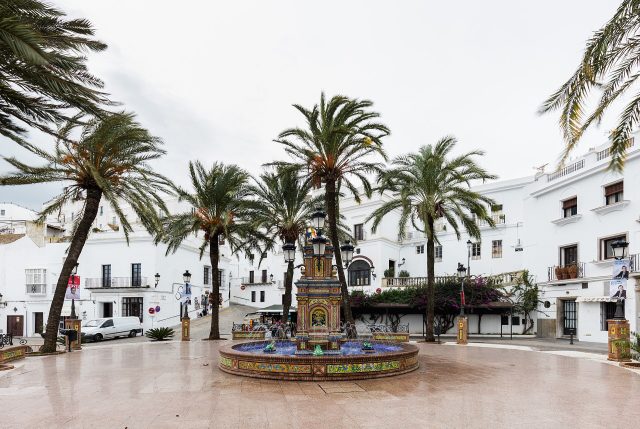
The architecture around La Caleta is worth exploring too. The nearby La Viña district is a maze of narrow streets lined with traditional Andalusian houses—whitewashed walls, wooden balconies, wrought-iron grilles. The area feels like a relic of old Cádiz, where life moved at a slower pace and neighbors knew each other by name. Small plazas with churches and fountains dot the neighborhood, preserving the soul of a historic port city.
This isn’t the kind of beach where you’d spend a week without leaving your sunbed. It’s smaller, quieter, more personal. But that’s precisely why it lingers in memory. There’s no rush here, no tourist hordes—just the sea, the history, and the sound of waves breaking against the shore. If you visit Cádiz, set aside time for La Caleta. Walk along the fortresses, swim in the cool Atlantic, then watch the sunset with a glass of wine. It’s a place that feels like a secret, even though it’s been here for centuries.