Tavira Tower stands as one of Cádiz’s most distinctive landmarks, a slender sentinel overlooking the old city’s labyrinth of streets and squares. Built in the eighteenth century, it was originally a watchtower, part of a network that monitored the bustling harbor below. In those days, Cádiz was Spain’s gateway to the Americas, a vital hub where ships laden with silver, spices, and colonial goods arrived from the New World. The tower’s purpose was practical—spotting incoming vessels, tracking their movements, and signaling their arrival—but its legacy is far more enduring. Today, it remains a quiet witness to an era when the city’s fortunes were tied to the sea, its skyline punctuated by the masts of merchant fleets.
The architecture of Tavira Tower is typical of Cádiz’s watchtowers, of which over a hundred and fifty once dotted the city. Most followed a similar design: a square base tapering upward to a small observation deck beneath a domed roof. What sets Tavira apart is not just its height—it’s one of the tallest in Cádiz—but the rare optical device housed within. The camera obscura, a system of mirrors and lenses mounted in the dome, projects a live image of the surrounding city onto a circular table below. The effect is mesmerizing. In the dimly lit chamber, the rooftops, church spires, and distant sea appear as if painted in real time, a fleeting snapshot of Cádiz unfolding before your eyes. It’s a reminder of how technology, even centuries old, can still feel like magic.
Climbing the narrow spiral staircase to the tower’s upper chamber feels like stepping into another century. The room itself is small, its walls bare except for the round table at its center. When the camera obscura is activated, the city outside seems to materialize on the white surface, shifting with the light, the movement of clouds, the sway of palm trees in the breeze. The illusion is so vivid that it’s easy to forget you’re not looking at a screen or a painting, but at the city itself, refracted through glass and time. The device has been refined over the years, but its core principle remains unchanged—a simple play of light and reflection that never fails to surprise.
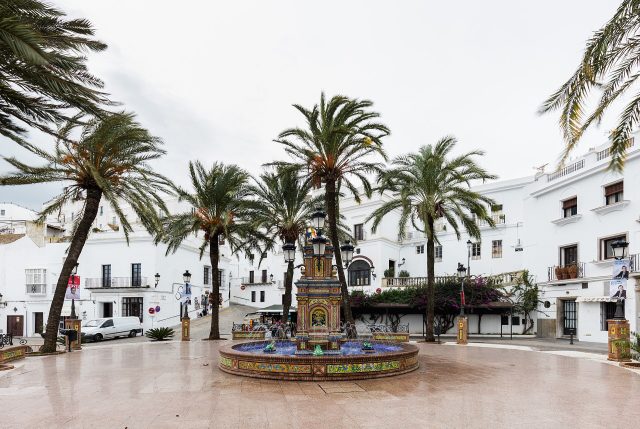
Tavira Tower is nestled in the heart of Cádiz’s old quarter, a neighborhood where time moves at its own pace. The streets here are narrow, paved with worn cobblestones that echo with the footsteps of centuries. Whitewashed houses line the alleys, their wrought-iron balconies draped in bougainvillea, their shutters painted in faded blues and greens. The air carries the scent of salt and orange blossoms, mingling with the occasional whiff of fried fish from a nearby tavern. This part of the city has resisted modernization, its charm lying in its unhurried rhythm, its refusal to conform to the expectations of a modern tourist hub. From the tower’s vantage point, the contrast between the old and the new is striking—Cádiz’s historic core remains largely untouched, while the outskirts stretch toward the horizon, a patchwork of low-rise buildings and industrial zones.
Cádiz is often called the oldest continuously inhabited city in Europe, a title that carries weight when you stand atop Tavira Tower. Founded by the Phoenicians around 1100 BC, it later became a Roman stronghold, a Moorish outpost, and finally, a Spanish maritime powerhouse. Each civilization left its mark, layering history upon history like sediment. Tavira Tower, though relatively young by Cádiz’s standards, fits seamlessly into this narrative. It represents the city’s golden age of trade, when fortunes were made and lost on the tides, when Cádiz was not just a port but a crossroads of the world. The tower’s presence is a reminder that even in its quieter moments, the city has always been defined by its relationship with the sea.
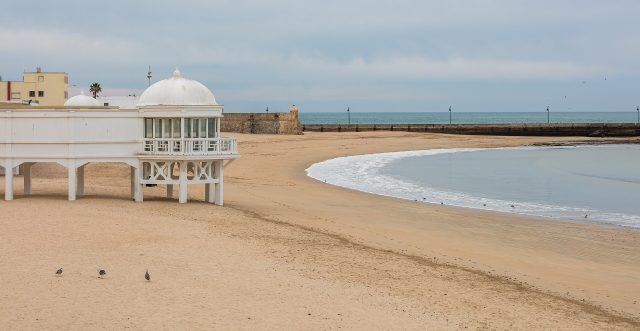
The view from the tower is one of those rare perspectives that makes a place feel both vast and intimate. On clear days, the gaze stretches beyond the city’s ancient walls to the bay, where fishing boats bob in the harbor and ferries glide toward the Atlantic. The domes of Cádiz’s cathedrals rise above the rooftops, their golden hues catching the sunlight, while the sea shimmers in the distance, a shifting canvas of blues and greens. At dusk, the city transforms. The streetlights flicker to life, casting a warm glow over the plazas, and the horizon blurs into a soft, indigo haze. It’s a view that lingers in the memory, not because it’s dramatic, but because it feels authentic—a snapshot of a city that has learned to live in harmony with its past.
Tavira Tower is more than just a historical curiosity; it’s a living part of Cádiz’s identity. The tradition of watchtowers, once essential for maritime trade, has faded, but the city still clings to its seafaring roots. Many of the old towers have been repurposed as homes or cafés, their original function forgotten. Tavira, however, remains true to its purpose. It may no longer be used to track ships, but it still offers a way to observe the city, to connect with its rhythms. Locals often share stories about the tower, though some are more legend than fact. One tale claims it was named after the Tavira family, who owned it in the nineteenth century, but no one knows for sure. What’s certain is that the tower has become a symbol of Cádiz’s resilience, a structure that has weathered storms, wars, and the slow march of time.
Visiting Tavira Tower is a quiet experience, far removed from the crowds that flock to more famous landmarks. There are no grand exhibits or multimedia displays, just a few panels explaining the tower’s history and, of course, the camera obscura. The simplicity is part of its appeal. The tower doesn’t demand attention; it invites you to slow down, to look closer. There’s a sense of intimacy here, as if the city has shared one of its secrets with you. Perhaps it’s the way the light filters through the narrow windows, or the way the wind carries the sound of church bells from below. Or maybe it’s the realization that Cádiz, for all its age, still has the power to surprise.
Cádiz is a city that reveals itself gradually, not through grand gestures, but through small, deliberate details. It doesn’t dazzle with flashy architecture or over-the-top attractions, and that’s precisely what makes it special. Tavira Tower embodies this understated charm. It’s unassuming yet proud, a relic of a bygone era that still has something to say. Standing at its summit, you’re not just looking at Cádiz—you’re seeing it through the eyes of those who came before. The sea stretches out endlessly, a reminder that this city has always been shaped by the water, by the comings and goings of ships, by the dreams of those who set sail from its shores. And in that moment, it’s easy to understand why Cádiz has always drawn people back, time and time again.