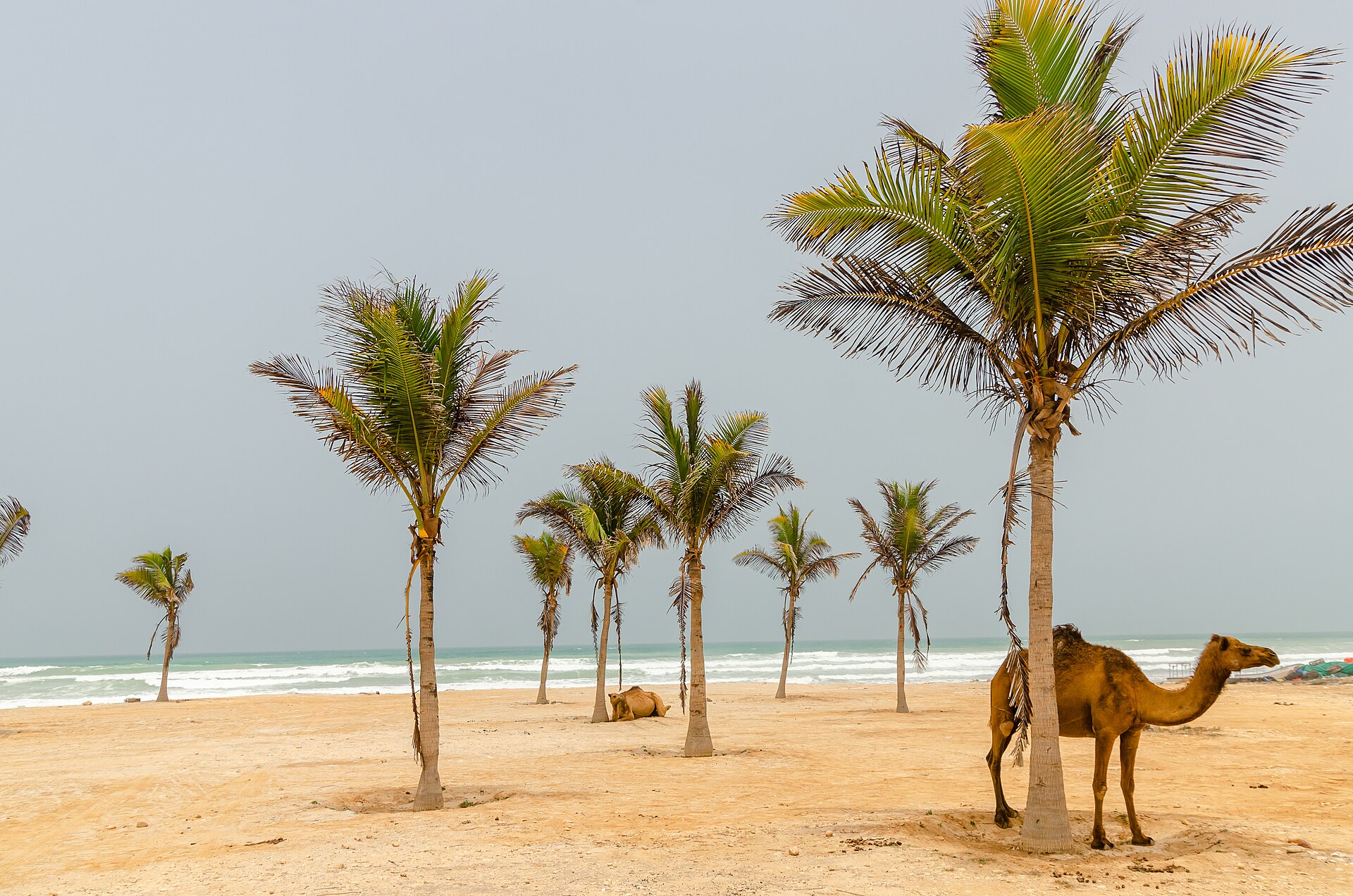
Al Mughsail Beach is one of those rare places in Oman where nature seems to have deliberately gathered every contrast imaginable. Stretching along the Arabian Sea just outside Salalah, it lies at the edge of the Dhofar mountains, where jagged limestone cliffs meet the ocean in a landscape unlike anywhere else in the region. The name itself comes from the Arabic for "whirlpool" or "boiling water," and during high tide, the sea here lives up to that description—waves crash against the rocks with a force that echoes for miles. The shoreline is anything but uniform, with hidden coves, rocky outcrops, and stretches of sand mixed with pebbles, all shaped by the relentless movement of the water.
This isn’t the kind of beach you visit for sunbathing or gentle swims. The coastline is wild and unpredictable, with no smooth golden sands or gradual entry into the sea. Instead, the shore is a mix of textures—fine sand giving way to coarse gravel, patches of seaweed left behind by storms, and sharp rock formations that jut into the water. On calm days, the sea glows in shades of turquoise and deep blue, but when the wind picks up, the water turns choppy and opaque, a reminder that this is an open ocean coast. The real magic of Al Mughsail lies in its raw, untamed beauty, where the elements dictate the rhythm of the day.
The most striking feature of the beach is the so-called "whistling caves," a series of natural limestone grottos and crevices that create an eerie acoustic effect. During high tide, waves surge into these hollows, compressing the air inside. As the water recedes, the trapped air escapes through narrow openings with a sound that ranges from a low whistle to a deep, resonant hum. Some of the caves are accessible at low tide, allowing visitors to step inside and feel the vibrations under the rock arches. The phenomenon is simple in its mechanics, but the effect is mesmerizing, as if the cliffs themselves are breathing.
Al Mughsail takes on a completely different character during the khareef, the monsoon season that transforms Dhofar each summer. From June to September, the usually arid hills surrounding the beach burst into life, covered in lush greenery and wildflowers. The air fills with the scent of damp earth and fresh vegetation, while the sea becomes rougher, its waves crashing against the rocks with even greater force. For local Bedouin communities and fishermen, this is a time of activity—gathering seaweed washed ashore, which is used as animal feed or in traditional remedies. Tourists also flock to the area during khareef, though swimming is discouraged due to strong currents. The contrast between the vibrant green hills and the stormy gray sea creates a dramatic, almost otherworldly scene.
There’s a quiet, almost meditative quality to Al Mughsail, especially in the early morning or late afternoon when the light softens the harsh edges of the landscape. The beach is never crowded, and on some days, you might have it entirely to yourself. There are no sun loungers, no beachside cafes, no signs of commercial development—just the sound of waves, the cry of gulls, and the occasional distant hum of a fishing boat returning to shore. The lack of infrastructure is part of the appeal; this is a place where you come to disconnect, to watch the play of light on the water, or to simply sit on the rocks and listen to the rhythm of the sea.
For photographers, Al Mughsail is a dream. The jagged limestone formations, the way the light dances on the waves, the silhouettes of boats against the horizon—all of it offers endless possibilities. The caves and rock arches are particularly photogenic at low tide, when you can get close enough to capture their intricate details. During khareef, the mood shifts entirely; low clouds cling to the hills, the sea turns a moody slate gray, and the sudden bursts of green vegetation create a striking contrast. Even the abandoned fishing boats half-buried in the sand add a layer of texture to the scene, hinting at the lives that have unfolded here over generations.
Though it remains off the beaten path for most travelers, Al Mughsail has slowly gained a following among those seeking something beyond Oman’s more polished tourist destinations. There are no resorts here, no guided tours, no souvenir stalls—just the raw, unfiltered beauty of nature. It’s a place for people who don’t mind roughing it a little, who are willing to trade comfort for the chance to experience something truly unique. That said, traces of human presence are still visible if you look closely: the remnants of old fishing nets, the occasional weathered boat resting on the shore, or the crumbling stone walls of long-abandoned homes.
The beach is part of a larger coastal landscape that includes rolling hills, hidden inlets, and even the ruins of old fishing villages. A short walk along the shore might lead you to the skeletal remains of coral-stone houses, their walls worn smooth by time and salt. These structures, half-reclaimed by the sea, add a sense of history to the place, though not the kind found in Oman’s ancient forts or palaces. Here, the past feels more immediate, more personal—less about empires and more about the quiet, daily lives of the people who once depended on this stretch of coast.
In recent years, Oman has shown a growing interest in developing its ecotourism potential, and places like Al Mughsail are beginning to receive more attention. So far, however, there have been no major infrastructure projects, and that’s probably for the best. The beach remains what it has always been: a wild, windswept corner of the world where nature sets the rules. For many visitors, that’s the real discovery—an Oman that exists beyond the glossy brochures, where the land and sea still hold their own against the march of progress. It’s a reminder that some places are best left untouched, not because they’re forgotten, but because their beauty lies in their imperfection.