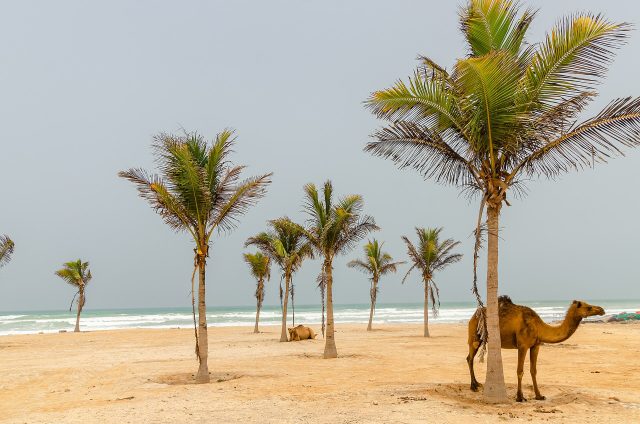
Khor Rori is where the past lingers at the edge of the sea. Tucked along the coast near Salalah, this ancient port once hummed with the activity of merchants and sailors, a vital stop on the incense trade routes that connected Oman to the Mediterranean and India. Today, the waves of the Arabian Sea lap against weathered stone walls, and the air carries the scent of salt and dry grass. It’s quiet now, but if you look closely, you can almost hear the echoes of ships arriving with their precious cargo, the bargaining of traders, and the distant murmur of a city that once thrived here.
The ruins tell a story that begins over two thousand years ago, when Khor Rori was known as Sumhuram, a fortified city under the rule of the Hadramawt kingdom. It wasn’t just a trading hub but a strategic stronghold, guarding the coastline from raids while serving as a gateway for the lucrative incense trade. Over the centuries, control shifted to Omani rulers and later empires, yet the city’s purpose remained unchanged. What stands today are fragments of its former grandeur—thick limestone walls, carved gateways, and the skeletal remains of warehouses and homes. The craftsmanship is still evident in the way the stones fit together, a testament to the skill of those who built it.
The location was chosen with care. Khor Rori sits at the mouth of a wadi, where freshwater meets the sea, creating a unique ecosystem. Mangroves fringe the shore, sheltering crabs and small fish, while birds nest in the reeds. In ancient times, this was an ideal harbor—sheltered from storms, with access to fresh water and fertile land nearby. Today, the area draws both visitors and locals, who come to swim in the warm shallows, picnic under the sun, or simply sit by the water with a cup of coffee, watching the tide roll in.
The walk through the site starts at the main gate, where the old trade road once began its journey inland. From here, the view stretches across the bay, and it’s easy to imagine the port in its prime, bustling with activity. To the left, the remnants of the fortress wall rise in places to several meters high, their massive blocks of stone still imposing despite centuries of erosion. Further on, the ruins of residential quarters reveal traces of workshops and shops, where artisans and merchants once worked. Nearby, the remains of a temple hint at the spiritual life of the city, though its exact purpose remains a mystery.
The acropolis, the elevated heart of the city, offers the best vantage point. This was likely where the administrative buildings stood, and perhaps the ruler’s residence. From here, the view encompasses the entire site, the surrounding hills, and the endless stretch of the sea. At sunset, the stones glow golden, and the landscape takes on a timeless quality, as if the centuries have folded in on themselves.
Khor Rori hasn’t been turned into a polished tourist attraction. There are no crowds, no souvenir stalls, and few signs to guide you. If you’re lucky, a local guide might share stories about the excavations, but more often, visitors are left to explore on their own. You can wander the paths, sit on the rocks, or listen to the rhythm of the waves. The absence of modern distractions makes it easier to slip into the past, to imagine the lives of the people who once walked these same paths.
For those drawn to history, Khor Rori is a rare chance to step into the world of ancient trade empires. There aren’t many explanatory plaques, and that’s part of the charm—you’re free to let your imagination fill in the gaps. For others, it’s simply a place of quiet beauty, where the sea and sky meet, and the weight of the modern world feels far away.
It’s worth noting that Khor Rori is off the beaten path. There are no cafes, no shaded rest areas, and few amenities of any kind. The best way to visit is by car, bringing along water and a snack. The heat can be intense, especially in the summer months, so the cooler season from October to March is ideal. The landscape is at its most vibrant then, with the first rains bringing life to the dry hills.
Khor Rori is more than just ruins. It’s a place where the past feels tangible, where you can spend an hour or an entire day wandering among the stones and listening to the wind. It’s a reminder that Oman’s history runs deep, far beyond its modern cities and deserts. Here, every rock has a story, and the land itself seems to whisper of the people who once called it home.