Standing at the edge of the desert, the Pyramids of Giza need no introduction. Their shapes are instantly recognizable, etched into the collective imagination long before most people ever see them in person. Yet no photograph, no documentary, no description can truly capture the weight of their presence. These structures are more than just ancient tombs or architectural marvels—they are the last surviving monuments of a civilization that vanished millennia ago, leaving behind questions that still linger in the dry desert air.
Built during Egypt’s Old Kingdom, around 2600 BCE, the pyramids were designed as eternal resting places for pharaohs who believed their souls would ascend to the gods. The three largest—Khufu’s, Khafre’s, and Menkaure’s—dominate the plateau, their limestone facades weathered but unyielding. Khufu’s Pyramid, the tallest of the three, once stood at nearly 146 meters, a record it held for nearly four thousand years. Even now, stripped of its original casing stones and worn by time, it remains an imposing sight. The sheer scale of the construction defies modern logic. How did a society without iron tools, wheeled vehicles, or advanced mathematics move millions of stone blocks, some weighing as much as 80 tons, with such precision? Theories abound—ramps, internal spirals, lost technologies—but the truth is, no one knows for certain.
What is undeniable is the precision of their construction. The stones fit together so tightly that a sheet of paper can barely slip between them. Inside, narrow passageways lead to burial chambers where sarcophagi once held the mummified remains of kings, surrounded by treasures meant to accompany them into the afterlife. Most of those riches were looted long ago, but the few surviving artifacts—gold jewelry, ceremonial vessels, fragments of hieroglyph-covered walls—hint at the wealth and power of the pharaohs. Khafre’s Pyramid, though slightly smaller than Khufu’s, appears taller due to its elevated position, and it is the only one to retain some of its original polished limestone casing at the top. Beside it, the Great Sphinx crouches in the sand, its lion’s body and human face carved from a single outcrop of rock. The Sphinx’s eroded features, missing nose, and enigmatic expression have fueled centuries of speculation. Was it built as a guardian? A portrait of Khafre? Or does it predate the pyramids entirely, a remnant of an even older civilization?
The Sphinx is more than just a statue—it is a symbol of the mysteries that still surround Giza. Its face, battered by wind, sand, and possibly human hands, has been the subject of endless debate. Some scholars argue it was recarved in antiquity to resemble Khafre, while others believe it was originally a lion or even a jackal, later modified. Legends cling to it like desert dust. One story claims that the Sphinx holds secrets that will only be revealed when humanity is ready to understand them. Another suggests that its missing nose was shot off by Napoleon’s troops—a myth, since drawings from the 18th century show it already damaged. Whatever the truth, the Sphinx adds to the sense of timelessness that pervades the plateau. It feels less like a relic and more like a silent witness, watching as the world changes around it.
Visiting the pyramids is not just sightseeing; it is a confrontation with history. Standing at their base, it’s impossible not to marvel at the labor that went into their creation. Estimates suggest that tens of thousands of workers—skilled artisans, laborers, and overseers—spent decades quarrying, transporting, and assembling the stones. Contrary to old myths, these were not slaves but paid workers, housed in nearby villages, fed and cared for by the state. The desert around the pyramids, now barren and still, was once a hive of activity. Workers’ camps, bakeries, and even a rudimentary hospital have been uncovered, painting a picture of a society that functioned with remarkable organization. The pharaohs may have sought immortality, but it was the collective effort of ordinary people that made it possible.
Today, Giza is both a tourist destination and an active archaeological site. Researchers continue to uncover new details about the pyramids, from hidden chambers to previously unknown construction techniques. In 2017, scientists using muon radiography detected a large void inside Khufu’s Pyramid, its purpose still unknown. For visitors, the experience is a mix of awe and intimacy. You can walk around the base of the pyramids, touch the sun-warmed stones, or even venture inside—though the narrow, stifling passages are not for the claustrophobic. The air inside is thick with the scent of ancient dust, and the silence is broken only by the echo of footsteps. It’s disorienting, almost surreal, to stand in a space that has remained untouched for thousands of years.
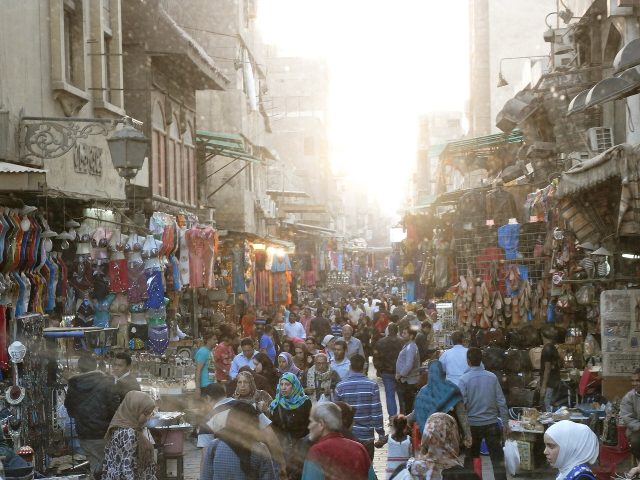
The atmosphere around the pyramids is as much a part of the experience as the monuments themselves. The plateau is a strange blend of the ancient and the modern. Tourists ride camels across the sand, their guides calling out in a mix of Arabic and broken English. Vendors sell miniature pyramids, postcards, and cups of sweet mint tea, their stalls clustered near the entrance. Beyond the tourist hubbub, the city of Giza sprawls outward, a maze of apartment blocks and markets where life goes on as it has for centuries. For locals, the pyramids are more than a backdrop to daily life—they are a source of pride, a reminder of Egypt’s enduring legacy. Even as the modern world encroaches, the pyramids remain untouched, a fixed point in a landscape that has otherwise changed beyond recognition.
The best time to visit is early morning or late afternoon, when the light is soft and the heat less oppressive. At dawn, the pyramids emerge from the haze like mirages, their edges sharp against the pale sky. At sunset, the stones glow gold and amber, casting long shadows across the sand. These moments offer a rare sense of solitude, a chance to appreciate the scale and silence of the place without the crowds. But even in the midday sun, when tour buses line the roads and the air shimmers with heat, the pyramids retain their power. They have stood here for nearly five thousand years, and they will likely stand for five thousand more. In a world that moves faster every day, they are a reminder of what endures. Not just the stones, but the ideas—the belief in something greater, the ambition to build for eternity. That, perhaps, is their greatest mystery.