Perched atop the rocky heights of Cairo’s Citadel, the Mosque of Muhammad Ali dominates the skyline with its soaring minarets and vast silver dome. From a distance, it catches the light at dawn and dusk, its marble walls glowing against the city’s sprawl. Built in the early 19th century, the mosque marked a turning point for Egypt, reflecting the ambitions of Muhammad Ali Pasha, who sought to modernize the country while embracing Ottoman architectural traditions. It stands not just as a place of worship but as a monument to an era of transformation, when Egypt began to redefine its identity after centuries of Mamluk rule.
Construction began in 1830 and took nearly two decades to complete. Muhammad Ali, an Albanian commander who rose to power amid the decline of the Mamluks, envisioned a structure that would rival the great mosques of Istanbul. He commissioned Yusuf Bushnak, a Greek architect, to design a building inspired by the Ottoman style, particularly the Süleymaniye Mosque. The result was a blend of grandeur and elegance, with a spacious courtyard centered around a fountain for ablutions, towering arches adorned with intricate arabesques, and massive chandeliers that hang like constellations from the ceiling. The mosque’s design was a deliberate statement, signaling Egypt’s alignment with the Ottoman world while asserting its own growing influence.
Inside, the main prayer hall is a vast, luminous space where light filters through dozens of windows, casting shifting patterns across the floor. The walls are clad in alabaster, a soft, translucent stone quarried near Asyut, which gives the interior a warm, almost ethereal glow. In the morning, sunlight slants through the windows, illuminating the mihrab—a niche indicating the direction of Mecca—decorated with gold mosaic and Quranic calligraphy. Nearby, the minbar, a wooden pulpit inlaid with mother-of-pearl, stands as a testament to the craftsmanship of the era. The hall’s scale and simplicity create an atmosphere of reverence, where the weight of history feels almost tangible.
One of the mosque’s most poignant features is the tomb of Muhammad Ali himself, located in the southwestern corner. Carved from white marble and enclosed by a delicate bronze lattice, the tomb was not his original resting place—he died in Alexandria—but was later moved here at the request of his son, Abbas I. Today, it draws visitors not only for its religious significance but as a quiet reminder of Egypt’s 19th-century struggles and aspirations. The intricate carvings on the tomb’s screen and the polished marble surface invite closer inspection, while the stillness of the space encourages reflection on the man who reshaped Egypt’s destiny.
The Citadel, where the mosque stands, is a historic site in its own right. Built in the 12th century by Saladin to defend Cairo from Crusader attacks, the fortress has witnessed centuries of conquest and change. Over time, its walls have been expanded and modified, but the Mosque of Muhammad Ali remains its most striking addition. From the terrace outside the mosque, the view stretches across Cairo, from the dense, labyrinthine streets of the old city to the modern skyline in the distance. On clear days, the Pyramids of Giza are visible on the horizon, a fleeting glimpse of Egypt’s ancient past juxtaposed with the living, breathing city below.
Visiting the mosque offers more than just an architectural experience—it’s a glimpse into the rhythms of Cairo itself. Inside, the space is always alive with activity: worshippers kneeling in prayer, tourists snapping photos, and schoolchildren chattering on guided tours. In the summer, the thick stone walls provide respite from the heat, drawing locals who come to escape the sun. In winter, the light softens, and the alabaster seems to glow from within. While entry is free, visitors are asked to observe certain customs, such as removing shoes and, for women, covering their heads and shoulders. These small rituals serve as a reminder that the mosque is not just a monument but a living place of faith.
The Mosque of Muhammad Ali is deeply intertwined with Egypt’s modern history. It has stood witness to the fall of the Mamluks, the British occupation, the 1952 revolution, and countless other moments that have shaped the nation. Today, it functions both as an active religious site and an open-air museum, where every stone seems to hold a story. For many Cairenes, it’s a familiar part of daily life—a place to pray, to seek quiet, or to simply sit and watch the city unfold below. For outsiders, it offers a window into how Egypt’s past and present coexist, where Ottoman influences, Islamic traditions, and the country’s own evolving identity converge in a single, enduring structure.
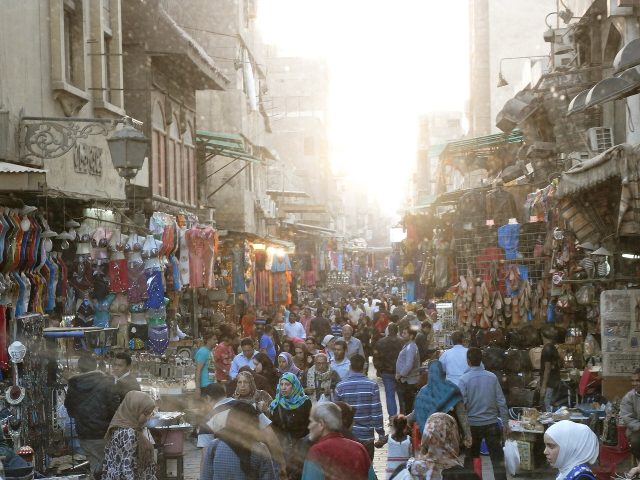
The approach to the mosque through the Citadel’s narrow streets is a journey in itself. The bustling markets and crumbling facades of the old city gradually give way to the fortress’s imposing walls, and the noise of the streets fades into the hush of history. At the top, the air feels different—cooler, quieter, as if time moves at a slower pace. It’s easy to imagine Cairo as it was in the 1830s, when the mosque was still under construction and the city’s boundaries were just beginning to stretch into the desert. Today, the mosque remains a rare constant in a city that is always changing, a place where the past lingers just beneath the surface.