Khan el-Khalili isn’t just a market—it’s a living piece of Cairo, a place that has pulsed with the city’s rhythm for over six hundred years. It began in the 14th century as part of a grand commercial complex built by Emir Djaharks el-Khalili, a close associate of Sultan Barquq. Back then, it wasn’t merely a bazaar but an entire district of caravanserais, where merchants from across the Islamic world—from Morocco to India—would rest their camels and trade their goods. Over time, the market expanded, swallowing up neighboring streets until it became the sprawling maze it is today, where every turn reveals something unexpected.
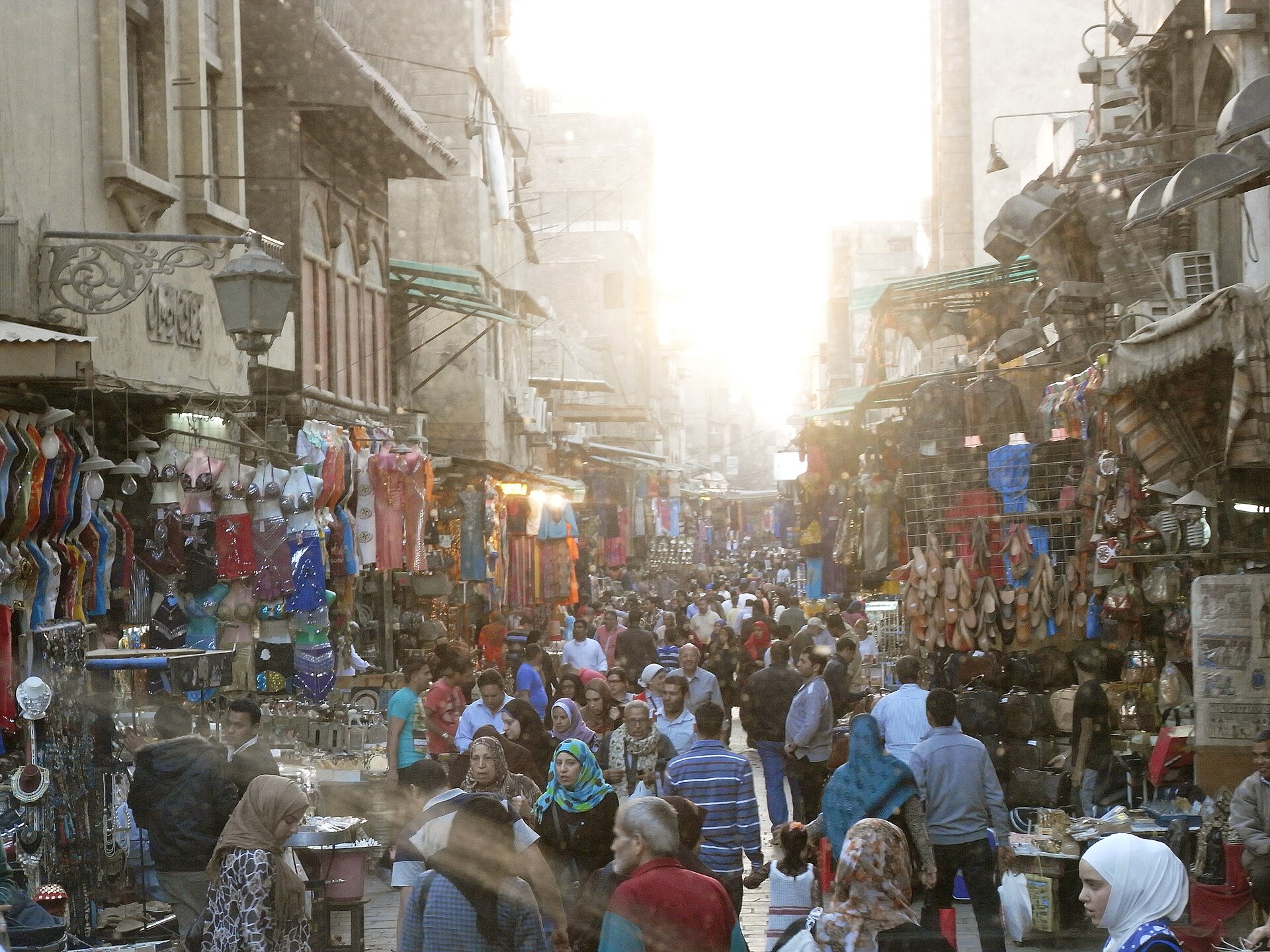
Walking through Khan el-Khalili feels like stepping into another era. The narrow, stone-paved alleys are shaded by wooden and metal canopies, filtering just enough light to create a dim, almost dreamlike atmosphere. The shops here are nothing like modern stores—small, low-ceilinged spaces where goods spill onto counters or hang from walls. The vendors sit on stools, sipping tea, in no hurry to call out to passersby. They know their regulars will return, just as they always have.
The market sells everything imaginable. One row is devoted to spices—mounds of bright yellow turmeric, fiery red pepper, and cinnamon sticks, their scents mingling with the aroma of freshly ground coffee and roasted nuts. Nearby, you’ll find silver and gold jewelry, ancient coins, scarab amulets, and other trinkets tourists take home as souvenirs. There are stalls piled high with fabrics—silk, cotton, embroidered shawls, and traditional galabeyas. Deeper in the market, artisans still hammer copper trays by hand or paint intricate designs on ceramics, just as they have for generations.
But Khan el-Khalili is more than just a place to shop. It’s a corner of old Cairo where time moves differently. One of its most famous spots is El-Fishawi, a café that has been open since the 18th century. Inside, the air is thick with the smell of strong coffee and hookah smoke, and patrons sit on wooden benches, watching the world go by. These cafés aren’t just places to drink—they’re social hubs where chess players gather, poets recite verses, and old men debate politics over backgammon boards.
The market comes alive at different times of day, but evenings are especially magical. As the heat of the day fades, dim lanterns flicker to life, and the alleys fill with sounds—the shouts of vendors, the laughter of tourists, the strains of music drifting from cafés. It’s easy to imagine you’ve wandered into a scene from *One Thousand and One Nights*, with shadows dancing on the walls and the sense that something extraordinary might appear around the next corner.
Of course, Khan el-Khalili has changed over the centuries. Souvenir shops catering to tourists now sit alongside traditional stalls, and modern goods have found their way onto the shelves. But the soul of the old bazaar remains. You can still find craftsmen working with techniques passed down through generations, haggling over prices just as their ancestors did, and the air is still thick with the scent of spices and coffee. This is where Cairo reveals its history not through museums or monuments, but through the everyday life that has unfolded here for centuries.
Exploring Khan el-Khalili is like traveling back in time. You can almost picture the caravans of camels arriving from distant lands, merchants striking deals beneath the vaulted ceilings of the old caravanserais. Today, motorbikes weave through the crowds where camels once trod, and the caravanserais have been replaced by shops, but the sense of history lingers. It’s in the worn stones underfoot, the creak of wooden doors, the knowing glances of vendors who understand that their stalls will outlast them.
For locals, Khan el-Khalili is more than just a workplace—it’s a part of life. Many were born and raised here, celebrating family milestones in its cafés and meeting friends in its alleys. For visitors, it’s one of those places that leaves a lasting impression, not because of what you can buy, but because of what you can feel. It’s the pulse of the city, the layers of history and culture hidden behind the facades of modern Cairo.
Khan el-Khalili isn’t a museum—it’s a place where history is still being made. Every day brings something new: a festival, a wedding, or just another ordinary day of trade, no different from the hundreds that came before. That’s the beauty of it—it doesn’t try to be anything other than what it is. It simply exists, as it always has, carrying on the traditions of the past while embracing the present.