St. Paraskeva Church in Vilnius is one of those rare places that feels suspended in time, where the quiet dignity of the past lingers in every stone. Tucked away in the heart of the Old Town, it stands on a small square surrounded by narrow streets and tiled-roof houses, their facades worn smooth by centuries. The church doesn’t announce itself with grand arches or towering spires—its modest exterior blends into the neighborhood, almost as if it’s waiting to be discovered. There are no crowds here, no hurried tourists snapping photos. Instead, the atmosphere is one of stillness, a glimpse of Vilnius as it might have been hundreds of years ago.
The history of St. Paraskeva stretches back to the era of the Grand Duchy of Lithuania, though the exact origins of the church remain a subject of debate among historians. The first written records date to the 16th century, but it’s likely that an earlier structure stood on this site, possibly even a pagan shrine. Christianity gradually replaced older beliefs in these lands, and churches were often built over sacred places of the past. The name honors Saint Paraskeva Pyatnitsa, a patron saint of merchants and craftsmen, the very people who shaped the daily life of medieval Vilnius.
The architecture of the church reflects the layers of history it has witnessed. Originally built in the Gothic style, it was rebuilt and altered after fires and wars, absorbing elements of Baroque in the process. The facade, though unassuming, carries traces of this evolution—delicate stucco work and arched windows that hint at the changes wrought by time. Inside, the space feels intimate, almost secretive. High vaulted ceilings, narrow stained-glass windows, and dark wooden pews create an atmosphere of quiet reverence. The light filters through the colored glass in soft patches, illuminating faded frescoes and the worn surfaces of the altar. There’s no opulence here, just a sense of authenticity that’s hard to find in more famous churches.
Vilnius has always been a city where cultures and faiths intersected, and St. Paraskeva is a testament to that history. Over the centuries, it has belonged to Orthodox Christians, Uniates, and Catholics, each leaving their mark on its interior. In the 18th century, when the church was under Uniate control, its iconostasis took on a distinctive style, blending Eastern and Western traditions. Later, under Catholic rule, Baroque altars were added, though some older elements remained. Today, the church still houses ancient icons, including a 17th-century depiction of Saint Paraskeva, its colors muted by time but its presence undiminished.
Unlike many historic churches that became centers of pilgrimage or grand ceremonies, St. Paraskeva has always been a humble parish church. It was a place where local merchants, craftsmen, and townspeople gathered for quiet worship, not for spectacle. Even now, it retains that unassuming character. There are no elaborate services here, no throngs of visitors. On a weekday, you might hear the soft murmur of a choir or see an elderly woman lighting a candle before an icon. It’s a place for personal reflection, not public display.
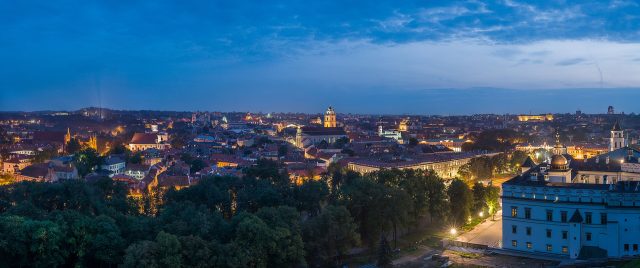
The square where the church stands is one of the oldest in Vilnius. Centuries ago, it was the site of a bustling market where traders sold everything from fresh fish to exotic spices. Today, the market is gone, but the surrounding streets still feel like a step back in time. The houses, built in the 16th and 17th centuries, lean slightly with age, their facades telling silent stories. A few cafes now occupy the ground floors, offering a place to sit with a coffee and watch the slow rhythm of the Old Town. From here, it’s a short walk to the base of Gediminas Hill, where the city unfolds in layers of red roofs and church spires, or to the banks of the Vilnia River, where the water moves lazily past old stone bridges.
In recent decades, St. Paraskeva has undergone careful restoration to preserve its fragile beauty. The frescoes and stucco work, once at risk of fading entirely, have been stabilized, though the process was done with a light touch. The goal wasn’t to erase the passage of time but to ensure the church could continue standing as it always has. Even after restoration, it doesn’t feel like a museum exhibit. The creak of the wooden floorboards, the scent of wax from the candles, the way the light slants through the windows—all of it feels alive, as if the walls still hold the echoes of prayers spoken here over generations.
For those who seek out St. Paraskeva, it offers something rare in a city that’s increasingly on the tourist map. It’s not a place you’ll find on most itineraries, and that’s part of its charm. Here, you can sit in silence, away from the noise of the main squares, and let the weight of history settle around you. The details—the cracks in the plaster, the way the icons’ gold leaf has worn thin, the uneven stones underfoot—reveal themselves slowly, rewarding patience. In a world that moves too fast, places like this remind us that some things endure. The church doesn’t ask for attention; it simply exists, as it has for centuries, a quiet witness to the life of the city.