Petrovskaya Square sits at the heart of Narva, a city where the layers of history feel almost tangible. This isn’t just another town square—it’s a place where the past lingers in the cobblestones, the facades of buildings, and the quiet weight of centuries. Narva itself has always been a borderland, a city caught between empires, and Petrovskaya Square is where that tension is most visible. Here, the old town meets the newer, Soviet-era structures, and the contrast tells a story of shifting powers, wars, and the slow, stubborn persistence of place.
The square takes its name from Peter the Great, the Russian tsar who left an indelible mark on this region in the early 18th century. It was under his rule that Narva, already a strategic fortress, became a key outpost in Russia’s push toward the Baltic. The square itself wasn’t always called Petrovskaya—its name has changed with the tides of history, reflecting whichever empire held sway at the time. But Peter’s legacy is hard to ignore here. The Narva Fortress, just a short walk away, was rebuilt under his orders after the Great Northern War, and the city’s layout still bears the imprint of his ambitions.
At the center of the square stands a monument that feels almost like an afterthought, yet it’s impossible to miss. A bronze statue of Peter the Great, cast in the 20th century, looks out over the space with an expression that’s hard to read—stern, perhaps, or simply weary. The statue was erected during the Soviet era, a time when the authorities were keen to emphasize Russia’s historical ties to the Baltic, even as they reshaped the region in their own image. It’s an odd juxtaposition: a tsar immortalized in bronze under a regime that officially rejected monarchy. But then, Narva has always been a place of contradictions.
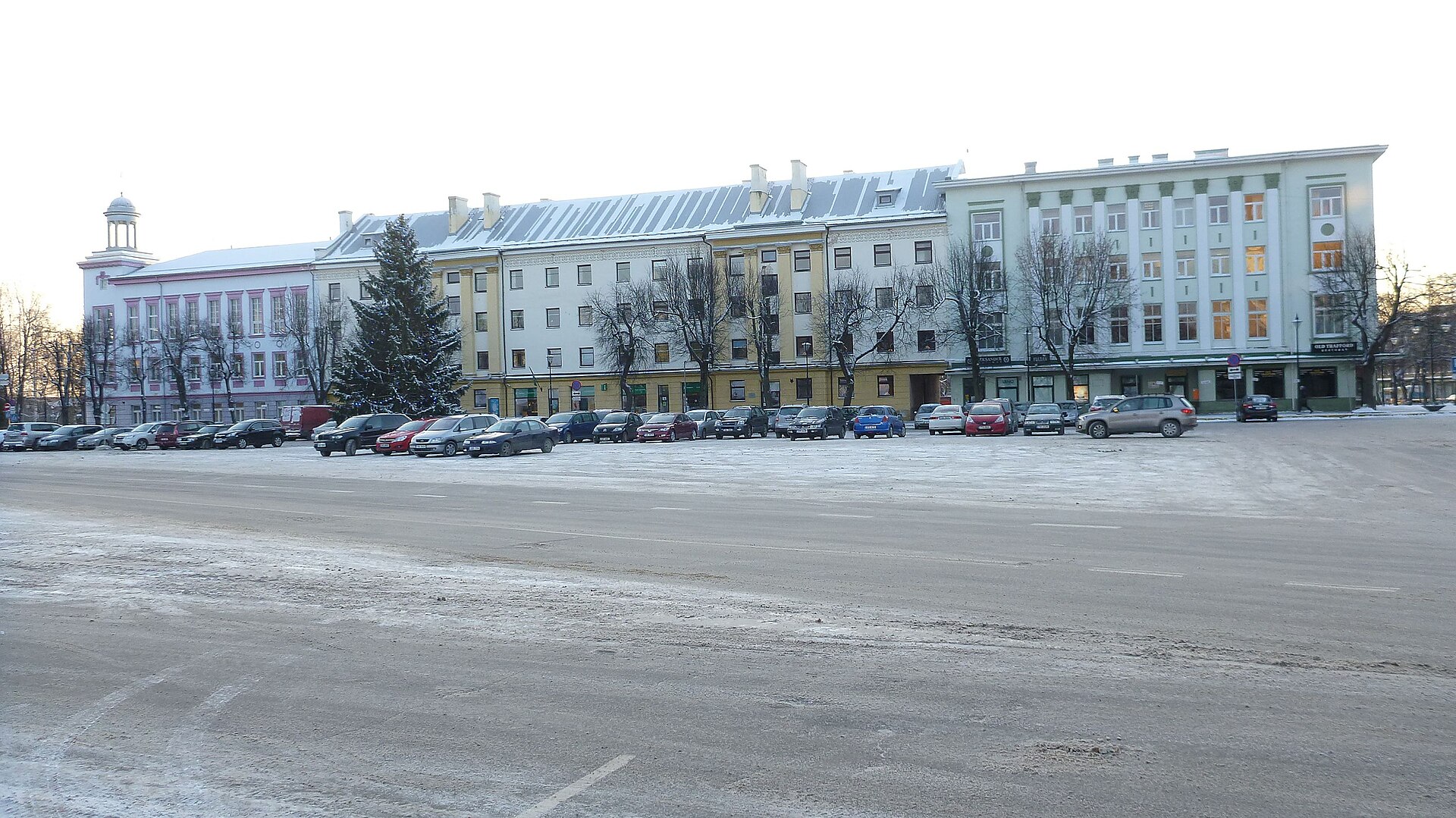
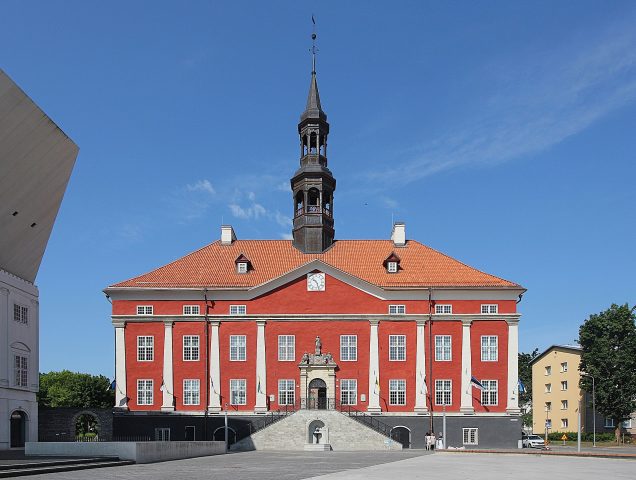
The buildings around the square tell their own stories. On one side, the Narva Town Hall, with its neoclassical facade, stands as a reminder of the city’s brief but vibrant period under Swedish rule in the 17th century. The Swedes rebuilt Narva after a devastating fire, and though much of that era’s architecture was later lost to war, the town hall survived, a quiet witness to the city’s shifting fortunes. Nearby, the Soviet-era apartment blocks rise in stark contrast—functional, unadorned, built to house the workers who came to Narva in the mid-20th century when the city became an industrial hub. The square is where these two worlds collide, where the past and present exist side by side without quite blending.
Walking across Petrovskaya Square, you notice the unevenness of the cobblestones, the way the light catches the worn edges of the buildings. There’s a sense of stillness here, as if the square is holding its breath. In summer, the space fills with the hum of tourists and locals, the occasional sound of a street musician, or the clatter of a café chair being pulled out onto the pavement. In winter, the square is quieter, the snow muffling footsteps, the statue of Peter the Great standing sentinel over a landscape softened by frost. The seasons change, but the square remains, a constant in a city that has seen so much upheaval.
Narva’s location on the border with Russia adds another layer to the square’s significance. Just across the Narva River lies Ivangorod, a Russian town that was once part of the same urban fabric. The two cities were separated by the shifting borders of the 20th century, but the connection remains. From Petrovskaya Square, you can see the Ivangorod Fortress on the opposite bank, its towers mirroring those of Narva’s own fortress. The view is a reminder that borders are often arbitrary, drawn by politicians and generals, while the land itself remains unchanged. For centuries, people moved freely between these two towns, trading, working, living their lives. Today, the border is a stark divide, but the square still feels like a meeting point, a place where two worlds brush against each other.
There’s something melancholic about Petrovskaya Square, a sense of time passing and leaving its marks. The city has been rebuilt so many times—after wars, fires, occupations—that it’s hard to say what’s truly original. The square, like much of Narva, is a palimpsest, a place where each era has written its own story over the last. The medieval fortress walls stand near Soviet-era housing blocks, and the baroque town hall rubs shoulders with utilitarian shops and cafés. It’s not a place of grand beauty, but of quiet resilience. The buildings may be worn, the streets a little uneven, but there’s a dignity in that wear, a sense that this city has endured.
For visitors, Petrovskaya Square is often just a stop on the way to the fortress or the riverfront, but it’s worth lingering. Sit on one of the benches and watch the light change over the facades, or walk to the edge of the square where the view opens up toward the river. The Narva River is wide here, slow-moving, and on the other side, the Russian flag flutters over Ivangorod. It’s a strange sight, this proximity to another country, another world. The square doesn’t offer easy answers about Narva’s identity—is it Estonian, Russian, something in between?—but it doesn’t need to. Its power lies in the way it holds all these histories at once, without smoothing over the contradictions.
In the end, Petrovskaya Square is less about what it is than what it represents. It’s a place where history isn’t just remembered but lived, where the past isn’t confined to museums but spills out onto the streets. Narva has always been a city of passage, a place people moved through on their way somewhere else. But the square remains, a fixed point in a shifting landscape. Whether you’re here for an hour or a day, it leaves an impression—not of grandeur, but of quiet persistence, of a city that has seen empires rise and fall and yet still stands.