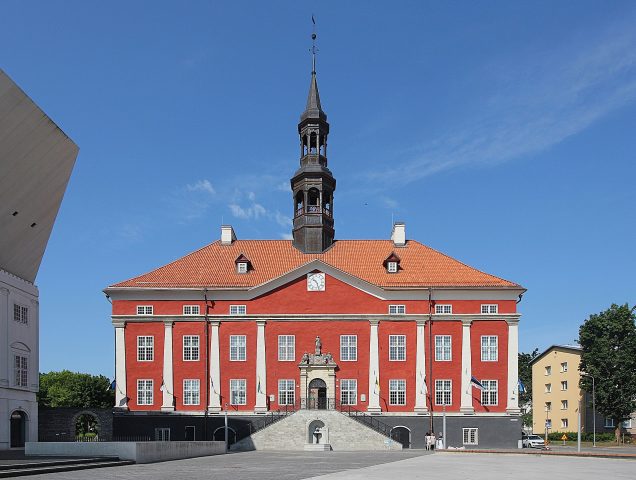
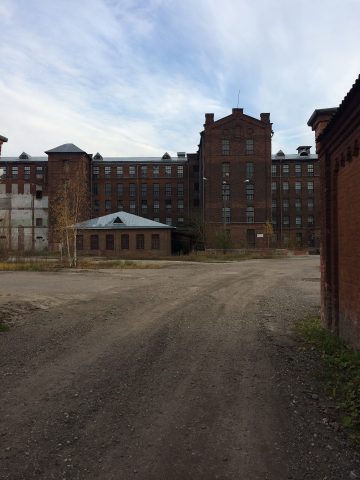
Narva Castle stands on the banks of the Narva River, where Estonia meets Russia, a quiet witness to centuries of shifting borders and forgotten battles. Built in the 13th century when these lands were under Danish rule, it has since passed through the hands of the Livonian Order, Sweden, Russia, and finally independent Estonia. Each era left its mark—walls were reinforced, towers rebuilt, and fortifications expanded—yet the castle never lost its original purpose as a stronghold. Today, it remains a symbol of endurance, its stones holding the weight of history without pretense.
The architecture tells its own story. The most striking feature is the Long Hermann tower, rising nearly 50 meters above the city. Once a lookout post, it now offers a view of the river winding between two nations. The inner courtyard is surrounded by thick walls with arrow slits, while underground passages and casemates hint at the castle’s military past. Unlike palaces built for grandeur, Narva Castle was designed for defense, its austere lines reflecting its practical origins. Even the later additions, like the baroque elements from the Petrine era, don’t soften its imposing presence.
The castle’s most famous moment came during the Great Northern War, when Peter the Great’s forces stormed Narva in the early 18th century. After the siege, the Russians rebuilt parts of the fortress in their own style, blending medieval defenses with new architectural trends. By the 19th century, the castle had lost its military importance and fell into disrepair, only to be restored in the 20th century. Now, it houses a museum where visitors can trace the history of Narva itself—a city that has always existed on the edge, where cultures and languages have mixed for centuries.
Inside, the atmosphere is unhurried, almost timeless. Exhibits cover medieval life, weaponry, and the daily routines of soldiers and townspeople. One of the most compelling displays is a series of scale models showing how the castle evolved over time, from its early Danish foundations to its later Russian modifications. The vaulted cellars, once used for storage, now host temporary exhibitions, while the courtyard occasionally comes alive with medieval reenactments and jousting tournaments. On those days, the past feels almost tangible.
Narva has always been a city of contrasts, and the castle embodies that complexity. For locals, it’s more than a historical site—it’s a place tied to personal memories, childhood explorations, and family visits. For outsiders, it offers something rare: an unpolished glimpse into history, free from tourist traps and over-commercialization. There are no crowds here, no pushy guides, just the quiet presence of old stone and the slow rhythm of the river below.
Climbing the Long Hermann tower rewards you with a sweeping view of the city and the Narva River. Across the water, Ivangorod Fortress stands as a mirror image, a reminder that these two strongholds were once part of the same defensive system. Together, they create a striking visual link between past and present, a testament to how borders can both divide and connect. The river has always been a frontier, but also a bridge, and these castles are its most enduring symbols.
Today, Narva Castle is more than a museum. It’s a living part of the city, hosting concerts, art exhibitions, and even weddings. In winter, the courtyard becomes an ice rink, while in summer, locals stroll along the ramparts or relax on benches by the river. The castle hasn’t been reduced to a relic—it’s still a place where history and everyday life intersect, where the past isn’t just preserved but actively engaged with.
If you visit Narva, set aside a few hours for the castle. There’s no rigid itinerary, no rush. You can wander the courtyards, linger by the river, or explore the museum at your own pace. The real draw isn’t just the history on display, but the way the place makes time feel different—slower, deeper. Narva Castle doesn’t offer easy answers, but it leaves you with the sense that history isn’t something distant. It’s all around us, in the stones beneath your feet and the river flowing past.