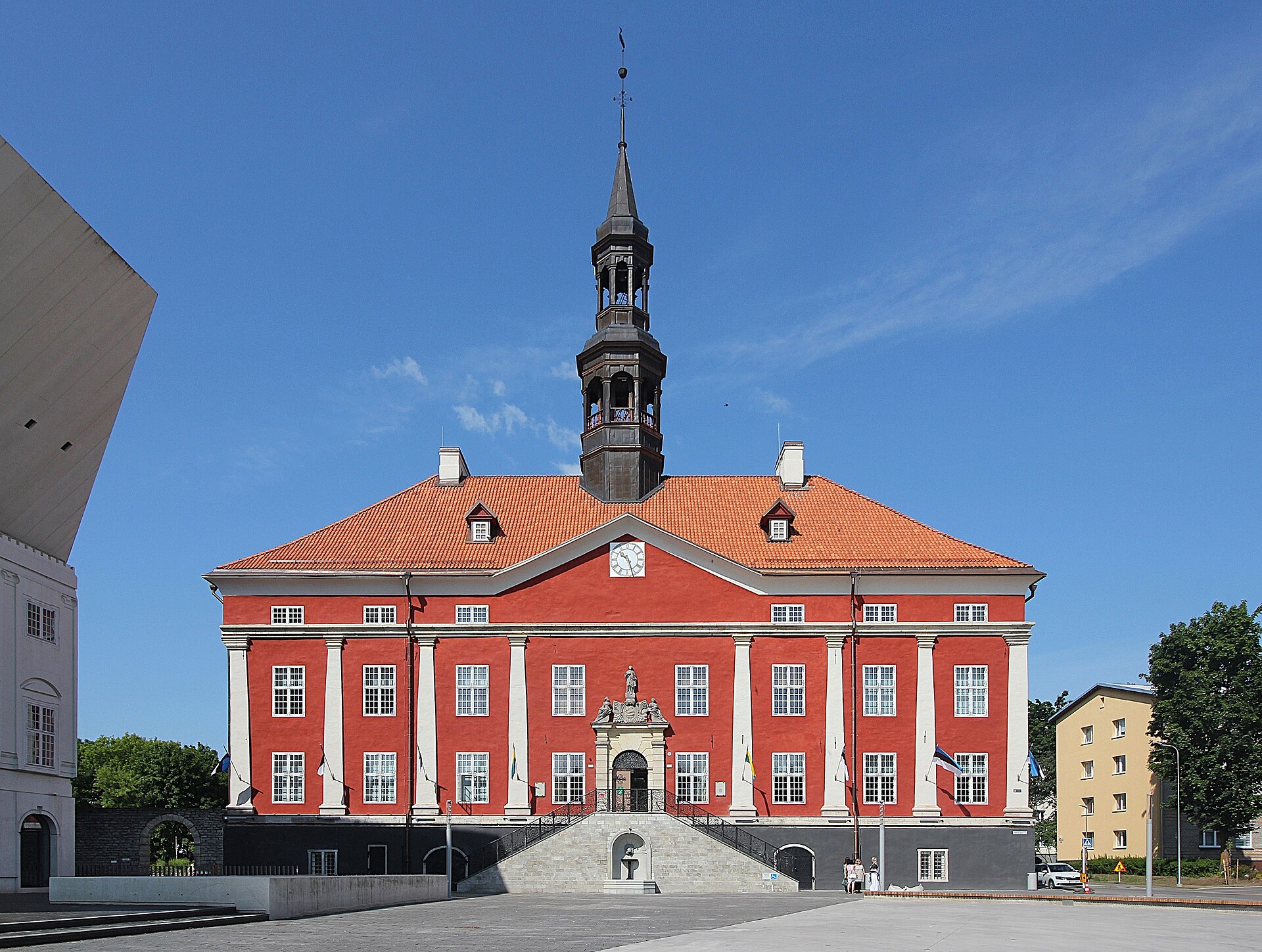
Narva Town Hall stands as one of the most striking examples of Baroque architecture in Estonia, a quiet witness to the city’s layered history. Built in the early 17th century, it was designed by the architect Georg Teuffel, who brought the grandeur of Northern European civic buildings to this borderland town. The structure’s facade, with its symmetrical windows, ornate gables, and a central tower, reflects the ambitions of Narva’s merchants and rulers during a time when the city flourished as a key trading hub between Russia and Western Europe. Though much of Narva was destroyed during World War II, the Town Hall survived, albeit with scars—its once-elaborate interiors were lost, and the building now serves as a museum rather than an active seat of government.
The history of Narva itself is inseparable from the Town Hall’s story. Founded in the 13th century, the city spent centuries under Danish, Swedish, and Russian rule, each leaving its mark on the urban landscape. By the 17th century, Narva had become a prosperous port, its wealth built on trade in timber, flax, and hemp. The Town Hall was commissioned during Swedish rule, a period when the city’s elite sought to project stability and sophistication. The building’s design borrowed from the Dutch and German Baroque traditions, a style that was both fashionable and functional, signaling Narva’s place in the broader Baltic world.
Inside, the Town Hall once housed the city’s administrative offices, courtrooms, and even a prison in its basement. The grand hall on the second floor, where the town council met, was the heart of Narva’s civic life. Today, the building’s interiors are more subdued, stripped of their original furnishings and decorations, but the scale of the rooms still hints at their former importance. The museum exhibits focus on Narva’s history, from its medieval origins to its role in the 20th century, when the city found itself on the front lines of war and later behind the Iron Curtain. The displays are modest but informative, offering a glimpse into the lives of the people who shaped the city.
The Town Hall’s location in Narva’s central square places it at the crossroads of the city’s past and present. The square itself has seen countless markets, parades, and public gatherings over the centuries. In the 19th century, it was the site of a bustling trade fair, where merchants from across the region converged. Today, the square is quieter, but it remains a focal point for locals and visitors alike. The Town Hall’s facade, with its warm yellow plaster and white accents, stands out against the more utilitarian Soviet-era buildings that surround it, a reminder of the city’s older, more ornate architectural heritage.
One of the most interesting aspects of the Town Hall is its resilience. Narva has been repeatedly destroyed and rebuilt—by wars, fires, and shifting borders—and the Town Hall has endured through it all. During World War II, the city was nearly leveled by bombing, and the Town Hall was one of the few structures to survive relatively intact. In the decades that followed, it was restored, though not to its original splendor. The building’s survival is a testament to the determination of those who sought to preserve Narva’s identity, even as the city’s population and political allegiance changed around it.
For visitors, the Town Hall offers more than just a historical exhibit. It’s a place to consider the complexities of Narva’s past—a city that has been Estonian, Swedish, Russian, and Soviet, often within the span of a single lifetime. The museum’s displays don’t shy away from these shifts, presenting them as part of a broader narrative about borderlands and the people who inhabit them. The building itself, with its mix of grandeur and wear, mirrors this story. The ornate details of the facade contrast with the more austere interiors, much like Narva’s own blend of old-world charm and Soviet-era pragmatism.
Beyond its historical significance, the Town Hall is also a quiet place to observe the rhythms of modern Narva. The city today is a mix of Estonian and Russian cultures, a reflection of its proximity to the Russian border, just a short walk away. The square in front of the Town Hall is often filled with locals going about their day—shopping at the nearby market, stopping for coffee, or simply sitting on the benches to watch the world go by. The building’s presence adds a sense of continuity to the scene, a link to a time when Narva was a thriving commercial center rather than a city on the edge of two nations.
Walking through the Town Hall’s rooms, it’s easy to imagine the debates, decisions, and dramas that once played out within its walls. The building has seen Narva at its height and at its lowest points, from the prosperity of the 17th century to the devastation of the 20th. Today, it stands as a symbol of endurance, a reminder that even in a city shaped by conflict and change, some things remain. For those who take the time to explore it, the Town Hall offers not just a lesson in history, but a chance to reflect on the quiet resilience of places—and people—that refuse to be forgotten.