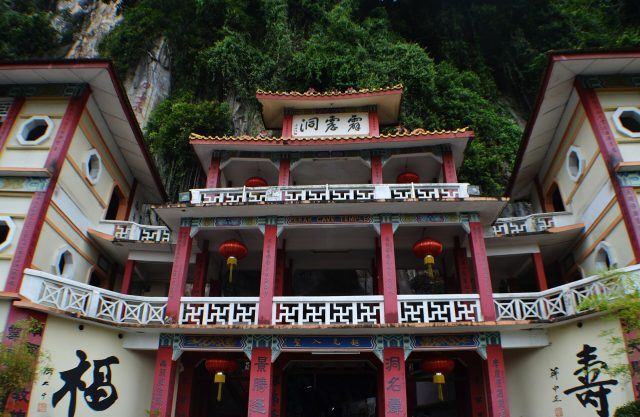
Sam Poh Tong is one of those rare places where nature and faith intertwine so seamlessly that it feels almost intentional. Tucked just outside Ipoh, the capital of Perak state, these caves have drawn pilgrims and travelers for generations. The entrance is framed by towering limestone cliffs, their jagged edges softened by time and weather, standing like silent guardians over the landscape. Unlike the crowded tourist spots elsewhere in Malaysia, Sam Poh Tong offers something quieter—a stillness broken only by the rustle of leaves and the distant chime of temple bells.
The caves have long been a sanctuary for Buddhist monks seeking solitude. Buddhism arrived in this region centuries ago, and over time, the caves became a place of meditation and retreat. What began as simple stone carvings of Buddha figures evolved into a sprawling complex of shrines and halls, each blending into the natural contours of the rock. The main cavern is vast, its high ceilings supported by thick limestone columns that give the space an almost cathedral-like grandeur. Inside, the air is cool and dim, with slivers of sunlight piercing through narrow cracks in the rock, casting long shadows over the dozens of Buddha statues that line the walls. Some are gilded, their surfaces catching the light, while others remain in their natural stone, their expressions serene and timeless.
One of the most striking features is the reclining Buddha, a massive statue that stretches across an entire chamber. The figure lies in quiet repose, its length accentuated by the low ceiling of the cave. Visitors often pause here, leaving offerings of flowers, fruit, or incense, their murmured prayers blending with the scent of sandalwood that lingers in the air. The atmosphere is one of reverence, a place where time seems to slow, and the outside world feels distant.
Beyond its spiritual significance, Sam Poh Tong is also a geological wonder. The limestone formations here began taking shape millions of years ago, and the caves are filled with stalactites and stalagmites that twist into shapes resembling animals, mythical creatures, or abstract sculptures. Some formations are smooth and rounded, while others are sharp and jagged, their surfaces worn by water and time. In one of the smaller caverns, a shallow pool of clear water mirrors the ceiling above, creating an almost surreal reflection of the statues and rock.
The caves attract more than just devotees. Photographers, artists, and curious travelers come to see how the man-made and natural elements coexist so harmoniously. There’s no entrance fee, though donations are welcome to help maintain the temple. The best times to visit are early morning or late afternoon, when the heat is less intense and the light inside the caves is soft and diffused, highlighting the textures of the rock and the details of the statues.
The area around Sam Poh Tong is just as inviting. Rolling hills covered in tropical greenery stretch out in every direction, with narrow paths winding up to viewpoints that offer sweeping vistas of the countryside. In the distance, rice paddies and small villages dot the landscape, while closer to the horizon, other limestone outcrops rise like ancient sentinels. Locals often come here to escape the hustle of the city, finding peace in the quiet shade of the trees or the gentle breeze that carries the scent of earth and foliage.
What makes Sam Poh Tong special is the way it feels suspended in time. There’s no rush here, no sense of urgency—just the quiet rhythm of footsteps on stone, the occasional murmur of prayer, and the play of light and shadow across the walls. For many, a visit becomes more than just a stop on a travel itinerary; it’s a moment of reflection, a chance to step away from the noise of daily life and connect with something deeper. Whether you come for the history, the spirituality, or simply the beauty of the place, the caves leave an impression that lingers long after you’ve left.