Nahal Sorek Cave is one of those rare places where time feels different. Tucked into the Judean Hills near Beit Shemesh, it lies hidden in a valley carved by the Sorek Stream, a landscape steeped in both natural beauty and ancient stories. The valley itself is woven into local legend—some say it was here that Samson first met Delilah, and where he later sought refuge from the Philistines. But the cave predates even these biblical tales by millions of years, shaped slowly by underground waters dissolving limestone into vast chambers and winding passages.
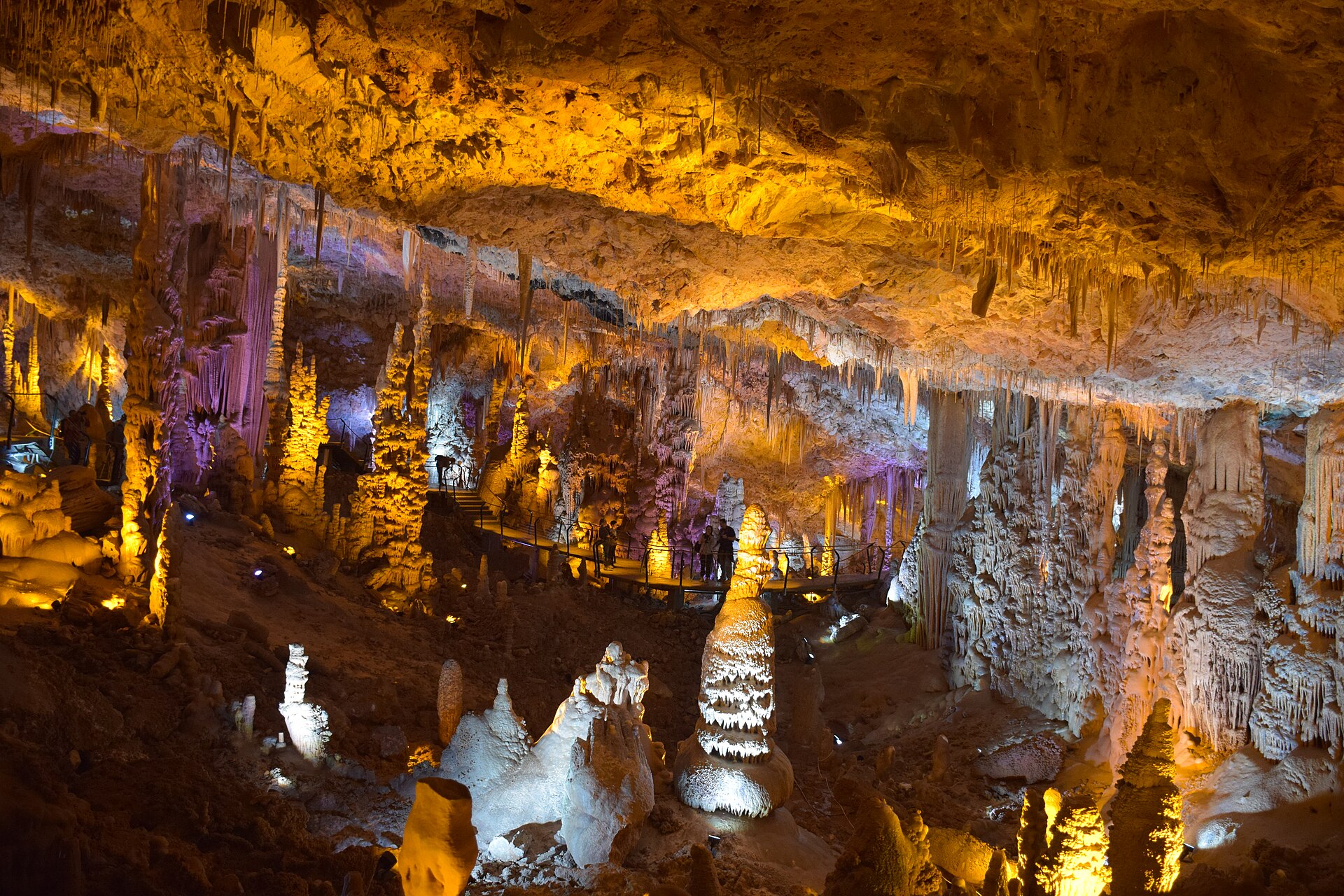
The entrance is easy to miss—a narrow fissure in the rock, half-concealed by shrubs. Step inside, though, and the world changes. The walls glisten with stalactites and stalagmites, some towering several meters high, their shapes shifting in the dim light like frozen water or strange, ancient sculptures. The central chamber is the most striking, where massive columns formed by the merging of stalactites and stalagmites seem to hold up the ceiling. The air is cool and damp, thick with the scent of earth and stone, the silence broken only by the occasional drip of water from above.
Unlike more famous caves in Israel, Nahal Sorek remains quiet and unspoiled. There are no crowds, no artificial lighting, no tourist infrastructure—just the raw, untouched feel of a place that has barely changed in millennia. Yet people have been here before. Archaeological finds suggest the cave was used as far back as the Paleolithic era, with tools and animal remains discovered in its depths. Later, during the Bronze Age, it served as a refuge for locals during times of war and invasion.
Visiting the cave isn’t like touring a typical attraction. There are no paved paths or signs, just a sense of stepping into something wild and untamed. Entry is free, but it’s best to explore with someone who knows the way—ideally a guide, or at least someone who’s been inside before. A flashlight is essential, as the cave is completely dark. Some passages are tight, and the ground can be slippery, but the effort is worth it. The reward is a rare sense of solitude and connection to something ancient.
The Sorek Valley itself is worth exploring. It’s one of the few places in Israel where nature still feels untouched—dense Mediterranean vegetation, rocky gorges, and clear streams that swell into rushing torrents in the spring. Nearby trails lead to other points of interest, like old water mills and remnants of Roman roads. Locals often come here for picnics or to escape the city, drawn by the quiet and the beauty of the landscape.
Nahal Sorek Cave isn’t just a geological wonder; it’s a place where layers of history and nature overlap. Beneath your feet lie millions of years of slow, patient formation, while around you are traces of the people who once sought shelter here. In a world that’s increasingly built up and hurried, places like this remind you of the value of stillness and the weight of the past. It may not have the fame of Masada or the Dead Sea, but its quiet magic runs deep.