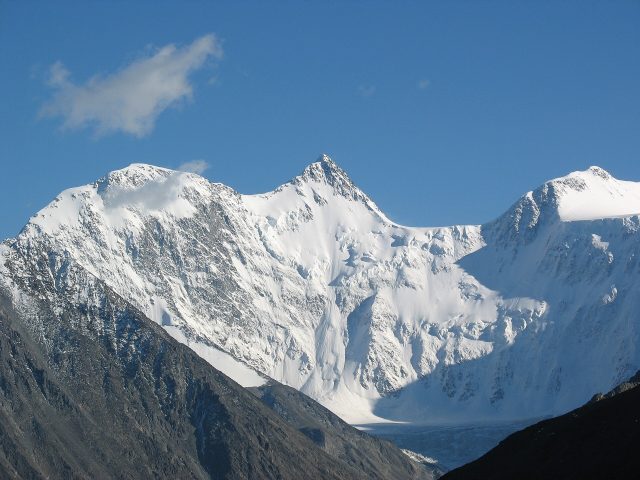
Chike-Taman Pass isn’t just a stretch of road cutting through the Altai Mountains—it’s where the journey itself becomes part of the destination. Winding along the Chuya Highway, this pass connects the northern foothills with the rugged highland valleys of southern Altai. The asphalt snakes between sheer cliffs, each turn revealing something new: dense forests giving way to towering rock faces, distant snowfields clinging to the peaks even in summer. Drivers instinctively slow down, and passengers press closer to the windows, struggling to take in the shifting landscapes that unfold faster than the mind can process.
At nearly 1,500 meters above sea level, the air grows cooler, the sky feels closer, and the mountains stretch endlessly toward the horizon. On clear days, the ridges dissolve into the haze, creating the illusion of infinite space. But this isn’t just a scenic viewpoint—it’s a threshold where Altai’s raw beauty becomes impossible to ignore. Winter turns the pass into a test of skill, with snowdrifts, black ice, and howling winds making the road impassable without chains and experience. Summer brings crowds of travelers who pull over to photograph the views, catch their breath, and watch the landscape transform with every kilometer.
The pass has always been more than a geographical landmark. Its history is tied to the Chuya Highway, once part of the ancient Tea Road that linked Russia with China and Mongolia. In the 19th century, merchants hauled goods across these mountains—tea, silk, and porcelain from the east, furs and livestock from the Altai villages. The road was brutal: steep climbs, washed-out sections after rain, no bridges over raging rivers. Chike-Taman was one of the most treacherous stretches, where caravans often stalled for days. Modern engineering has smoothed the way, but the sense of overcoming something primal remains, especially when you stand at the edge and look down at the road twisting into the valley below.
There are no grand monuments here, nor are they needed. The pass is a masterpiece of nature, its jagged cliffs formed from ancient seabeds millions of years old. Geologists find fossilized shells embedded in the rock, while local legends speak of mountain spirits that frown upon littering or loud noises. Most visitors treat the place with respect—no one picks wildflowers, builds fires in forbidden spots, or pockets stones as souvenirs. The silence is broken only by the wind, the occasional rumble of a truck, or the distant lowing of cattle crossing the road.
The atmosphere at Chike-Taman is a mix of exhilaration and quiet. The road demands attention—sharp turns, oncoming traffic, herds of horses or cows ambling across the asphalt. Yet beyond the pavement, there’s a stillness that feels almost sacred. Locals say the mountains have a way of stripping away the noise of daily life, leaving only the vastness of the sky and the crisp, thin air. Some travelers pull over at small roadside clearings just to stand there, listening to the wind and realizing how small human concerns are against the backdrop of these ancient peaks.
For first-time visitors, the pass often comes as a shock. After the flat expanses of Siberia, the sudden rise of the mountains feels overwhelming, the road endless. But this is where the real journey begins—not just toward a destination, but into the rhythm of the land itself. Drivers who make it through usually exhale in relief, then grin. The hardest part is over, but the best is yet to come. Those who stop for the night in nearby villages often return, drawn back by the wind, the views, and that unshakable sense of freedom.
Winter transforms Chike-Taman into a different world. Snow softens the edges of the cliffs, and the road narrows to a thin ribbon between white slopes. Few tourists brave the cold, and locals avoid the pass unless absolutely necessary. But those who do venture through in winter are rewarded with absolute silence and otherworldly beauty. On crisp, cloudless days, the snow glitters under the sun, and time seems to stand still. Only the wind reminds you that life persists, even in the harshest months.
Summer brings life to the pass. Tents dot the roadside, and cars with license plates from across Russia cluster near small cafés. Here, you can buy hot tea, homemade pastries, or smoked fish from Lake Teletskoye. The vendors aren’t in a hurry—they know people stop as much for conversation as for food. Some ask about road conditions ahead, others share stories of their travels, and a few just stand in silence, soaking in the moment. In these small exchanges, Chike-Taman becomes more than a waypoint—it’s a place of connection, with the land, with strangers, and with oneself.
In recent years, the pass has become a highlight of popular travel routes. Cyclists tackle its grueling climbs, motorcyclists roar up the curves, and hikers pause to rest before continuing toward alpine lakes. For bikers, it’s one of the toughest sections of the Chuya Highway—long ascents, steep descents, and no room for error. But those who make it through carry the memory with them. Hikers usually linger only long enough to snap photos and eat a quick meal before moving on. Yet no matter how they pass through, Chike-Taman leaves its mark—a place where Altai first reveals its true character.
Today, the pass is more than just a road. It’s a symbol of the idea that the hardest parts of a journey are often the most rewarding. There are no luxury hotels, no tourist traps, no crowds. Just the mountains, the road, and the sky. And perhaps that’s the real magic of Chike-Taman: it doesn’t try to impress. It simply exists, as it always has, offering those who pass through not just a view, but a piece of itself to take along.