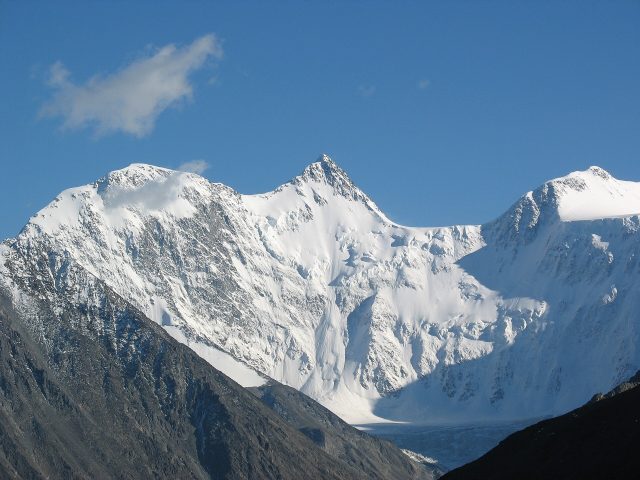
The Chuya Highway isn’t just a road—it’s one of Russia’s most legendary routes, winding through the heart of the Altai Mountains like a thread connecting the vast Siberian plains to the steppes of Central Asia. Stretching from Biysk to the Mongolian border, it’s less a journey from point A to point B and more an experience where every turn reveals something new: rolling grasslands giving way to jagged peaks, rushing rivers carving through valleys, and quiet alpine lakes reflecting the endless sky. For travelers, it’s less about the destination and more about the slow, deliberate rhythm of the drive itself.
The history of the Chuya Highway runs deep, tracing back to ancient trade routes that once linked China, Mongolia, and Siberia. Centuries ago, caravans laden with silk, tea, and spices moved along these paths, leaving behind faint echoes of their passage in the form of old stone markers and burial mounds. Russian settlers and Cossacks began shaping the route in the 18th century, but it wasn’t until the 20th century that the road took its modern form, transformed into a federal highway that still bears the weight of its past. Today, it’s officially known as the M-52, though for those who travel it, the name feels almost secondary—what matters is the way it cuts through the land, revealing layers of time with every kilometer.
The landscapes along the Chuya Highway shift dramatically as you move deeper into the mountains. Near Biysk, the road rolls through gentle foothills, where forests of pine and birch give way to open meadows. But as the elevation rises, the scenery grows wilder—steep gorges, fast-flowing rivers, and alpine pastures where horses graze in the summer sun. The stretch between Chibit and Aktash is particularly striking, where the road twists through high mountain passes, flanked by sheer cliffs and the occasional herd of yaks or sheep. In winter, the highway becomes a narrow ribbon of asphalt snaking through snow-dusted peaks, a stark contrast to the golden grasslands of summer.
One of the most breathtaking points along the route is the Seminsky Pass, where the road climbs to over two thousand meters above sea level. From here, the view stretches across a sea of ridges, their slopes covered in wildflowers in the warmer months and blanketed in snow during winter. The pass is as challenging as it is beautiful—strong winds and sudden snowstorms can make driving treacherous, but the sense of standing between two worlds, where the steppe meets the mountains, is unforgettable. It’s a place where the vastness of the Altai feels almost tangible, pressing in from all sides.
Just off the highway, there are places that demand a detour. The Katun Nature Reserve, for instance, is home to rare wildlife and plants found nowhere else, its trails winding through forests and along riverbanks. Then there’s the Chuya Steppe, a vast, windswept plain near the Mongolian border, where herds of horses and camels roam freely, much as they have for centuries. Scattered across the landscape are ancient burial mounds and petroglyphs, silent witnesses to the people who have lived here since prehistoric times. These sites aren’t just historical markers—they’re reminders of how deeply the land has shaped the lives of those who call it home.
For many, the Chuya Highway is as much about the people as it is about the scenery. Along the route, small guesthouses, campsites, and roadside cafes offer a chance to rest and connect with locals. Some of the best stops are along the Katun River, where in summer, travelers swim in its icy waters, and in winter, they gather around fires to share stories. The river itself is a constant presence, its banks lined with villages where life moves at a slower pace. Here, you might stumble upon a roadside market selling honey, smoked cheese, or handwoven textiles—small offerings from a culture that has thrived in these mountains for generations.
The highway also carries the spirit of the Altai’s nomadic traditions. In some villages, you’ll find yurts set up by the roadside, where travelers can stop for a cup of salty milk tea or *ayran*, a fermented dairy drink. Festivals celebrating horse racing, traditional music, and wrestling still take place in the warmer months, drawing crowds from nearby settlements. Even a brief conversation with a local shepherd or a shopkeeper can reveal stories that bring the landscape to life—tales of harsh winters, of rivers that flood in spring, of the quiet resilience of those who live here. It’s these encounters that make the journey feel less like passing through and more like being let in on a secret.
Of course, the Chuya Highway isn’t all romance—it’s a road that demands respect. The drive can be challenging, with sharp turns, narrow bridges, and stretches of rough pavement that test even experienced drivers. Winter brings its own hazards: snowdrifts, black ice, and sudden storms that can turn a clear day into a whiteout in minutes. But those who take the time to navigate it carefully are rewarded with something rare—a sense of being fully present in a place where nature still sets the rules. The key is to go slow, to pull over when something catches your eye, and to let the road unfold at its own pace. Because the Chuya Highway isn’t just a route; it’s a journey through a land that has shaped travelers, traders, and dreamers for centuries.