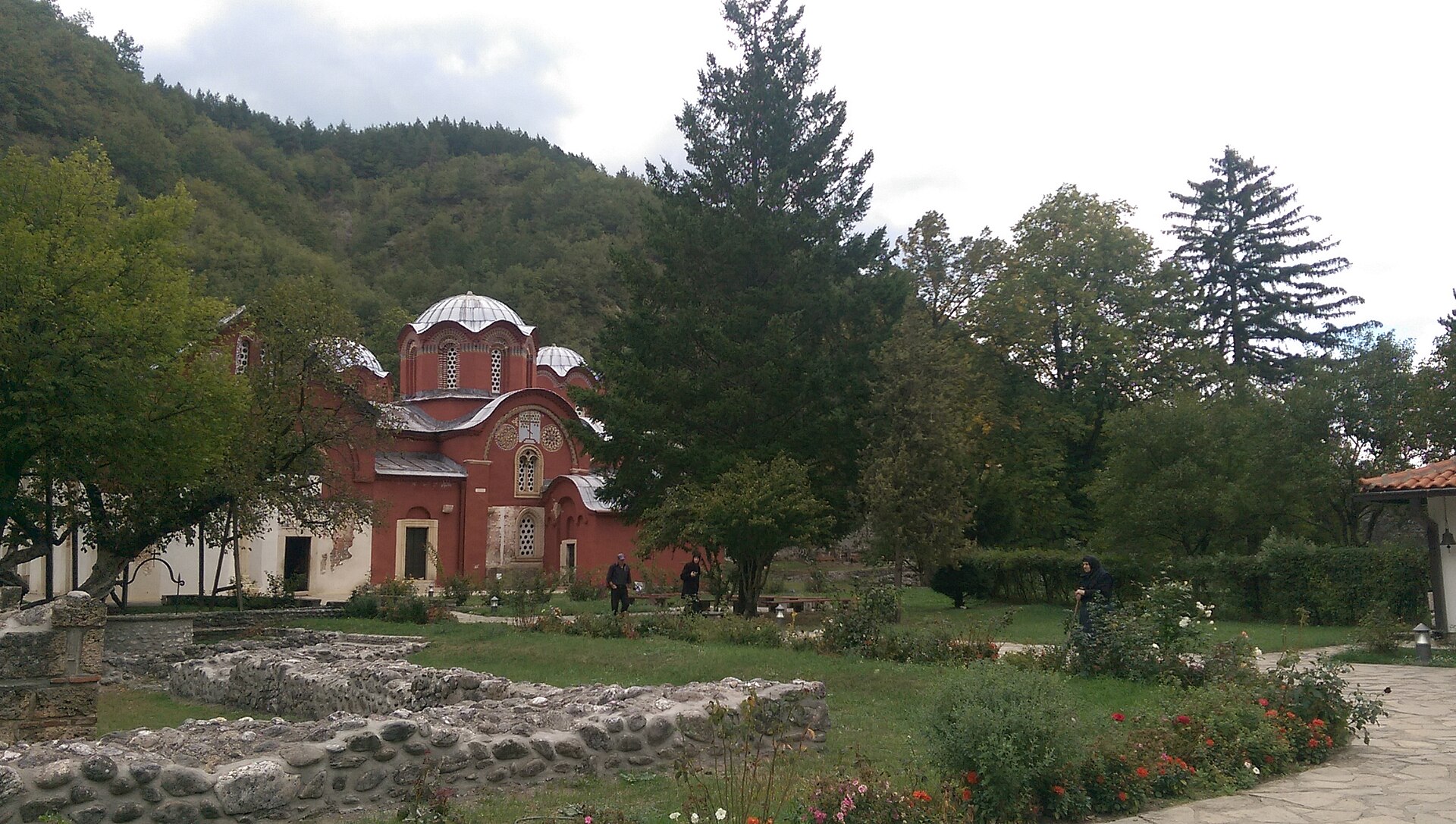
Perched at the edge of Peć, where the rugged mountains of western Kosovo begin their slow rise from the valley floor, the Patriarchate of Peć feels less like a monument and more like a living presence. It has stood here for centuries, not just as a cluster of ancient churches but as a quiet witness to the ebb and flow of empires, faiths, and the shifting fortunes of the Serbian people. The complex doesn’t announce itself with grand facades or towering spires; instead, it blends into the landscape, its weathered stone walls carrying the weight of history without ostentation. For those who make the journey here, it offers something rare—a sense of continuity in a region where the past is often contested, and the present remains unsettled.
The Patriarchate’s origins trace back to the 13th century, a time when the medieval Serbian state was at its height. It was here, in these modest yet enduring walls, that Stefan Dušan was crowned tsar in 1346, marking the peak of Serbian medieval power. The monastery’s elevation to a patriarchate later that century cemented its role as the spiritual heart of the Serbian Orthodox Church, a status it held even as political control over the Balkans changed hands. In its heyday, Peć was more than a provincial town; it was a destination for pilgrims, scholars, and rulers, a place where the affairs of church and state intertwined. The Patriarchate became a stage for history’s turning points, its halls echoing with the voices of those who shaped the fate of a nation.
The architecture of the Patriarchate tells its own story, one of gradual growth and adaptation. The complex is made up of four churches, each built in a different era but united by a shared purpose. The oldest, the Church of the Holy Apostles, dates to the 13th century and embodies the restrained elegance of early Byzantine design. Its simple lines and unadorned exterior give way to an interior rich with meaning, where every arch and column seems to carry the weight of the centuries. Over time, the Church of St. Demetrius was added, followed by the Church of the Virgin Hodegetria and the smaller Church of St. Nicholas in the 14th century. Together, they form a cohesive whole, a testament to the skill of medieval builders who understood how to balance harmony with individuality.
What makes the Patriarchate truly remarkable, however, are its frescoes. These are not mere decorations but visual chronicles of faith, history, and identity. The Church of the Holy Apostles preserves some of the oldest, dating to the 13th century, where scenes from the life of Christ and the saints unfold alongside portraits of Serbian rulers. The later frescoes in the Church of the Virgin Hodegetria, painted in the 14th century, reveal a more refined technique, with softer colors and intricate details that draw the eye upward. These works are more than artistic achievements; they are acts of devotion, created in an era when art and spirituality were inseparable. Even today, they retain their power to move, their faded pigments and cracked surfaces only adding to their mystique.
The Patriarchate’s history is inseparable from that of Kosovo itself. During the centuries of Ottoman rule, it remained one of the few bastions of Serbian Orthodox culture in the Balkans, a place where traditions were preserved even as the world around it changed. The Ottomans did not destroy it, but life under their rule was never easy. Monks continued their rituals, copying manuscripts and maintaining the faith, though always under the watchful eye of a foreign power. When Serbia regained its independence in the 19th century, the Patriarchate once again became a symbol of national identity, even as it remained geographically distant from the new state. The 20th century brought new trials—two world wars, the rise and fall of Yugoslavia, and finally, the conflict that left Kosovo and Serbia divided. Through it all, the Patriarchate endured, a silent but steadfast presence in a land marked by upheaval.
Today, the Patriarchate of Peć occupies a complicated space in the region’s collective memory. For some, it is a sacred site, a place of pilgrimage where the past feels tangible and the divine seems close. For others, it is a historical artifact, a reminder of the layers of history that have shaped Kosovo. The monastery remains active, with services held regularly and a small community of monks still residing within its walls. Visitors who step inside find themselves in a world where time moves differently. The light filters through narrow windows, casting long shadows across the frescoes, while the scent of incense lingers in the air. Outside, the streets of Peć lead back to the present, but within these walls, the past is never far away.
Walking through the Patriarchate, it’s impossible not to feel the weight of the centuries. The churches are small, their interiors intimate, yet they contain multitudes. The frescoes, though faded, still command attention, their figures seeming to watch over those who enter. The silence is profound, broken only by the occasional murmur of a prayer or the creak of an old door. There is no rush here, no sense of the modern world’s relentless pace. Instead, there is space to reflect, to consider the lives that have passed through these halls and the faith that has sustained them. It is a place where history is not just remembered but felt, where the past and present coexist in quiet conversation.
In a region where history is often politicized and memory contested, the Patriarchate of Peć stands as a rare point of stillness. It has survived wars, empires, and the passage of time, not because it was spared from conflict, but because it has always been more than just a building. It is a living link to a past that continues to shape the present, a place where the spiritual and the historical intersect. For Kosovo, it represents both a connection to a shared heritage and a reminder of the complexities that define the land. And for those who visit, it offers something even more valuable—a moment of quiet, a chance to step outside of time and consider what endures when everything else fades.