Nestled along the southern coast of Crimea, where the Black Sea meets the foothills of Mount Ayu-Dag, Partenit Park feels like a place where time moves at its own unhurried pace. Unlike the crowded promenades and bustling resorts that dot much of the coastline, this park offers something quieter—a retreat where the scent of pine needles mingles with the salt of the sea, and the only sounds are the rustle of leaves and the distant murmur of waves. It’s a landscape shaped as much by nature as by human hands, a green refuge that has witnessed the changing tides of history while remaining largely untouched by the passage of tourists.
The park’s origins trace back to the mid-19th century, when the southern coast of Crimea was beginning to transform into a fashionable destination for Russia’s aristocracy. The land belonged to the Vorontsov family, one of the empire’s most influential noble dynasties, who sought to create an estate that would rival the grand parks of Europe. Under their patronage, the slopes of Ayu-Dag were carefully terraced, and exotic trees and shrubs were planted, turning the area into a living garden where species from across the globe could thrive side by side. What emerged was not just a private retreat but a kind of open-air botanical collection, where magnolias from the Americas stood beside Crimean pines, and winding paths led visitors through a carefully curated wilderness.
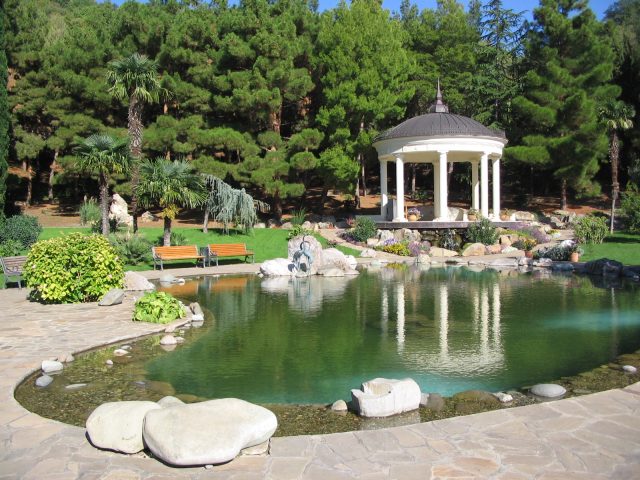
Today, the park is a blend of wild beauty and deliberate design. Ancient pines and firs tower overhead, their branches filtering the sunlight into dappled patterns on the ground below. Cypresses stand like sentinels along the paths, while sprawling magnolias and flowering shrubs add splashes of color throughout the year. Spring is perhaps the most enchanting time, when rhododendrons and wisteria burst into bloom, filling the air with their sweet fragrance. Even in the height of summer, the park remains cool, its dense canopy offering respite from the Crimean heat. Autumn turns the foliage into a palette of gold and crimson, while winter dusts the paths with a light frost, softening the edges of the landscape.
One of the park’s most striking features is the way it integrates with the surrounding terrain. Unlike formal gardens that impose order on nature, Partenit Park feels as though it has grown organically from the land itself. The paths wind upward from the coast, following the natural contours of the hillside, and each turn reveals a new perspective—whether it’s a secluded bench overlooking the sea, a narrow trail disappearing into the shade of the trees, or a stone staircase leading to a hidden viewpoint. From the higher terraces, the view stretches across the water to the distant peaks of the Crimean Mountains, and on clear days, the far-off Cape Meganom is just visible on the horizon.
The park is deeply intertwined with the history of Partenit itself, a settlement with roots that stretch back over a thousand years. The name is said to derive from the Greek *parthenos*, meaning "maiden," a nod to the legend that this was once the site of a temple dedicated to Artemis, the virgin goddess of the hunt. In the Middle Ages, a Greek village stood here, and by the 19th century, as Crimea became part of the Russian Empire, Partenit had evolved into a quiet resort favored by the nobility and artistic circles. The park, with its manicured paths and exotic plantings, was very much a product of this era—a place where the elite could escape the formality of court life and immerse themselves in nature.
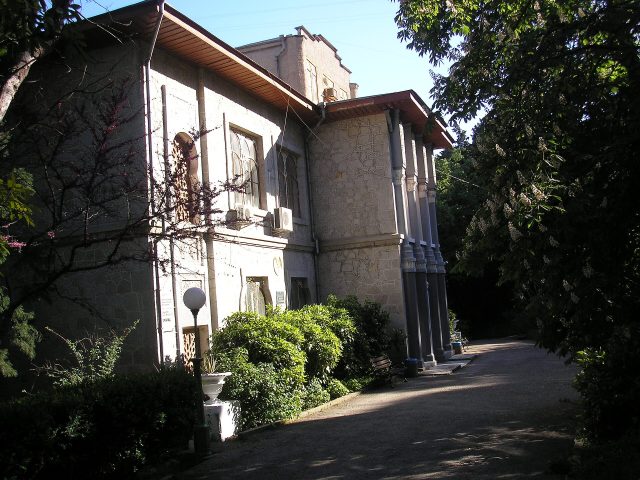
Though much of the Vorontsovs’ estate has faded with time, traces of its past remain scattered throughout the park. The ruins of a small palace, once a summer residence for the family, still stand near the coast, their weathered stones a silent testament to the grandeur that once was. Nearby, fragments of fountains and crumbling staircases hint at the estate’s former elegance. These remnants add a layer of depth to the park, turning a simple walk into a journey through history. It’s easy to imagine the clatter of carriages on the gravel paths or the murmur of conversations in French and Russian as guests strolled beneath the trees.
What makes Partenit Park so appealing is its lack of pretension. There are no guided tours, no ticket booths, no signs urging visitors to hurry along. Instead, the park invites you to wander at your own pace, to linger on a bench with a book, or to follow a path simply because it looks interesting. Locals often come here for morning runs or evening strolls, while travelers who stumble upon the park by accident find themselves staying far longer than they intended. The absence of crowds is part of its charm—this is a place where you can be alone with your thoughts, or share a quiet moment with someone else, without the usual distractions of a tourist hotspot.
Perhaps the most remarkable thing about Partenit Park is the way it changes with the seasons. In spring, the air is thick with the scent of blossoms, and the paths are lined with delicate petals. Summer brings a lush, green stillness, the trees providing shade from the sun’s glare. Autumn turns the park into a golden landscape, the leaves crunching underfoot as the days grow shorter. Even winter has its own quiet beauty, with frost clinging to the branches and the sea taking on a steely hue. Each season reveals a different side of the park, ensuring that no two visits are ever quite the same.
For those who seek out Partenit Park, it offers more than just a pleasant walk—it’s a chance to step away from the noise of modern life and into a space where nature and history coexist. It’s not a place of grand monuments or rare botanical specimens, but something far more personal: a living, breathing landscape that has been shaped by both human hands and the passage of time. Whether you come for the views, the history, or simply the quiet, the park has a way of making you feel as though you’ve discovered a secret corner of Crimea—one that the crowds have somehow overlooked.