Perched on the gentle slopes of Mount Ayu-Dag, the Church of the Dormition of the Mother of God in Partenit is one of those quiet places where history feels almost tangible. It stands not far from the Black Sea coast, where the Crimean mountains soften into rolling hills, and the air carries the scent of pine and salt. The church itself is modest in size, built in the traditional Russian style with whitewashed walls and a single dome, but its setting gives it a sense of timelessness. From here, the view stretches across the sea, and on clear days, the coastline of the Caucasus shimmers in the distance.
The origins of the church trace back to the 19th century, though the exact date of its construction remains uncertain. Some accounts suggest it was built in the 1860s, while others place it earlier, possibly as a replacement for an older structure that once stood on the same spot. What is known is that it served as a spiritual center for the small Greek community that lived in Partenit at the time. The village itself has ancient roots—its name is believed to derive from the Greek word for "virgin," a nod to the Virgin Mary, and the area was once part of the Byzantine world before shifting hands between empires.
The architecture of the church is simple but deliberate. The single dome, crowned with a cross, rises above the main building, its shape echoing the domes of older Byzantine churches found elsewhere in Crimea. The walls are thick, designed to keep the interior cool in summer and warm in winter, a practical choice for a region where temperatures can swing dramatically. Inside, the space is uncluttered, with a few icons and a wooden iconostasis separating the altar from the nave. The lack of ornate decoration is striking, but it suits the church’s understated character.
Over the years, the Church of the Dormition has seen its share of change. In the early 20th century, as political upheavals swept through Russia, the church fell into disrepair. During the Soviet era, religious sites across the country were repurposed or abandoned, and this one was no exception. It wasn’t until the late 1980s and early 1990s, when religious life in Russia began to revive, that efforts were made to restore the church. Today, it stands as a functioning place of worship, though its congregation is small, reflecting the changing demographics of Partenit itself.
For visitors, the church offers more than just a glimpse into religious history. It’s a place where the layers of Crimea’s past are visible in the stones and the landscape. The nearby ruins of an ancient settlement, scattered across the slopes of Ayu-Dag, hint at the area’s long human presence. The mountain itself, often called "Bear Mountain" for its shape, is steeped in local legend—some say it was once a giant bear turned to stone by an ancient curse. Whether or not the stories are true, the mountain adds a sense of mystery to the church’s surroundings.
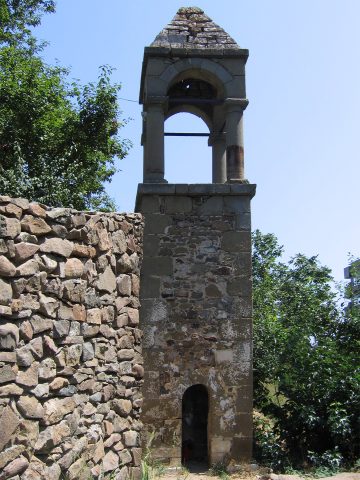
The church is also a quiet counterpoint to the more tourist-heavy spots along the Crimean coast. While places like Yalta and Alupka draw crowds with their palaces and beaches, Partenit remains a sleepy village where life moves at a slower pace. The church fits into this rhythm, its presence unobtrusive but constant. On Sundays, the sound of bells carries across the hills, and a handful of locals gather for services. For those who venture here, it’s an opportunity to step away from the well-trodden paths and experience a side of Crimea that feels more personal.
The best time to visit is in the early morning or late afternoon, when the light softens and the shadows lengthen across the hills. The path leading up to the church is lined with wildflowers in spring and summer, and the air is filled with the hum of insects. There’s no grand entrance or elaborate signage—just a simple gate and a dirt path that winds up the slope. Inside, the coolness of the stone walls offers respite from the sun, and the scent of wax and incense lingers in the air.
The Church of the Dormition may not be the most famous landmark in Crimea, but that’s part of its charm. It’s a place that doesn’t demand attention but rewards those who take the time to notice it. Whether you’re drawn by history, architecture, or simply the desire to find a quiet corner of the world, the church offers a moment of reflection. It stands as a reminder that some of the most meaningful places are those that have endured not through grandeur, but through the quiet persistence of time.