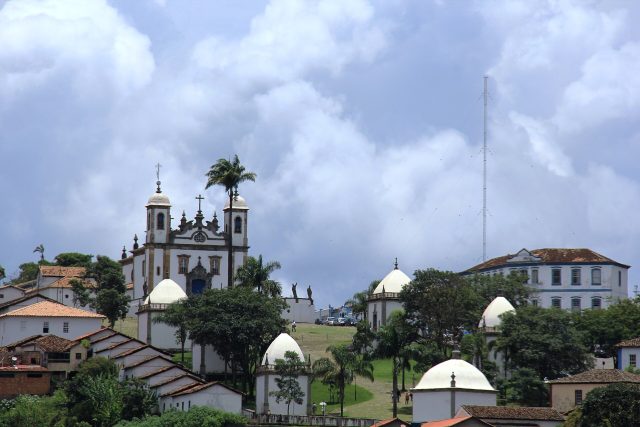
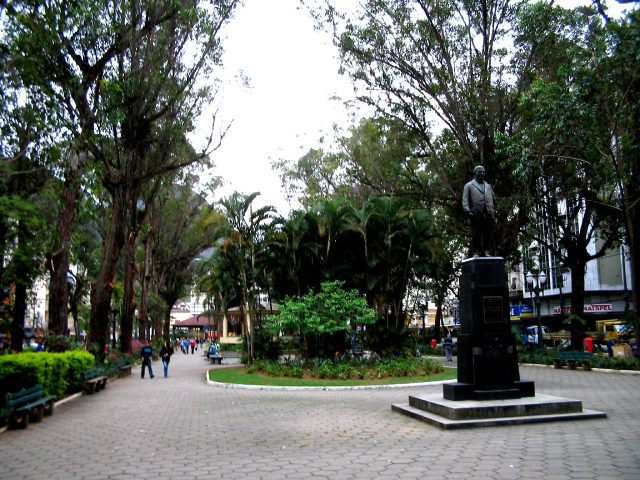
João Guimarães Rosa Park is one of those quiet places that feels like a well-kept secret, tucked away in the heart of Conselheiro Lafaiete, a town that rarely makes it onto tourist maps. There are no crowds here, no bustling streets or flashy signs—just open space, the shade of old trees, and the crisp, clean air that lingers after a summer rain. The park is named after one of Brazil’s most celebrated writers, the author of *Grande Sertão: Veredas*, a novel that captured the harsh yet poetic beauty of the country’s rural interior. For locals, this isn’t just a patch of green; it’s a refuge from the heat, a place to walk with family, or simply sit on a bench and watch the sunlight filter through the leaves.
The park itself is small but well-maintained, with neatly paved paths and manicured lawns. Along the walkways, you’ll find trees native to this part of Minas Gerais—jacarandas, whose delicate purple blooms turn the park into a sea of violet in spring, and evergreen ipês, whose bark was once used in traditional remedies. At the center, a small pond is home to ducks and turtles, a favorite spot for children to feed the birds while adults occasionally cast fishing lines, though catching dinner here is more about the ritual than the result.
Conselheiro Lafaiete’s history is tied to the boom and bust of Brazil’s gold and diamond rush. In the 19th century, the town thrived as a mining hub, with bustling streets and rapid growth. But as the mines dried up, the town settled into a slower pace, becoming the kind of place where time moves differently. The park was established in the 20th century, a deliberate effort to preserve a connection to nature and create a space for relaxation. Naming it after Guimarães Rosa was no accident—the writer embodied the spirit of Minas Gerais, a land of rugged beauty and quiet resilience, much like the sertão he wrote about.
There’s nothing grand about the park’s design. You won’t find towering fountains or monumental statues, just a few simple gazebos for shade and stone benches inscribed with quotes from Guimarães Rosa’s works. These lines feel like an invitation to pause and reflect on the world around you—the stillness, the trees, the unhurried rhythm of life. One quote, carved into a granite slab near the entrance, stands out: it’s a reminder that wisdom often lies not in grand gestures, but in the quiet, ordinary moments.
While the park isn’t an open-air museum, there’s a sense of reverence for history here. School groups sometimes visit to learn about Guimarães Rosa, and on weekends, you might spot artists sketching the park’s landscapes. The atmosphere on those days is especially warm—the sound of pencils on paper, the rustle of book pages, the distant laughter of children. This isn’t a place for those seeking excitement or spectacle; it’s for those who appreciate stillness and the chance to be alone with their thoughts.
Conselheiro Lafaiete isn’t the kind of town that draws crowds with festivals or historic landmarks. Its charm is quieter, more understated. João Guimarães Rosa Park is a perfect example of that—it captures the unhurried pace of life in a Brazilian interior town. In the mornings, elderly locals come for walks; in the afternoons, mothers push strollers along the paths; and by evening, students gather to study or chat with friends. As dusk falls, the park becomes even more enchanting, with soft lamplight casting long shadows and the trees taking on a mysterious silhouette.
If you find yourself in Conselheiro Lafaiete, don’t rush past this place. The park asks nothing of its visitors except the willingness to slow down and listen to the silence. There are no tickets, no lines, no strict rules—just greenery, birdsong, and a gentle breeze. That’s probably why locals love it so much: it doesn’t demand attention, it simply exists, as much a part of their lives as the streets they walk every day. In a world that’s always clamoring for more—more noise, more spectacle—places like this feel like a rare gift. They remind us that sometimes, the most meaningful things aren’t found in grand monuments or busy squares, but in the quiet rustle of leaves, the scent of rain on earth, and the simple act of sitting still.