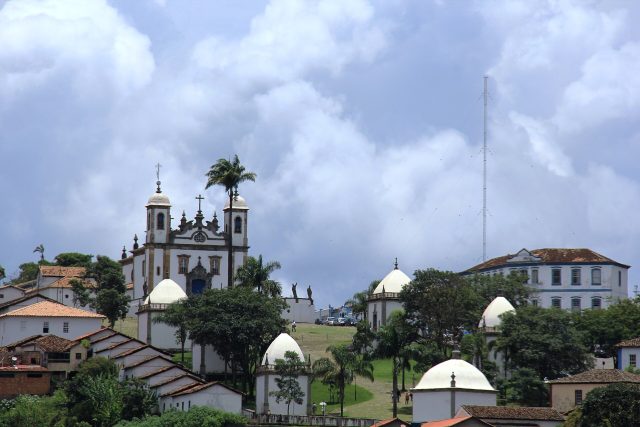
Saint Sebastian Church in Conselheiro Lafaiete is the kind of place that doesn’t announce itself. Tucked away on a quiet square in the town center, surrounded by low-slung houses with terracotta roofs, it blends into the rhythm of daily life in this small Brazilian city. There’s nothing grand about its appearance—no soaring domes or ornate facades like the cathedrals of Rio or Salvador. Instead, it exists quietly, a patient witness to the passage of time.
The church’s history is woven into the story of Conselheiro Lafaiete itself. The town emerged in the 18th century as a stopover for gold prospectors, and the church was one of its first stone structures. Built in the colonial style known locally as *barroco mineiro*—after the state of Minas Gerais, where it flourished—the architecture is understated yet deliberate. The whitewashed walls, simple lines, and modest twin towers reflect the practicality of the region. Inside, wooden ceiling beams, faded religious icons, and a humble altar hint at a past when gold leaf once adorned the surfaces, a common feature in churches of that era.
Saint Sebastian was no random choice for the church’s patron. During colonial times, he was revered as a protector of cities and a shield against epidemics, particularly in Minas Gerais. Locals believed he warded off smallpox and other diseases that ravaged the area. Even now, his feast day in January draws crowds, though the celebrations are far more subdued than in larger cities. The church fills with worshippers, music drifts through the air, and the square outside hosts small fairs, a fleeting burst of color in an otherwise quiet town.
The building itself tells a story of how cities in Brazil’s interior were constructed. Unlike the coastal settlements, where churches were built to last with marble and stone, here the materials were simpler—clay, wood, and local rock. The church’s facade was once covered in plaster, but time has worn it away, revealing the brick beneath. This gives the structure a lived-in quality, as if it’s aging alongside the town rather than standing frozen in time.
Inside, little remains of the original decor. The altar may have been painted by local artisans, but the colors have faded or been painted over. What’s left is the atmosphere of a provincial sanctuary: wooden pews, a few old candlesticks, and icons in plain frames. The space feels suspended in time, especially in the summer heat, when the thick walls offer a cool, quiet refuge from the sun.
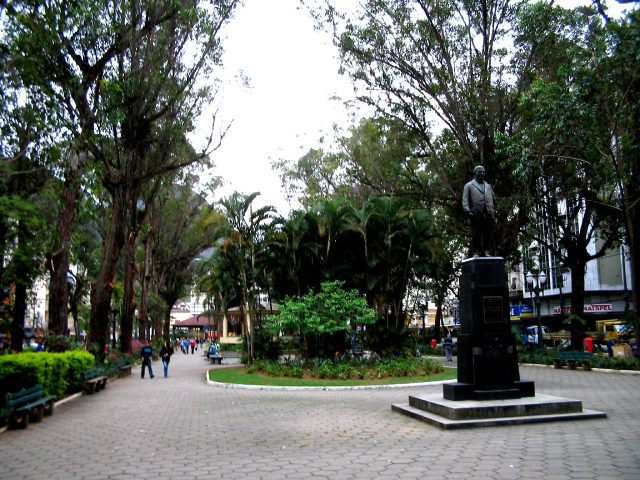
Conselheiro Lafaiete isn’t a place that appears in most travel guides. There are no beaches, no carnivals, no world-famous landmarks. The town moves at its own unhurried pace—morning markets selling fruit and cheese, empty streets in the afternoon, and evenings spent on the square with coffee and conversation. Saint Sebastian Church is part of this rhythm. It doesn’t draw crowds, which is precisely why it’s worth visiting. Here, you glimpse a side of Brazil that exists beyond the postcards.
On a weekday, the church is often empty. Services are held occasionally, but more often than not, the doors are simply left open. Locals treat it with quiet reverence, not as a tourist attraction but as a place where generations have been baptized, married, and mourned. That’s its real value—it’s not a monument but a living part of people’s lives.
The church was once surrounded by a defensive wall, though only fragments remain. Now, the space is filled with flower beds and an old, long-dry fountain. These remnants are subtle reminders that Conselheiro Lafaiete has its own history, even if it’s not as dramatic as Ouro Preto or Diamantina. But it’s in places like this that you find the real Brazil—the one where life unfolds quietly, and old churches, squares, and houses become the backdrop to everyday existence.
Visiting Saint Sebastian Church isn’t an excursion; it’s a pause. There are no explanatory plaques, no audio guides, no souvenir stalls. Just silence, the scent of aged wood, and the soft light filtering through narrow windows. The beauty of the place lies in its lack of demands—it asks only for a moment of attention and respect for the stories it holds.