Zdrój Park in Jastrzębie-Zdrój is one of those places that doesn’t reveal itself at first glance. It’s not the kind of manicured urban park with neat pathways and fountains, but rather a quiet pocket of wilderness that seems to have survived almost by accident amid Upper Silesia’s industrial landscape. There are no crowds, no flashy attractions, no signs pointing you toward the next must-see spot—just trees, gentle hills, and a handful of old buildings that feel suspended in time.
The park’s history is woven into the story of the town itself. Jastrzębie-Zdrój began as a spa resort in the late 19th century, when mineral springs were discovered here and drew wealthy industrialists and aristocrats. They built villas and sanatoriums, and the park became part of this genteel retreat. Over time, the town grew into a major industrial hub, but Zdrój retained its original character—quiet, secluded, almost forgotten. Today, it stands as a reminder of an era when Silesia wasn’t just a coal basin but a place of rest and healing.
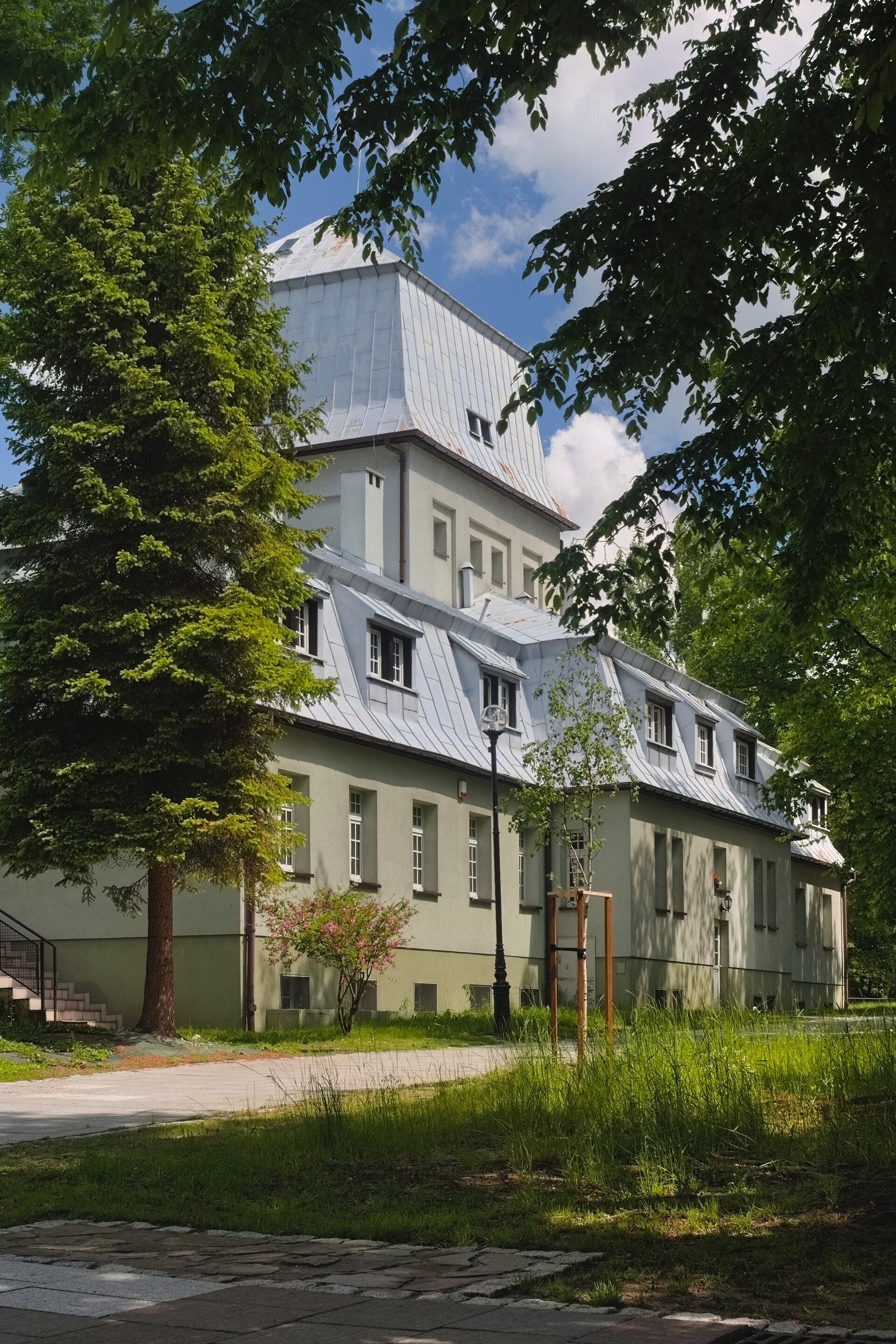
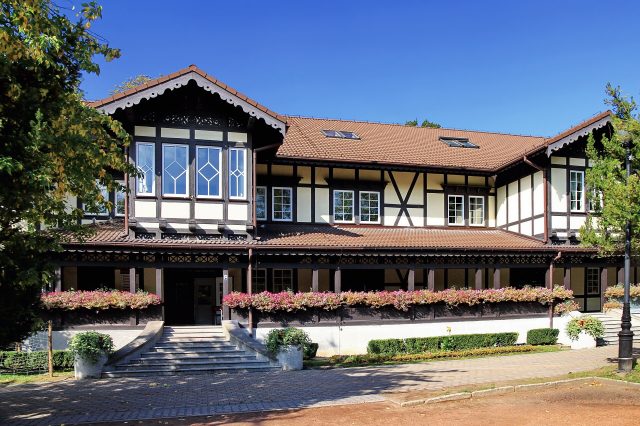
The architecture here is understated but striking in its own way. The most notable structure is the former sanatorium, built in the early 20th century in a style that blends late Art Nouveau with Renaissance revival elements. The building is solid yet graceful, with tall windows, decorative stucco, and small towers that give it a slightly melancholic charm. Now housing a cultural center, it sets the tone for the entire park—reserved, a little wistful, but undeniably inviting.
The park sprawls across several wooded hills, where nature follows its own rules. There are no formal flowerbeds or manicured lawns—just dense forest, winding paths that climb and dip, and small ponds tucked between the trees. In places, you might stumble upon the remnants of old gazebos or stone benches, once used by visitors taking leisurely strolls. Now covered in moss, they still carry a sense of the past, as if waiting for someone to sit down and stay awhile.
At the heart of the park is the mineral spring that gave the town its name. The water here was once famous for its healing properties, drawing visitors from across Europe. Today, the spring is housed in a modest pavilion with columns, where the water still flows, cold and slightly salty. Locals still come to collect it, believing in its benefits. A weathered plaque nearby tells the story of the place, though time has made the details harder to read.
Zdrój isn’t the kind of park you visit for excitement or spectacle. It’s a place for slow walks, for listening to the rustle of leaves, for reflecting on how this region has changed over the past century. In summer, the shade keeps it cool even on the hottest days, while autumn turns the park into a golden landscape, with maples and oaks blazing in shades of amber and crimson. Winter brings a quiet stillness, the snow muffling footsteps and frost dusting the branches.
Though unassuming, the park holds a special place in the life of the town. For locals, it’s a spot for weekend strolls, gatherings, and small celebrations. In summer, open-air concerts are held here, and in winter, Christmas markets bring a festive air. But even without events, Zdrój remains a refuge from the hustle of daily life, a place where history feels tangible. There’s nothing forced or artificial about it—just nature, architecture, and the quiet weight of the past coming together to create something rare.
If you find yourself in Jastrzębie-Zdrój, take the time to wander through the park. Climb one of the hills for a view of the town and the surrounding countryside. You won’t find anything extravagant here, but that’s precisely the point. Zdrój doesn’t demand attention; it waits patiently to be discovered. And those who do will leave with something more lasting than vivid memories—a sense of stillness, of connection to something older and deeper.