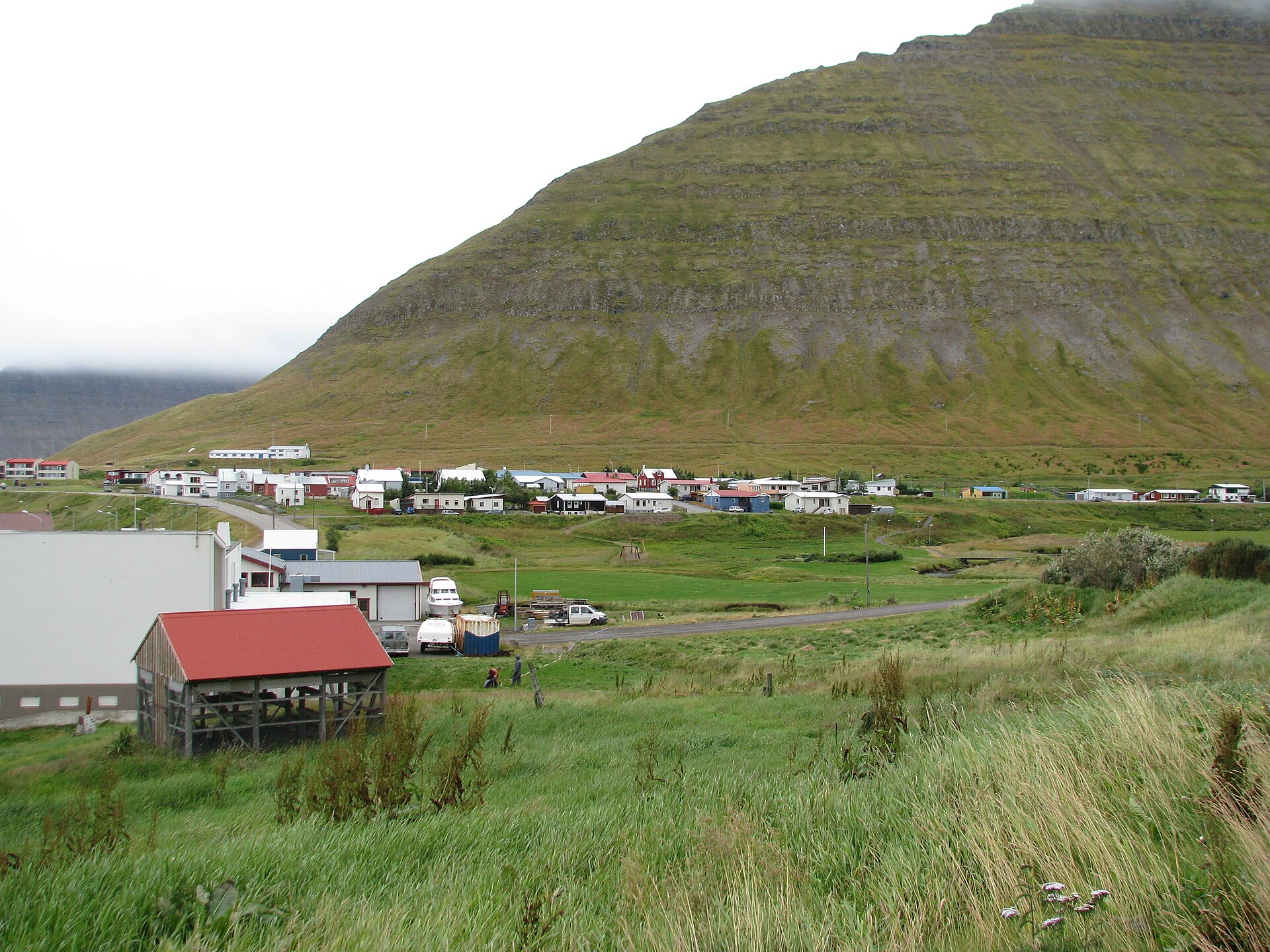
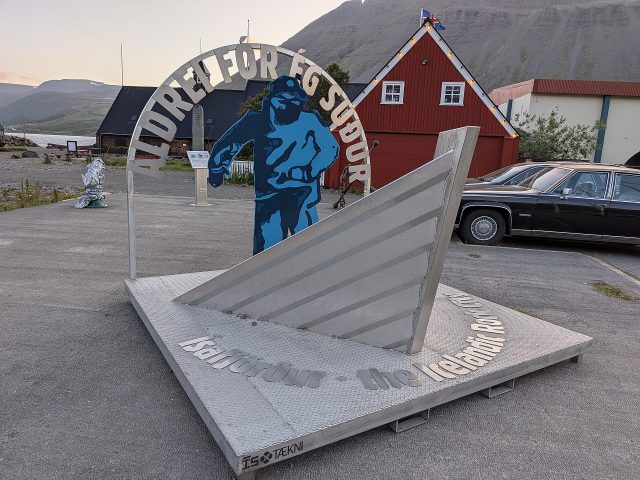
Ísafjörður is a place where the raw beauty of Iceland’s Westfjords feels most alive, and Hnífsdalur Park is one of its quietest secrets. Tucked just outside the town, this isn’t a park in the usual sense—no manicured lawns, no playgrounds, no crowds. Instead, it’s a stretch of wild coastline where the land meets the sea with unfiltered honesty. The drive here is part of the experience, a narrow road winding between sheer cliffs and the deep blue of the fjord, with only the occasional house clinging to the hillsides. By the time you arrive, the world beyond feels distant, replaced by the sound of wind and waves, the scent of salt and damp earth.
There’s nothing staged about Hnífsdalur. It’s a place where nature dictates the rules, and humans have learned to step lightly. The paths are simple, marked only by a few signs, and the ground beneath your feet is a mix of volcanic gravel and moss-covered rocks. The wind here doesn’t just blow—it sweeps in from the fjord with a force that makes you lean into it, carrying the taste of the ocean. There are no cafes or souvenir stands, no grand viewpoints with railings. Just the open space, the water, and the sky, stretching endlessly in every direction. For those who come seeking Iceland’s untamed side, this is where it reveals itself.
The park’s history is woven into the fabric of Ísafjörður and the Westfjords, a region that has always lived by the rhythm of the sea. Centuries ago, this stretch of shoreline was a vital hub for fishermen, a natural harbor where boats could shelter from the North Atlantic’s storms. Trade and supplies passed through here, and from this point, expeditions set out to explore the deeper reaches of the fjords. Today, the remnants of old docks and foundations are barely visible, but they’re there if you know where to look—a quiet testament to the lives that once depended on this place. The park doesn’t preserve history in the way a museum does; it lets the land tell the story itself.
What makes Hnífsdalur striking isn’t architecture or grand design, but the way the landscape commands attention. The cliffs rise sharply from the water, their jagged edges softened by patches of green where moss and lichen have taken hold. On clear days, the fjord mirrors the mountains opposite, turning the scene into something almost surreal. In winter, snow blankets the ground, and the water takes on a steely stillness, broken only by the occasional ripple. The light here is different, too—softer in summer, when the midnight sun casts long shadows, and stark in winter, when the low sun turns the snow into a blinding white. It’s a place that changes with the seasons, yet always feels the same in its quiet intensity.
For locals, Hnífsdalur is more than a park; it’s a part of daily life. Fishermen still come here to check their nets or take a moment away from the harbor’s bustle. Families gather on the shore for picnics, children scrambling over the rocks while parents watch the water. In autumn, the hillsides burst with blueberries and crowberries, and people fill baskets with the tart fruit, a small but meaningful harvest. When winter arrives and the days shrink to a few hours of light, the park becomes a prime spot for watching the northern lights, their green and purple ribbons dancing across the sky, unobstructed by city lights. It’s a place where life’s simple rituals unfold without fanfare.
The park also carries the weight of the Westfjords’ past—a region where survival has always been a quiet, daily struggle. Iceland has few places where nature hasn’t been tamed in some way, but Hnífsdalur remains one of them. There are no plaques or exhibits here, no curated narratives about the people who once lived and worked along this shore. Instead, the history lingers in the wind, in the way the rocks have been worn smooth by centuries of waves, in the stories passed down through generations. For many Icelanders, such places feel almost sacred, not because of any grand monuments, but because they hold the essence of what it means to live in this land.
A walk through Hnífsdalur isn’t about ticking off sights or capturing the perfect photo. It’s about slowing down, about letting the space work on you in its own time. There are no set trails, no must-see viewpoints—just the freedom to wander, to sit on a rock and watch the tide roll in, to listen to the cries of seabirds overhead. The park doesn’t demand your attention; it simply offers itself, and what you take from it depends on what you’re willing to notice. Some come for the solitude, others for the way the light plays on the water. But everyone leaves with the sense that they’ve touched something real, something untouched by the noise of the modern world.
This isn’t the kind of place that makes for dramatic travel stories or Instagram feeds. There are no dramatic waterfalls or geothermal pools, no crowds to prove you’ve been somewhere special. Instead, Hnífsdalur lingers in memory as a feeling—the crispness of the air, the weight of the silence, the way the wind seems to carry voices from the past. It’s a place for those who don’t need distractions, who are content to simply be present. In a world where so much is curated and staged, the park’s unassuming authenticity is its greatest gift. It doesn’t try to impress; it just is, and that’s enough.