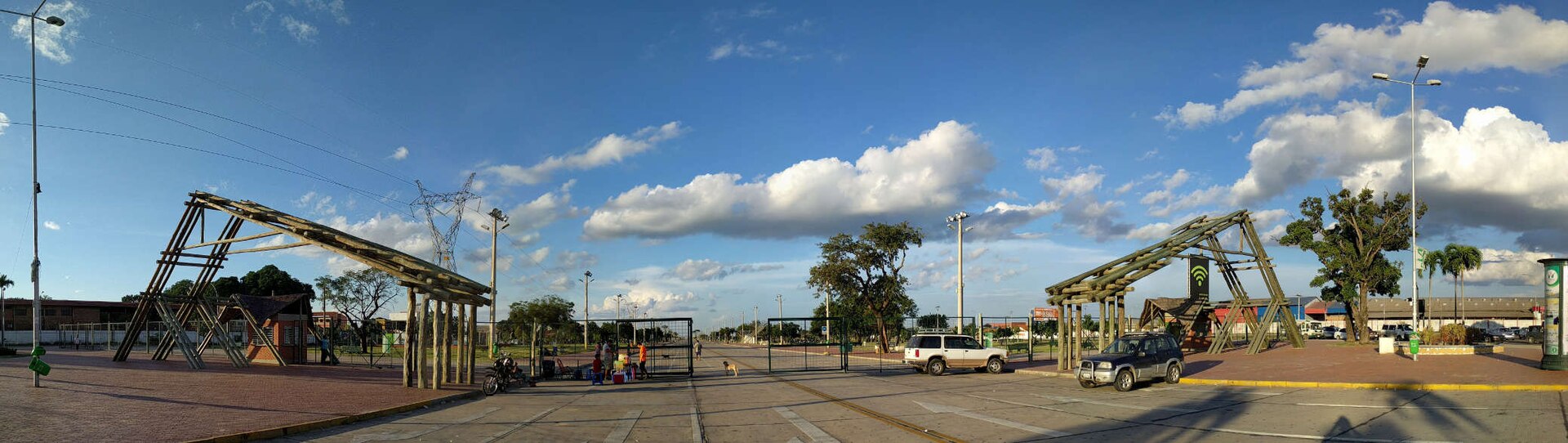
Santa Cruz de la Sierra is a city that moves at its own rhythm, a place where the energy of urban life hums beneath the surface of wide avenues and bustling plazas. Yet even here, in the heart of Bolivia’s largest and fastest-growing city, there are pockets of quiet where the pace slows and the air feels lighter. Parque Urbano is one of those places—a green refuge that doesn’t try to impress with grand monuments or manicured gardens, but simply offers a space to breathe.
The park sits in the middle of the city, surrounded by residential blocks and office buildings, its boundaries marked by the steady flow of traffic just beyond its edges. There are no towering fountains or elaborate sculptures here, just open lawns, shaded pathways, and clusters of trees that have stood for decades. It was designed not as a showpiece, but as a practical escape for a city that was expanding rapidly in the mid-20th century. Santa Cruz had long been a modest outpost, overshadowed by the highland cities of La Paz and Sucre, but as it grew into an economic hub, the need for public spaces became clear. Parque Urbano was born from that necessity, a place where people could gather without pretense.
The layout of the park is straightforward, almost unassuming. A central walkway, paved with simple tiles, leads toward a small amphitheater where occasional concerts or performances take place. The trees lining the paths are mostly native species, their leaves providing shade in the heat of the day. During the rainy season, the park comes alive with vibrant greens and the scent of blooming flowers, while in the dry months, it remains a cool oasis thanks to careful maintenance. There’s a sense of continuity here—many of the trees were planted when the park was first established, and they’ve grown alongside the city itself.
What makes Parque Urbano special isn’t its design, but the way people use it. It’s a place where the rhythms of daily life play out in public. In the mornings, you might see older men gathered around chessboards, their games unfolding slowly beneath the trees. By midday, children run across the grass, chasing balls or each other, while groups of teenagers sit on benches, talking or scrolling through their phones. On weekends, the park fills with families—parents pushing strollers, kids on bicycles, grandparents watching from the sidelines. There’s no agenda, no schedule, just the easy flow of people coming and going as they please.
Sports are a big part of the park’s identity. Basketball and volleyball courts draw players of all ages, and there’s a small outdoor fitness area where people lift weights or stretch under the open sky. Early risers often come for yoga or jogging, while in the evenings, impromptu soccer matches break out on the grass. For many in Santa Cruz, the park is a daily ritual—a place to unwind after work, to meet friends, or to get some exercise without the confines of a gym. It’s not about competition or spectacle; it’s about movement and connection, the simple act of being outside.
There’s something quietly democratic about Parque Urbano. It doesn’t cater to tourists or try to be anything other than what it is: a patch of green in a city that’s constantly changing. You won’t find guided tours or souvenir stands here, just the steady hum of local life. That’s part of its charm. The park doesn’t demand attention; it simply exists, offering a counterpoint to the noise and haste of the streets beyond. For those who live in Santa Cruz, it’s a familiar presence, a place that feels like home without needing to be anything more.
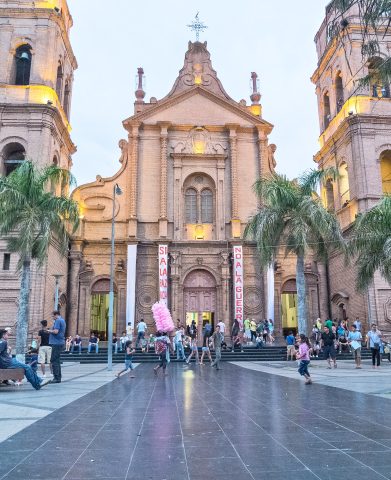
Santa Cruz itself is a city of contrasts—modern high-rises stand beside colonial-era buildings, and the clamor of markets gives way to quiet side streets. Parque Urbano reflects that duality. It’s not trying to be grand or historic; it’s just a place where people can pause. There’s no pressure to do or see anything in particular. You can sit on a bench and watch the world go by, or join a game of cards with strangers. The park doesn’t ask for much, and in return, it gives back something intangible: a sense of belonging, a moment of stillness in a city that’s always on the move.
In the end, Parque Urbano is exactly what a city park should be—not a destination, but a part of the fabric of daily life. It’s where a child takes their first wobbly steps on a bicycle, where a couple shares a quiet conversation under the trees, where an old man feeds the pigeons at dusk. It’s unremarkable in the best possible way, a place that doesn’t need to be extraordinary to matter. And perhaps that’s why it endures, a quiet constant in a city that’s always growing.