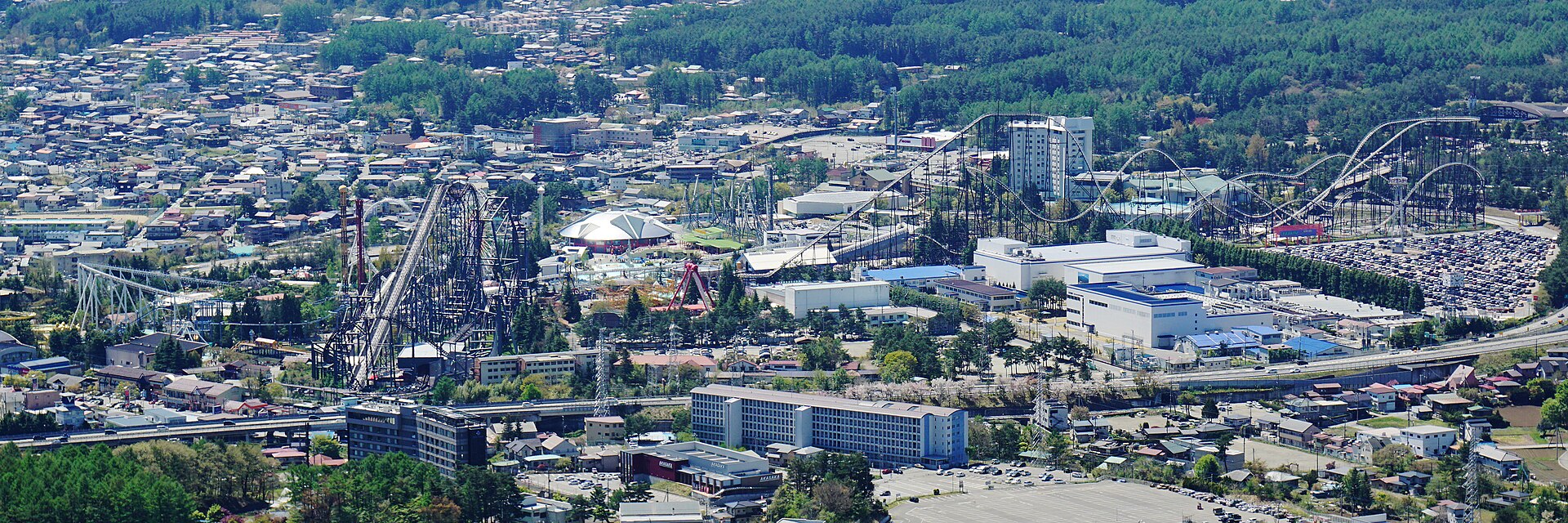
Fuji-Q Highland isn’t the kind of place you stumble upon by accident. Tucked at the base of Mount Fuji, where the air carries the quiet weight of ancient forests and still lakes, this amusement park arrives like a jolt—sudden, loud, and impossible to ignore. Unlike the manicured gardens or serene temples that dot the region, Fuji-Q doesn’t whisper. It roars. The mountain looms in the distance, indifferent to the screams of riders hurtling down steel tracks at impossible speeds, as if nature itself is watching, amused, while humans test their limits against its backdrop.
The park’s origins trace back to the 1960s, a time when Japan was hurtling toward modernity with the same velocity as its bullet trains. What began as a modest collection of carousels and a Ferris wheel quickly evolved into something more ambitious. The founders recognized early on that Fuji-Q had one advantage no other park could claim: a front-row seat to Japan’s most iconic landmark. While other amusement parks relied on cartoon mascots or elaborate themes, Fuji-Q staked its identity on something far simpler—location. Here, the thrill wasn’t just in the ride; it was in the view. Over the decades, that philosophy shaped the park’s growth. Engineers and designers were brought in not just to build bigger, faster attractions, but to create experiences that felt like a dialogue with the mountain itself.
Fujiyama, the park’s most famous roller coaster, opened in 1996 and held the title of the world’s tallest and fastest for years. Even now, decades later, it remains the heart of Fuji-Q. The ride climbs 79 meters into the sky before plunging riders into a stomach-dropping descent at over 130 kilometers per hour. But the numbers only tell part of the story. What makes Fujiyama unforgettable is the way the track weaves through the landscape, teasing glimpses of Mount Fuji between sharp turns and sudden drops. For a few breathless seconds, the mountain feels close enough to touch, only to vanish again as the coaster twists away. Not everyone dares to ride it—some watch from the ground, equal parts fascinated and terrified—but those who do rarely forget the experience.
Of course, Fujiyama is just one of many adrenaline-fueled attractions. Eejanaika, the world’s fourth-fastest roller coaster, flips riders upside down while spinning them in their seats, turning the landscape into a blur of motion. Takabisha takes a different approach, launching passengers down a 121-degree vertical drop—the steepest in the world—before twisting them through a series of near-misses with the ground. These rides aren’t just about speed; they’re about disorientation, about the moment when your brain can no longer tell which way is up. Yet for all its extremes, Fuji-Q isn’t solely a playground for thrill-seekers. There are gentler options, too: a Ferris wheel that offers a slow, sweeping view of the mountain, or haunted houses where the scares come from shadows and whispers rather than velocity. The park balances its intensity with moments of quiet, ensuring there’s something for those who prefer their heart rates steady.
Beyond the rides, Fuji-Q has spaces that invite you to simply pause. The terrace near the entrance is one of the best spots to take in the view, especially at dusk when the last light catches the snow on Fuji’s peak. Nearby cafés serve matcha and sweet red bean treats, their flavors as much a part of the experience as the rides themselves. The air here is cooler than in Tokyo, even in summer, and in winter, the contrast between the snow-dusted mountain and the park’s neon lights creates a scene that feels almost surreal. It’s in these moments—when the screams fade and the crowd thins—that the park reveals another side of itself, one that’s less about adrenaline and more about the strange beauty of seeing an ancient mountain framed by modern spectacle.
The park changes with the seasons, each bringing its own mood. Summer is the busiest time, packed with families and groups of friends escaping the city heat. Autumn transforms the surrounding forests into a blaze of red and gold, making the rides feel like they’re cutting through a living painting. Winter quiets things down, though the park remains open, its attractions standing stark against the snow. Some of the most striking photos of Fuji-Q are taken in these colder months, when the mountain wears its white cap and the park’s lights glow like embers in the dark. Spring, with its cherry blossoms, softens the edges of the steel and concrete, reminding visitors that even here, nature has the final say.
What makes Fuji-Q Highland unusual is how little it tries to be anything other than what it is. There’s no attempt to mimic traditional Japanese aesthetics or force a narrative onto the experience. The park doesn’t compete with the mountain; it coexists with it. Fuji remains the star, and the rides are merely a way to see it from a different angle. That honesty might be why Fuji-Q has endured for so long. It doesn’t pretend to be more profound than it is. It doesn’t need to. The mountain does that work for it.
For first-time visitors, the park can feel overwhelming. The towering structures of the roller coasters, the shrieks of riders, the smell of fried food and engine oil—it’s a sensory overload. But after a few hours, the initial chaos gives way to something more familiar. Fuji-Q isn’t just a collection of rides; it’s a place with its own rhythm, its own rules. There’s no pretense of luxury or exclusivity. Everything is designed for maximum impact in a short amount of time, whether that means a three-minute roller coaster or a quick photo with Fuji in the background. And yet, despite being just two hours from Tokyo, the park feels like its own world—a place where the only real expectation is that you leave your comfort zone at the gate.