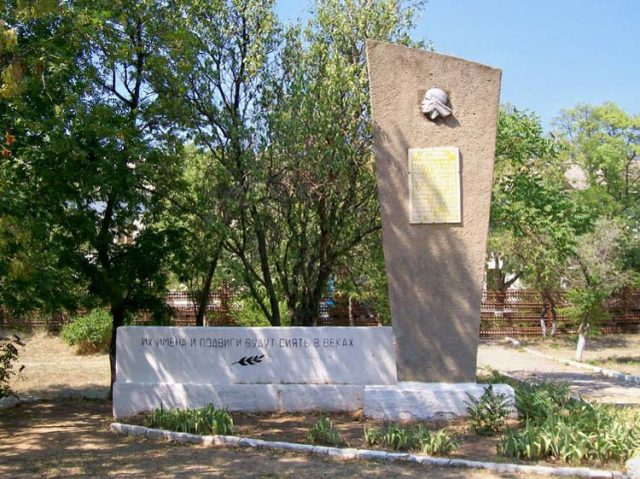
Victory Park in Kacha is one of those places where history doesn’t feel like a distant lesson but something quietly present in everyday life. It sits on the outskirts of Sevastopol, in a small suburb where the past and the present coexist without fanfare. There are no grand monuments here, no imposing sculptures demanding attention—just a gentle hillside where locals come to escape the summer heat under the shade of trees, or to walk along snow-dusted paths in winter.
The park’s understated nature is part of what makes it meaningful. It doesn’t try to impress with scale or drama; instead, it offers a space where memory feels personal rather than performative. The central avenue leads to a simple stele with an eternal flame, flanked by wartime artillery pieces that have long since fallen silent. The trees lining the paths are old enough to have witnessed the changes in the landscape, their branches swaying over benches where people sit with books, conversations, or just the quiet company of their thoughts.
Kacha, like much of Crimea, carries the weight of its wartime history. The area saw fighting during the liberation of the peninsula, and for decades after, this land remained neglected. It wasn’t until the late 20th century that the decision was made to turn it into a memorial space—not with plaques or names, but with an unspoken understanding of what happened here. There are no lists of the fallen, no formal tributes, just the land itself, shaped by time and human hands.
For the people who live in Kacha, the park is a familiar part of life. Families bring their children here on weekends, teenagers gather by the fountain, and older residents play chess under the trees. On Victory Day, veterans and their families come to remember, some sharing stories, others simply standing in silence. It’s a place where history isn’t confined to textbooks but lives in the stories passed down through generations. Some bring their grandchildren to walk the same paths their grandparents once did, pointing out where battles were fought or where soldiers once stood.
The park changes with the seasons, each bringing its own rhythm. In summer, it’s alive with the sounds of children playing and the murmur of conversations. Autumn quiets things down; the air fills with the scent of fallen leaves, and the paths become a soft carpet of gold and brown. Winter brings a hush, the snow muffling footsteps as people walk along the familiar routes. Spring arrives with the first blooms, the trees bursting back to life, and the park once again becoming a place of renewal.
What sets Victory Park apart from other memorials is its lack of pretense. There are no guided tours, no prescribed ways to experience it. You can sit on a bench and watch the wind move through the leaves, or wander off the main path to find a quiet corner. For some, it’s a place of reflection; for others, just a green space in the middle of a small town. It doesn’t demand reverence—it simply offers a moment to pause and consider what came before.
Kacha itself is a quiet place, far from the tourist crowds that flock to other parts of Crimea. There are no souvenir stalls or guided tours here, just a handful of streets where life moves at its own unhurried pace. The park fits naturally into this rhythm, a place where you can spend an hour or an entire afternoon without feeling rushed. It doesn’t ask for anything except a quiet respect for those who never returned from the war.
Over the years, small changes have come to the park—new benches, repaired paths—but the essence remains the same. The past isn’t erased or polished; it’s allowed to exist alongside the present. There’s no need for grand gestures or explanations. You come, you walk, you feel the weight of what happened here, and you leave with the sense that history isn’t just something you read about—it’s something you carry with you.