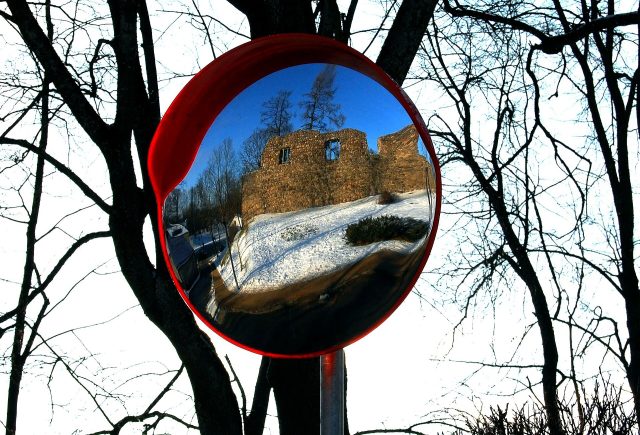
Pils Park in Valmiera is one of those quiet places where history and nature seem to breathe together, as if time moves at its own unhurried pace. Tucked in the heart of the city, it occupies what was once the site of a Livonian Order castle, though little remains of it today—just fragments of foundations and a shallow ditch, now softened by grass and moss. These modest ruins hint at Valmiera’s medieval past, when the town was a strategic stronghold along trade routes and a battleground for influence in the region. The castle, built in the 13th century, changed hands many times, was destroyed and rebuilt, only to be dismantled for good in the 18th century. Now, the space has transformed into a green refuge where visitors can stroll along shaded paths, rest on a bench by the pond, or take in the view from the gentle hill where the fortress walls once stood.
The park is small but remarkably peaceful. There are no flashy attractions or crowds here—just old trees, well-kept lawns, and a few monuments that blend seamlessly into the landscape. One of them honors Auseklis, a Latvian poet whose work is deeply tied to this region. Nearby, you might see schoolchildren leaving flowers or locals sitting quietly, lost in thought. In warmer months, the park comes alive with picnics on the grass, children playing, and the occasional strains of music drifting over from nearby festivals.
A particular charm lies in the park’s pond, framed by willows and chestnut trees. The water is still, reflecting the sky and the branches above. In summer, ducks and swans glide across its surface, while in winter, it freezes over, becoming an impromptu skating rink. Some locals bring fishing rods, though officially, angling within the city isn’t always permitted. Even without catching anything, sitting by the water feels like an escape—city noise fades away, and for a moment, you could be far beyond the town limits.
The park’s character has evolved over time. In the 19th century, as Valmiera grew into a cultural and educational hub, the first walking paths and benches appeared, along with flowerbeds that still bloom each spring and summer. During the Soviet era, the park expanded to include playgrounds and sports areas, but its quiet, old-fashioned atmosphere remained intact. Today, you’ll find people of all ages here—young couples, families with children, and older residents who’ve been coming since childhood.
Despite its historical roots, Pils Park doesn’t aim to impress with grand monuments or museum displays. Instead, it offers a space for slow walks, quiet reflection, and small joys. There are no strict rules or signs forbidding you to step on the grass—in fact, the park seems to encourage you to break from formality and simply enjoy being outside. In summer, the shade of the trees offers relief from the heat, while in autumn, the ground is carpeted with golden leaves that crunch underfoot.
For many in Valmiera, Pils Park feels like a shared living room. It’s where people meet for dates, walk their children, or gather with friends over coffee from a thermos. On weekends, families push strollers along the paths, and in the evenings, couples sit by the pond watching the sunset. The park isn’t just a green space—it’s woven into the fabric of daily life, asking only for respect for its quiet and natural beauty in return.
The park is also deeply connected to Valmiera’s history. Founded in the 13th century, the town has always been a crossroads of cultures—Latvians, Germans, Russians, and others have all left their mark on its architecture, language, and traditions. Pils Park, sitting on the site of the old castle, carries traces of those layers. Even without knowing its past, you can sense something special in the air, as if the ground itself remembers the centuries of stories it holds.
Today, Pils Park is more than just a place to relax—it’s a symbol of Valmiera. The town is often seen as provincial, but it has its own distinct character, and the park is one of its defining features. There’s no hustle of tourist hotspots here, just the quiet rustle of leaves, the scent of grass, and the unhurried rhythm of a small Latvian city. For visitors, it’s a pleasant discovery; for locals, it’s a place that always feels like coming home.