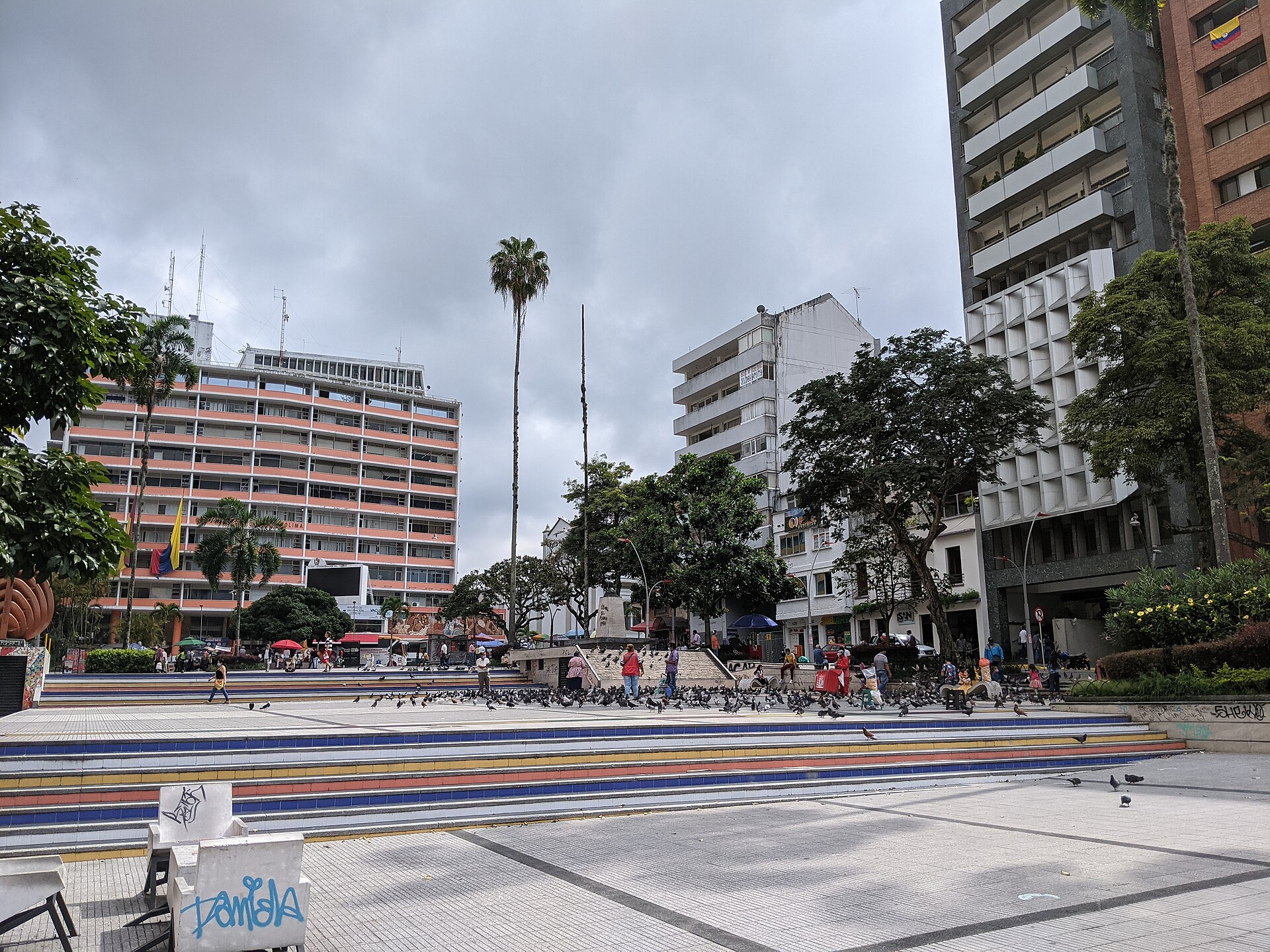
Murillo Toro Park is one of those quiet corners in Ibagué where the city’s usual hustle fades into something slower, softer. Tucked in the heart of the city, it’s not just a patch of green but a place where history lingers without fanfare. There are no flashy attractions or neon signs here—just shaded paths, old trees, and benches where you can sit and watch the world go by.
The park takes its name from Manuel Murillo Toro, a 19th-century Colombian statesman who served as president twice and played a key role in shaping the country’s early political landscape. Born near Ibagué in the town of Chaparral, his legacy is woven into the region’s identity. A modest bronze bust of him stands on a pedestal in the park, surrounded by flowerbeds. It’s not an imposing monument, but it carries weight—a reminder that history isn’t just made of grand events, but of people who left their mark in quieter ways.
The park’s design is simple, as city squares often are. A paved central walkway is lined with palms and other tropical trees, their leaves filtering the sunlight on warm afternoons. The grass is well-kept, and toward the edges, the greenery grows denser with shrubs and flowers tended by local gardeners. There are no grand fountains or towering sculptures, and that’s part of its charm. It doesn’t try to impress; it just offers a place to breathe.
Ibagué is known as Colombia’s musical capital, and Murillo Toro Park often hums with that spirit. In the evenings, you might hear street musicians playing guitars or accordions, sometimes even small groups performing traditional Colombian tunes. The music blends with the rustle of leaves and the murmur of conversations, creating an atmosphere that feels both lively and relaxed. For locals, the park isn’t just a place to walk through—it’s where they meet friends, read a book, or unwind after work.
The park’s story is tied to Ibagué’s own growth. Founded in 1550 by Spanish settlers, the city was once a small outpost surrounded by farmland. Over time, it became a regional hub, and Murillo Toro Park emerged in the 20th century as one of its first public spaces. Today, it’s surrounded by buildings from different eras—colonial houses, modern offices—making it a quiet bridge between the past and present.
There are no museums here, but the park’s history is written in its details. The old lampposts along the paths hark back to a time when electricity was still new in the city. Some of the trees may have been planted decades ago, their branches now stretching over the park like silent witnesses to change. Even the benches seem to carry stories, having hosted generations of locals sharing news, laughter, and quiet moments.
For visitors, Murillo Toro Park isn’t a must-see attraction in the usual sense. There are no crowds following guides, no souvenir stands—just the chance to see how people in Ibagué actually live. In the mornings, you might find older residents doing light exercises. By afternoon, students sit on the grass with their books. In the evenings, families stroll after dinner. On weekends, small markets pop up, selling local sweets, fresh fruit, and handmade crafts. It’s not a tourist spectacle, just everyday life unfolding naturally.
Ibagué’s climate, nestled in the foothills of the Central Cordillera, makes the park pleasant year-round. It’s never as sweltering as the Caribbean coast, nor as chilly as the highlands. Temperatures rarely dip below twenty degrees Celsius, and a gentle breeze from the mountains keeps the air comfortable even at midday. That’s why the park is always busy, but never crowded—there’s enough space for everyone to find their own corner.
Murillo Toro Park doesn’t demand attention. It doesn’t need to. Its value lies in its unassuming presence, a place that feels like it’s always been there. There’s nothing forced or artificial about it—just trees, paths, and people going about their day. In a time when so many cities feel like they’re designed for Instagram, places like this remind you that real beauty often lies in simplicity. Whether you’re a local or a visitor, it’s the kind of spot that makes you slow down, even if just for a little while.