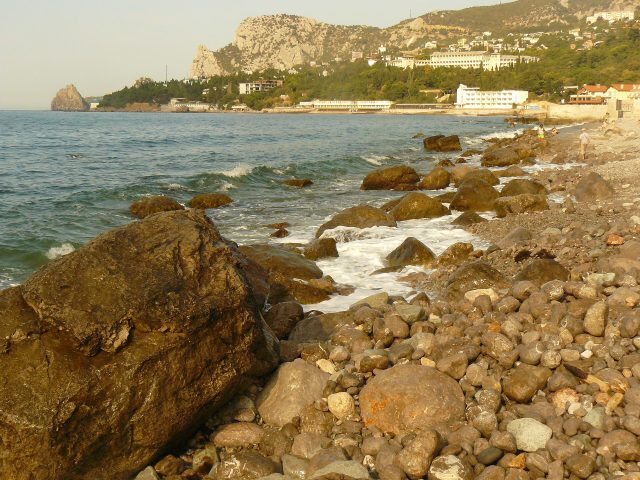
Nestled along the southern coast of Crimea, where the Black Sea meets the slopes of Mount Koshka, Miskhor Park feels like a world apart. This isn’t a place of crowded promenades or flashy attractions, but rather a quiet sanctuary where time seems to slow down. The air carries the scent of pine needles and saltwater, mingling with the fragrance of subtropical plants that have thrived here for over a century. The park stretches between the settlements of Miskhor and Koreiz, its terraced landscape offering a gradual descent toward the sea. Walking its paths, you’re surrounded by towering magnolias, slender cypresses, and umbrella pines—trees that were carefully chosen and planted long ago, when this land was still a private estate.
The park’s origins trace back to the mid-19th century, when Count Dmitry Shuvalov first envisioned turning these slopes into a lush retreat. He began introducing exotic species from around the world, a tradition later expanded by Prince Yusupov, who inherited the estate. By the early 20th century, Miskhor had earned a reputation as one of Russia’s most remarkable gardens, a place where visitors could wander among giant sequoias, Japanese cherry blossoms, and Australian eucalyptus without ever leaving Crimea. The collection of rare plants was so extensive that it felt like stepping into a living atlas of global flora, each tree and shrub telling a story of distant lands.
Architecture here is as much a part of the landscape as the trees themselves. The most striking structure is the Dulber Palace, designed by architect Nikolai Krasnov in a Moorish style that seems to float above the greenery. Its white walls, intricate balconies, and domed roofs evoke the grandeur of North African palaces, while the inner courtyard, with its fountains and mosaic tiles, adds a touch of Eastern opulence. Nearby, smaller pavilions, stone bridges, and winding staircases blend seamlessly into the terrain, their design never overpowering the natural beauty around them. These buildings weren’t meant to dominate the park but to complement it, creating a harmonious balance between man-made elegance and wild growth.
The park’s terraced layout is one of its defining features. Each level has its own character, shaped by the changing climate as you move from the cooler upper slopes to the warmer, more humid lower areas. Higher up, where the air is crisp, pines and junipers grow alongside winding paths that lead to viewpoints overlooking the sea and the distant lights of Yalta. Below, closer to the coast, the vegetation shifts to palms, bamboo, and even banana trees, their broad leaves rustling in the breeze. Scattered throughout are the park’s understated fountains—small but graceful, their gentle streams adding a soothing soundtrack to the surroundings. Unlike the grand jets of water in formal gardens, these fountains murmur quietly, as if inviting visitors to pause and listen.
Miskhor Park is more than just a garden; it’s an open-air museum of living history. Some of the trees here are well over a hundred years old, their massive trunks and sprawling branches bearing witness to generations of visitors. The giant plane tree, with its wide-reaching limbs, is said to have provided shade for Russian aristocrats in the past, while rare species like the strawberry tree and Crimean edelweiss still grow in the park’s quieter corners. In summer, oleanders and bougainvillea burst into bloom, their vibrant colors contrasting with the deep greens of the surrounding foliage. By autumn, persimmons and pomegranates ripen, their fruit a reminder of Crimea’s unique position as a crossroads of northern and southern climates.
The park’s atmosphere shifts with the seasons. Spring brings a riot of blossoms—magnolias and rhododendrons fill the air with a sweet, honeyed scent, while the sea below sparkles under the lengthening daylight. Summer offers respite from the heat, the dense canopy of trees providing cool, shaded retreats even on the warmest days. Autumn transforms the landscape into a palette of gold and crimson, the changing leaves mirrored in the deep blue of the water. Winter, though quieter, reveals new perspectives: without the foliage, the views of the mountains and coastline become even more dramatic, the bare branches framing the scenery like a living painting.
Walking through Miskhor Park is like stepping into the past. It’s easy to imagine the figures who once strolled these same paths—members of the imperial family, writers like Chekhov and Gorky, even Tsar Nicholas II. The park has a way of making history feel tangible, as if the whispers of the past are still carried on the breeze. There’s a sense of continuity here, a connection to the people who shaped this place with care and vision. Today, it remains largely unchanged, a rare example of a landscape that has preserved its original character despite the passage of time.
Despite its fame, Miskhor Park has managed to retain its peaceful, almost intimate atmosphere. There are no bustling cafes or souvenir stalls here, just a few benches strategically placed to offer the best views of the sea. In recent years, the park has become part of a broader tourist route, but it hasn’t lost its essence. It’s still a place for quiet reflection, where the only sounds are the rustling of leaves and the distant murmur of waves. For those who prefer their travels unhurried, Miskhor offers something increasingly rare: a chance to slow down, breathe deeply, and simply be.
More than just a tourist attraction, Miskhor Park is a testament to the idea that nature and human creativity can coexist without conflict. Every element of the landscape—from the winding paths to the carefully placed trees—was designed to enhance rather than dominate the environment. Though the park is no longer a private estate, it still carries the imprint of its original creators, their passion evident in the way the gardens have been maintained over the decades. Today, it stands as an open invitation to anyone who wants to experience the beauty of Crimea’s natural world while connecting with the history that shaped it.