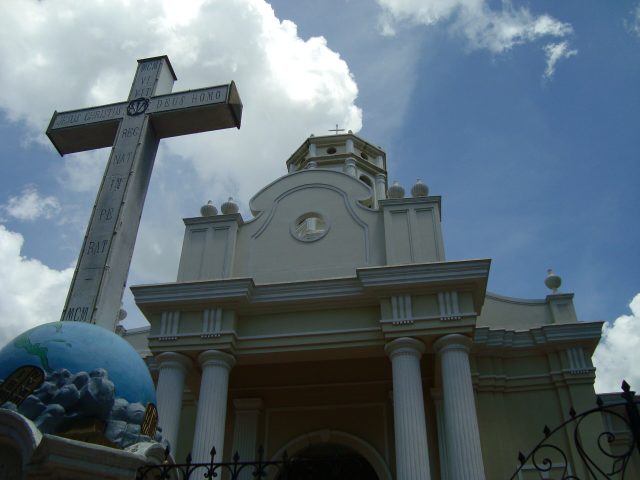
Santa Ana’s Parque Libertad is one of those rare urban spaces where the city’s usual hum fades into something quieter—a place where time seems to slow just enough to let you catch your breath. Tucked in the heart of El Salvador’s second-largest city, the park isn’t just a patch of green amid the concrete; it’s a living record of the country’s past. Under the shade of its old trees, you can almost hear the echoes of different eras, from colonial days to the present, each leaving its mark in subtle ways.
Santa Ana has always been a city of significance, a hub of culture and commerce long before modern borders took shape. Parque Libertad began as a natural extension of the central plaza, the kind of space that once served as the town’s beating heart. In colonial times, these squares weren’t just for leisure—they were where deals were struck, festivals celebrated, and processions marched. Today, the park still plays that role, though in a gentler form. Locals gather here to chat over coffee, watch children play, or simply escape the midday heat. It’s a place where life unfolds at its own pace, unhurried and unscripted.
The buildings around the park tell their own stories. The most striking is the Santa Ana Cathedral, its neo-Gothic facade rising above the square with pointed spires and intricate stained glass. Construction began in the late 19th century and dragged on for decades, a testament to the ambition of its design. Inside, the dim light filtering through the windows creates a quiet grandeur, the high vaulted ceilings making the space feel both vast and intimate. Nearby, more modest colonial-era structures offer a contrast, their simpler lines a reminder of the city’s earlier days.
The park itself is small but well-kept. A central path leads to a modest fountain, often surrounded by people taking a moment to rest. Benches line the shaded walkways, and in the evenings, lamplight casts a warm glow over the paths. On weekends, the park comes alive with street musicians, vendors selling local snacks, and children darting after pigeons. There’s no touristy hustle here—just the easy rhythm of everyday life.
Parque Libertad hasn’t always looked the way it does now. In the mid-20th century, it underwent renovations that introduced landscaping and added sculptures, including a modest monument to Manuel José Arce, a national hero born in Santa Ana who played a key role in El Salvador’s fight for independence. The statue isn’t grand, but it’s a quiet reminder of the city’s place in the country’s history.
For visitors, the park is a natural starting point for exploring Santa Ana. From here, it’s easy to reach the regional museum, the local market with its handmade crafts, or the old theater where performances still draw crowds. But even if you don’t venture further, the park offers a chance to slow down and soak in the city’s atmosphere. Locals often stop by in the morning for coffee at a nearby café or return in the evening when the heat subsides and the scent of blooming trees fills the air.
What makes Parque Libertad special isn’t any single feature—it’s the way it blends into the fabric of the city. There are no grand declarations here, no attempts to impress. Instead, it exists as a quiet witness to the passage of time, a place where history isn’t just remembered but lived. It’s a reminder that the most meaningful moments aren’t always the loudest; sometimes, they’re the ones that unfold in the shade of an old tree, where the past and present meet without fanfare.