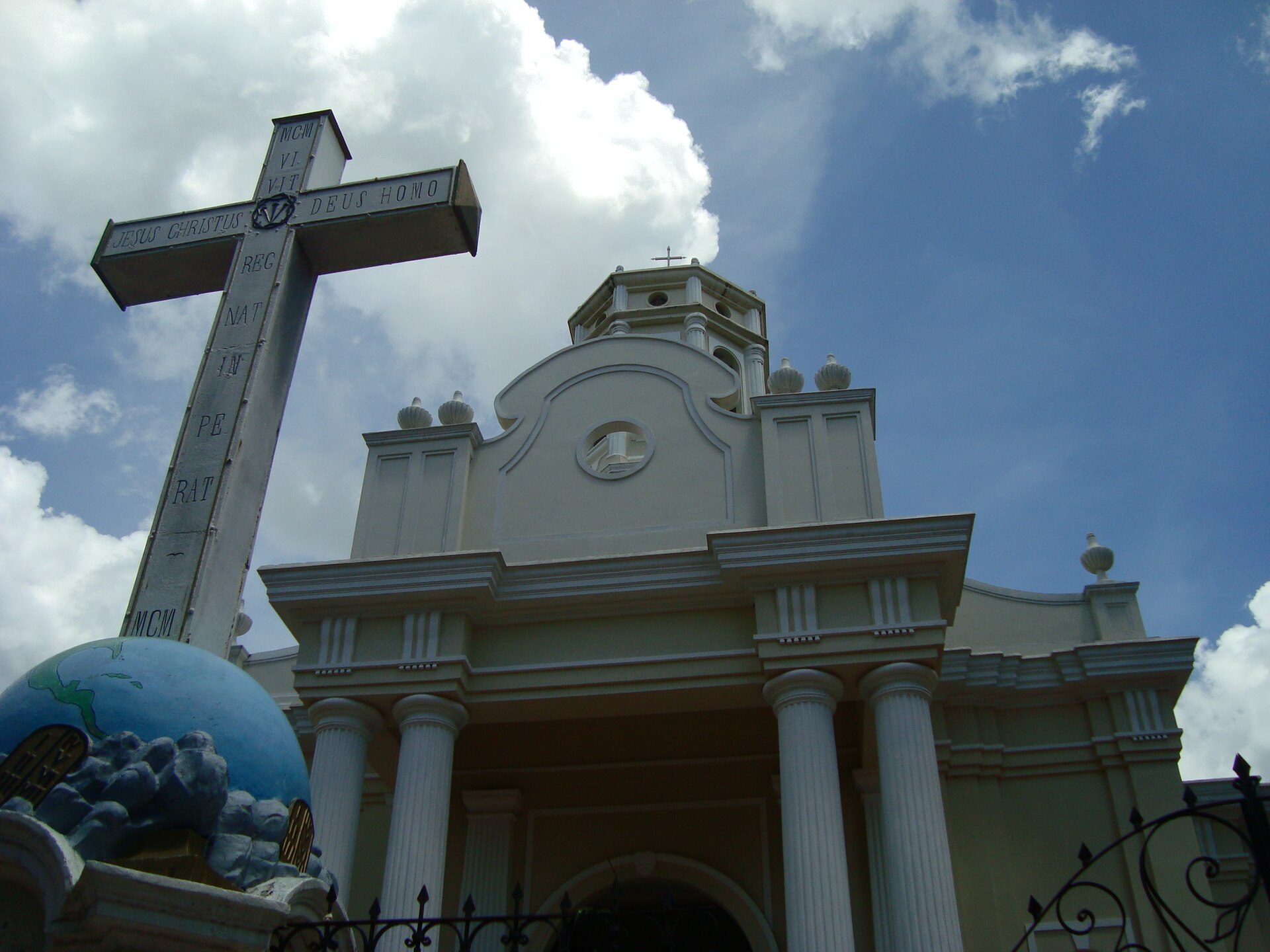
El Calvario Church in Santa Ana is the kind of place that doesn’t demand attention but lingers in the mind long after you’ve left. Perched on a gentle hill in the city’s historic center, it’s reached by a steep stone staircase. The climb slows your steps, and by the time you reach the top, the noise below has dissolved into something softer.
The church itself is unassuming. Its whitewashed walls and modest bell towers carry the quiet dignity of colonial architecture. Built in the 19th century, it has stood through decades of change—not as a monument to power, but as a steady presence in the city’s life. Inside, wooden pews, a few saintly statues, and a simple altar fill the space. The stillness makes the light filtering through the high windows feel different, as if it carries the weight of prayers whispered beneath it.
Santa Ana was founded by Spanish conquistadors in the 16th century. It grew into a vital hub in western El Salvador, where trade routes converged and people passed through. El Calvario, though not the oldest church in town, became a place to pause and feel connected to something larger. In the 19th century, as El Salvador fought for independence and weathered political upheavals, the church remained a constant—a refuge where life moved at its own pace.
Today, it still serves that role. On Sundays, families, elders, and children fill the pews. On weekdays, silence returns, broken only by the chime of bells or the scuff of shoes on the worn floor. The small square around the church offers a place to sit and look out over Santa Ana—the red-tiled roofs, the distant mountains, the streets winding downhill. From here, the city feels both close and far away.
The church holds more than history. The cracks in the plaster, the scuffs on the pews, the faint scent of old wood and candle wax—these are traces of lives lived here. El Calvario doesn’t need ornate frescoes or golden altars. What it offers is authenticity, the feeling that you’ve stepped into a place that has always been exactly what it is.
Santa Ana is a city of contrasts—colonial facades pressed against modern buildings, markets giving way to quiet alleys. El Calvario sits at the edge of these worlds. It doesn’t try to impress. It simply exists, and that’s why it draws people in.
You can stand at the entrance, watch the city below, and let your thoughts drift. For a moment, time seems to pause.
The area around El Calvario has its own rhythm. In the mornings, vendors sell fresh fruit and warm bread. By evening, the steps fill with teenagers lounging in the cool air. Sometimes musicians appear—a guitarist strumming, a flutist playing a tune that drifts through the square.
This isn’t the kind of church that makes it into guidebooks. But places like El Calvario often leave the deepest impressions. They don’t ask for awe. They offer a space to be—to sit with your thoughts, with the city, with the weight of time. There’s nothing staged here, just the quiet, the light, and the slow pulse of history.
When people leave Santa Ana, it’s often this unassuming church on the hill they remember.