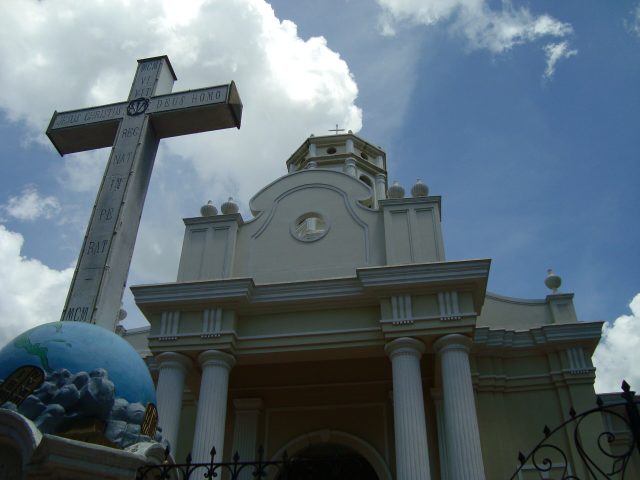
The National Palace in Santa Ana is one of those rare places that feels suspended in time, as if the early 20th century never quite faded away. Built during a period of economic prosperity fueled by El Salvador’s coffee boom, the palace was more than just an administrative building—it was a statement. Santa Ana, then a thriving hub of coffee production, flourished alongside the country’s fortunes, and the palace reflected that ambition. Its architecture blends neoclassical grandeur with Baroque flourishes and even hints of Moorish influence, a testament to the European architects who left their mark across Latin America. The result is a structure that feels both imposing and intricate, designed not just for function but to inspire awe.
From the outside, the palace commands attention with its stately columns and ornate façade, but it’s the interior that truly impresses. High ceilings, marble floors, and sweeping staircases evoke a sense of ceremony, though the building was never a royal residence. It was meant for local officials, yet its scale suggests something far grander—a deliberate choice to project stability and power. The main staircase, still largely intact, leads to the upper floors where government receptions and meetings once took place. Time has worn some details, but the overall effect remains striking, as if the building itself is a relic of an era when architecture was meant to endure.
The palace wasn’t just a symbol of governance; it was a response to the turbulence of its time. El Salvador in the early 1900s was a country in flux, grappling with political shifts and social change. Buildings like this were meant to convey permanence, a counterpoint to the instability around them. Yet history had other plans. By the mid-20th century, the country was plunged into conflict, and Santa Ana, like much of El Salvador, found itself caught in the upheaval. The palace survived earthquakes, regime changes, and even attempts at modernization, emerging largely unchanged—a quiet witness to the storms that raged around it.
Today, the National Palace is open to visitors, offering one of the few opportunities in Santa Ana to step directly into the past. Many of the original interiors remain intact: carved wooden doors, stained-glass windows, and antique furniture that once furnished the halls of power. Some rooms have been repurposed as small museums, displaying documents, photographs, and everyday objects from the early 1900s. The exhibits on the coffee industry are particularly revealing, showcasing the tools, trade records, and even samples of the beans that once drove the country’s economy. It’s a reminder of how deeply coffee shaped El Salvador, turning Santa Ana into a city of wealth and influence.
There’s a certain melancholy to the palace, a sense that its walls still hold echoes of the past. In the quieter moments, when the halls are nearly empty, the sound of footsteps on marble floors seems to carry whispers of old conversations—politicians debating, clerks shuffling papers, visitors waiting for audiences. The inner courtyard, framed by arched walkways, hints at the bustle that once filled the space: deals being struck, alliances formed, lives decided. Now, it feels like a pause in time, a place where the weight of history is almost tangible.
Santa Ana isn’t a city that draws crowds of tourists, and the National Palace is often overlooked in favor of more famous landmarks. That’s part of its charm. There are no souvenir stands or guided tours here, just the building itself, standing as it has for over a century. Visitors can wander at their own pace, studying the architectural details or simply soaking in the atmosphere. The city around it feels similarly untouched by time, with narrow streets, colonial-era houses, and cafés serving strong coffee from nearby plantations. It’s a place where the past isn’t just preserved—it’s still alive.
From the palace’s upper floors, the view stretches across Santa Ana and beyond. The city sprawls between rolling hills, with the imposing silhouette of the Santa Ana Volcano looming in the distance. Closer in, church domes and tiled roofs mark the historic center, a patchwork of old and new. The scene is a reminder that the palace isn’t just a museum piece; it’s part of a living city, one that has weathered revolutions, economic shifts, and natural disasters yet continues to endure.
A visit to the National Palace is more than a history lesson—it’s a reflection on how places shape, and are shaped by, the people who pass through them. What was once a symbol of power and progress now stands as a monument to a bygone era. Yet in a country like El Salvador, where history has often been tumultuous, such places take on a deeper significance. They serve as anchors, connecting the present to the past and reminding us that behind every grand building are the stories of those who built, inhabited, and ultimately left it behind.