Skadovsk’s Taras Shevchenko Park is one of those quiet corners where a small seaside town reveals its unhurried soul. Tucked away from the main streets, it offers a pause from the rhythm of daily life—a place where the rustle of leaves and the distant murmur of the sea replace the usual city noise. Locals come here to walk their dogs, read under the trees, or simply sit on a bench with a cup of coffee, while visitors find it an easy escape from the sun or the crowds.
The park has been part of Skadovsk’s fabric for generations, though its exact origins are woven into the town’s early 20th-century growth. Founded as a port and later a resort, Skadovsk developed its public spaces slowly, and this park became one of them, named after Ukraine’s beloved poet and national symbol, Taras Shevchenko. Over the decades, it has remained a constant in a town that has seen its share of changes, retaining a modest, almost timeless quality. There are no grand monuments or elaborate designs here—just a well-tended green space that feels like an extension of the town itself.
The layout is simple, almost unassuming. Wide paths wind between mature trees, their branches forming a canopy that offers shade even on the hottest days. Benches are scattered along the walkways, some tucked into quiet corners, others facing small flowerbeds that bloom in bursts of color during the warmer months. The central avenue leads to the park’s focal point: a bronze statue of Shevchenko, installed during the Soviet era. The poet stands with his gaze directed toward the horizon, as if watching over the town. Around him, the space is kept neat, with low hedges and seasonal flowers that add a touch of softness to the scene. In the evenings, the area is gently lit, the warm glow of lampposts casting long shadows across the paths.
Beyond its physical presence, the park is a stage for the town’s small but lively cultural life. In summer, local musicians perform on the open-air stage, their melodies mixing with the laughter of children playing nearby. During festivals, the park fills with stalls selling handmade crafts, traditional food, and sweets, while families gather to watch performances or take part in games. Winter brings its own charm—holiday markets, ice-skating if the weather allows, and the quiet beauty of snow-covered branches. For the youngest visitors, there are playgrounds with swings and climbing frames, though even these feel unhurried, as if designed for leisurely afternoons rather than rushed entertainment.
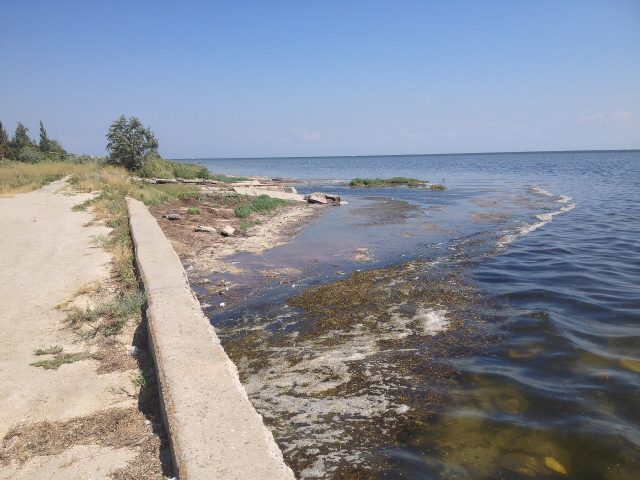
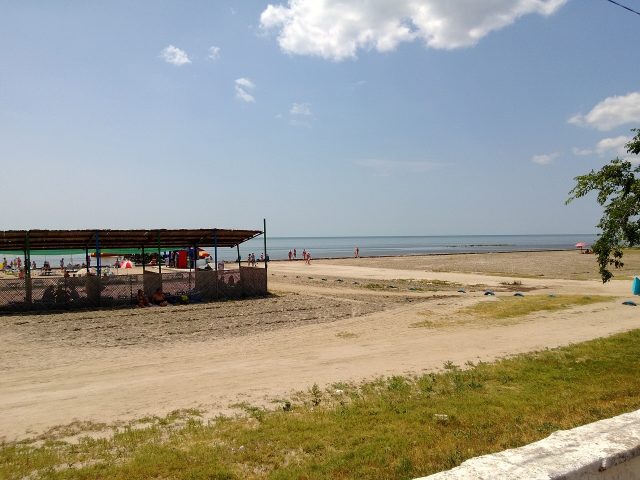
What makes the park special is its connection to the sea. Skadovsk sits on the Black Sea coast, and even here, a few blocks inland, the air carries the scent of salt and pine. On still days, the breeze is barely noticeable, but when the wind picks up, it rustles through the trees, carrying with it the faint sound of waves breaking against the shore. The park’s location makes it a natural stop for those wandering between the town center and the beach, a place to pause before or after a swim, or simply to enjoy the way the light changes over the water as the day fades.
In recent years, the park has seen subtle updates—new benches, repaved paths, young saplings planted to replace older trees—but these changes have been careful, preserving the sense of continuity. There’s no attempt to modernize it into something sleek or polished; instead, the focus seems to be on maintaining what already works. The result is a space that feels both lived-in and cared for, where the past and present coexist without tension. The older trees, with their gnarled trunks and wide-reaching branches, stand alongside the newer plantings, just as the memories of those who have walked these paths for decades mingle with the footsteps of today’s visitors.
For travelers, the park offers more than just a place to rest. It’s a window into the rhythm of a small coastal town, where life moves at its own pace. Mornings here are quiet, with the occasional jogger or elderly couple strolling along the paths. By midday, families arrive with picnic baskets, spreading out blankets on the grass. As evening falls, the park takes on a different mood—couples walk hand in hand, teenagers gather in small groups, and the scent of grilled food from nearby cafés drifts through the air. The streetlights flicker on, casting a soft glow over the scene, and for a moment, it’s easy to forget that the rest of the world exists beyond this patch of green.
What makes Taras Shevchenko Park more than just a green space is the way it holds the town’s collective memory. For some, it’s where they learned to ride a bike or had their first kiss. For others, it’s a place of quiet reflection, where the years seem to slow down just enough to catch a breath. Skadovsk has grown and changed, but the park remains a constant, a reminder that beauty often lies in the simplest things—a shady tree, a well-worn path, the sound of the sea in the distance. It doesn’t demand attention; it simply offers a place to be, and in doing so, becomes a part of the town’s identity.