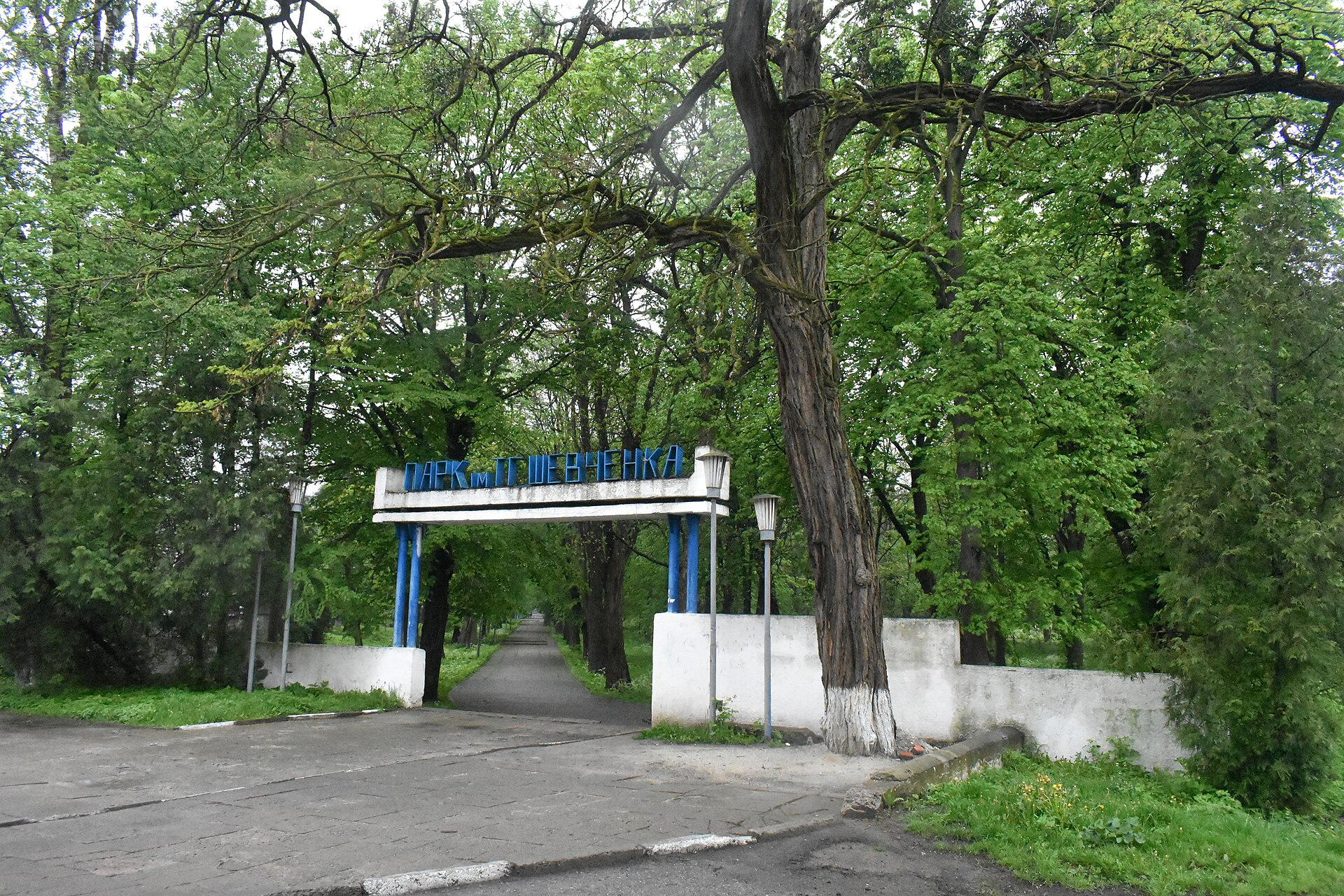
Taras Shevchenko Park in Olesko is one of those places where time seems to move at its own unhurried pace. Tucked away on the edge of a small town, it feels far removed from the manicured urban parks with their fountains and flowerbeds. Here, the air carries the scent of damp earth and grass, and the only sounds are the rustling of leaves and the occasional call of a bird. The park is quiet not because it’s forgotten, but because it was never meant to be loud. Locals come here to walk, school groups visit on field trips, and sometimes travelers passing through on their way to the nearby castle stop for a moment. Even on weekends, you won’t find crowds—just a handful of people enjoying the stillness.
The park was established in the mid-20th century, part of a Soviet-era tradition of honoring cultural figures with green spaces rather than just monuments. Olesko was a natural choice. The town has deep ties to Shevchenko, who spent time in the area as a young man while working for a local landowner. A house where he once stayed still stands nearby, and the park itself is home to a bronze bust of the poet, mounted on a simple stone pedestal. The sculpture captures him in a quiet moment, head slightly bowed as if lost in thought. Fresh flowers are often left at its base, a small but steady reminder of how much he still means to people here.
Like many memorial parks of its time, the design is understated. A central path lined with old linden and chestnut trees leads from the entrance to the monument, their branches forming a natural canopy overhead. Some of these trees have stood here since the park was first planted, their gnarled trunks bearing silent witness to decades of change. Off the main path, benches are scattered beneath the shade, perfect for reading or simply listening to the wind. There’s also a small pond, its dark water fringed with reeds, where ducks glide across the surface on calm days. The water reflects the sky only when the wind dies down, turning the pond into a mirror of shifting clouds.
Olesko itself is a town steeped in history, and the park fits seamlessly into its landscape. The real draw for most visitors is the castle perched on a nearby hill—a 14th-century fortress later remodeled in the Baroque style. But while the castle tells a story of power and conflict, the park offers something quieter. There are no grand ruins or dramatic vistas here, just the sense that the land itself remembers. Olesko has always been a place apart, bypassed by major roads and largely untouched by war. Even during World War II, the town and its surroundings remained intact, preserving both the castle and the park as they were.
For locals, the park is more than just a green space—it’s part of daily life. In summer, families spread out picnics on the grass, children play hide-and-seek among the trees, and elderly visitors feed the ducks by the pond. Autumn transforms the park into a blaze of color, with chestnut and maple leaves turning gold and crimson. Winter brings snow, muffling the paths until only the well-trodden trails to the monument remain visible. Spring is the liveliest season, when the trees burst into leaf and migratory birds return, filling the air with song.
Shevchenko occupies a near-mythic place in Ukrainian culture, and every town where he lived or visited has its own memorial to him. But in Olesko, the connection feels particularly strong. This was where he was young, full of dreams and ambitions, long before fame or hardship shaped his legacy. The park doesn’t try to impress with grandeur. There are no towering statues or elaborate displays, just a quiet corner where you can sit on a bench, look at the poet’s bronze profile, and imagine him walking these same paths two centuries ago.
This isn’t the kind of place people travel across the country to see. There are no tourist traps, no souvenir stalls, no cafes blasting music. What it offers instead is something rarer: a chance to step away from noise and distraction, to be alone with nature and history. The park doesn’t demand attention—it simply exists, unassuming and real. In a world where so many places are designed to dazzle, that might be its greatest strength. Here, you’re left with nothing but the trees, the sky, and the quiet presence of a man who became a symbol for an entire nation.