Olesko is a quiet town in western Ukraine, best known for its castle—the birthplace of King Jan Sobieski. But beyond the fortress walls, the town holds other stories, less grand but just as meaningful. One of them belongs to the Church of St. Nicholas, tucked away on a narrow street not far from the main square.
From the outside, it looks unassuming: a stone building with wooden accents, its facade free of ornate decoration. Yet this very simplicity makes it special. Here, history isn’t announced with towering arches or gilded domes—it lingers in the walls themselves, worn smooth by time.
The church was built in the early 18th century, when Olesko was part of the Polish-Lithuanian Commonwealth. The town had seen its share of upheaval—passing from Polish magnates to Hungarian lords, then briefly under Ottoman rule—before settling into a period of relative calm. The church was founded as a Uniate temple, serving the Ukrainian Greek Catholic community, which was gaining influence in the region. Its architecture reflects this transitional era, blending traditional Ukrainian wooden craftsmanship with the emerging Baroque style from the West.
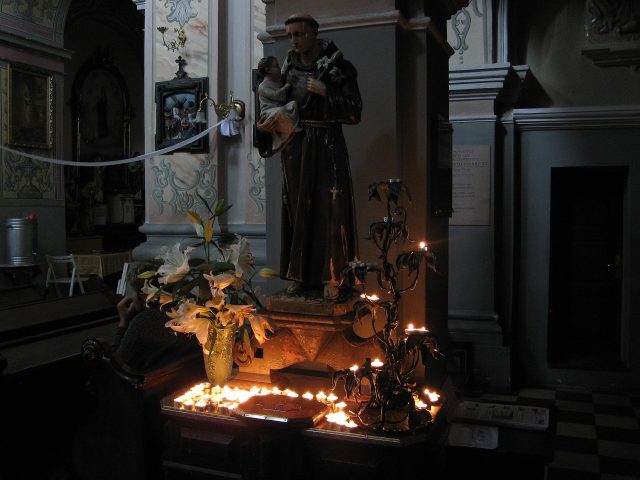
Inside, the space feels intimate yet airy. The walls, built from local stone, support a roof held together by sturdy oak beams that have weathered centuries. The high vaulted ceilings create a sense of openness, while the iconostasis bears the marks of local artisans. The icons, painted in the soft, warm tones typical of Galicia, seem to glow with an inner light. Their faces are gentle, almost lifelike, as if the saints themselves are watching over the quiet rituals of the church.
For all its beauty, the Church of St. Nicholas was never the most prominent place of worship in Olesko. The town’s main church, and later its Orthodox parishes, always drew larger congregations. Yet this small Uniate temple played a steady role in daily life—baptisms, weddings, and funerals unfolded within its walls. In the 19th century, when Olesko became part of the Austro-Hungarian Empire, the church fell into decline. The Uniate rite was banned, and the building was handed over to the Orthodox. Even then, it remained a place of solace for those who sought it.
Today, the church is still active, open to anyone who steps inside. The scent of beeswax and aged wood fills the air, mingling with the soft light that filters through narrow windows. On some days, the murmur of a choir drifts through the space—quiet, but deeply moving. Outside, a small courtyard offers a place to sit beneath linden trees, where locals gather to talk or simply enjoy the stillness.
Olesko isn’t a stop on most tourist itineraries. There are no crowds here, no hurried selfies. The town moves at its own pace, its streets lined with old houses whose roofs nearly touch. The Church of St. Nicholas stands among them, a quiet witness to centuries of change.
Time feels different here. Stand by the church walls, listen to the rustle of leaves or the distant chime of bells, and it’s easy to imagine the lives that have passed through this place. The building has seen restorations over the years, but care has been taken to preserve its original character. The people of Olesko have always valued their history, and their efforts have kept the church much as it was three hundred years ago.
You can still see the marks of those repairs—the fresh stone against the old, the new planks on the floor. But these details only reinforce the sense of continuity. The church isn’t frozen in time; it’s alive, carrying the past into the present.
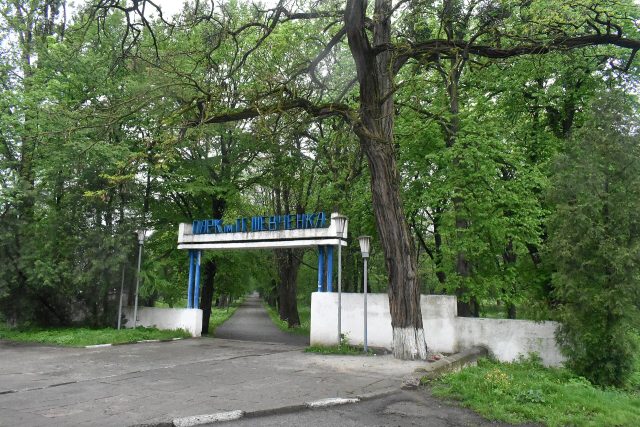
If you visit Olesko, don’t rush straight to the castle. Take a detour from the main square, wander down a side street where the houses stand so close their eaves almost meet. Among the greenery and old trees, you’ll find the Church of St. Nicholas. It won’t overwhelm you with grandeur. Instead, it offers something rarer: a place where history isn’t displayed for show, but lingers quietly, like the breath of wind through the leaves.