Kharkiv’s Gorky Park is one of those places where the city’s past and present seem to coexist without friction. It stretches along the banks of the Lopan River, a quiet waterway that has seen the city grow from a small fortress town into Ukraine’s second-largest metropolis. The park wasn’t always a public space—it began as a private estate in the 19th century, owned by a local noble family who used the land for hunting and leisure. By the early 20th century, the city had expanded enough to claim it, and in 1907, the area was transformed into a municipal park, though it wasn’t until the 1930s that it took on the name it bears today.
The layout of the park reflects the urban planning ideals of its time. Wide alleys lined with chestnut and linden trees lead visitors toward the river, where the paths curve gently along the water’s edge. In summer, the trees provide shade for those who come to escape the city’s heat, while in autumn, their leaves turn the park into a patchwork of gold and russet. The central avenue, once a grand promenade for Kharkiv’s elite, is now a place where families stroll, street musicians play, and elderly couples sit on benches watching the world go by. There’s a sense of continuity here, as if the park has always been a part of the city’s rhythm.
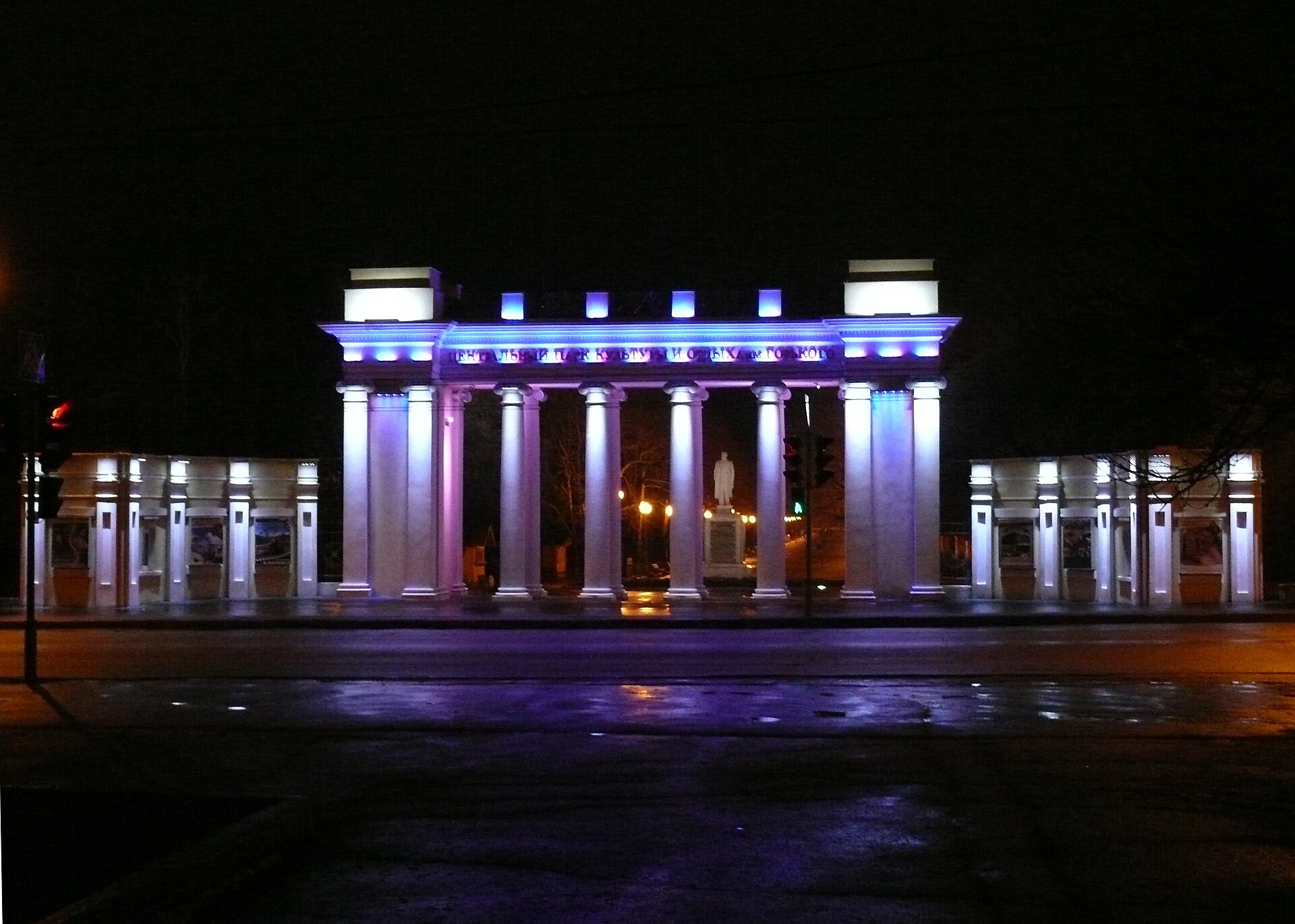
One of the most striking features of Gorky Park is its architecture, much of which dates back to the Soviet era. The main entrance, with its imposing columns and wide staircase, was built in the 1930s in the neoclassical style that was popular at the time. It’s a reminder of an era when public spaces were designed to impress, to make citizens feel part of something larger than themselves. Nearby, the summer theater, a circular structure with a domed roof, was once a venue for concerts and performances. Though it’s fallen into disrepair in recent years, its silhouette still adds a touch of grandeur to the park’s landscape.
The park has always been more than just a green space—it’s a place where Kharkiv’s social life unfolds. In the warmer months, the amusement park section draws crowds with its Ferris wheel and roller coasters, a nod to the Soviet tradition of combining recreation with ideology. The Ferris wheel, in particular, has become something of a landmark, offering views of the city’s skyline and the river winding through it. For children, there’s a small zoo and playgrounds, while adults often gather in the open-air cafes that dot the park. In winter, the paths are cleared for ice skating, and the trees are strung with lights, turning the park into a festive gathering place.
Beyond the attractions, Gorky Park holds a quieter kind of significance. It’s one of the few places in Kharkiv where the layers of history are still visible. The older trees, the worn stone benches, and the faded murals on some of the buildings all tell stories of the people who have walked these paths over the decades. During World War II, the park was damaged, like much of the city, but it was restored in the postwar years, becoming a symbol of resilience. Even today, it’s a place where history feels tangible, where the past isn’t just remembered but lived in.
The park’s relationship with the river is another defining feature. The Lopan, though not particularly wide or deep, has always been central to Kharkiv’s identity. In the 18th and 19th centuries, it powered mills and provided water for the growing city. Today, it’s more of a scenic backdrop, its banks lined with willows and footpaths. In the evenings, the setting sun reflects off the water, casting a warm glow over the park. Some visitors bring picnics to the riverbank, while others simply sit and watch the ducks glide across the surface. The river gives the park a sense of tranquility, a counterpoint to the bustle of the city just beyond its borders.
Gorky Park has also been a stage for the city’s cultural life. Over the years, it has hosted festivals, open-air concerts, and even political rallies. In the 1960s and 70s, it was a popular spot for Soviet-era celebrations, with fireworks and performances marking holidays like May Day and Victory Day. More recently, it has become a venue for modern music festivals and art installations, reflecting Kharkiv’s evolving identity. The park’s ability to adapt—to remain relevant across different eras—is part of what makes it special. It’s not just a relic of the past but a living space that continues to shape the city’s character.
For locals, the park is a familiar presence, a place that has been part of their lives for generations. Some remember coming here as children, riding the carousel or eating ice cream from the park’s kiosks. Others have walked its paths during moments of personal significance—first dates, family outings, or quiet afternoons spent reading on a bench. There’s a sense of ownership here, as if the park belongs to the people of Kharkiv in a way that few other places do. It’s not just a tourist attraction but a part of the city’s collective memory.
Walking through Gorky Park today, it’s easy to see why it has endured. It’s not the most polished or manicured park in the world, and some of its infrastructure shows signs of age. But that’s part of its charm. It feels lived-in, authentic—a place where the city’s history and its everyday life intersect. Whether you come for the views, the river, the amusement park, or simply to watch the world go by, the park offers a glimpse into what makes Kharkiv unique. It’s a reminder that even in a city of over a million people, there are still places where time slows down, where the past and present coexist in quiet harmony.